MSC and Royal Caribbean Secure 30-Year Berth Priority at Naha
The four-thousand-square-metre terminal at Shinminato Wharf will support turnaround calls; MSC forecasts 40 visits in its opening year, including twelve turnarounds.
Naha’s New Cruise Terminal Comes With Up to 30 Years of Berth Priority
Royal Caribbean Group and MSC Cruises are set to receive preferential berth access at Naha Port for up to 250 days a year, over a period of up to 30 years. That is a substantial commitment at a public berth, and the most consequential part of this terminal deal.
I like the decision to add proper passenger facilities to a berth already receiving cruise ships. Naha has identified practical problems that need fixing. Giving two cruise groups a preferred position for potentially three decades deserves more scrutiny than the terminal’s construction timetable.
Construction began on October 2, 2026, at Shinminato Wharf’s No. 12 berth, with completion and the start of operations targeted for March 2028. The terminal is designed to handle turnaround cruises carrying about 6,000 passengers.
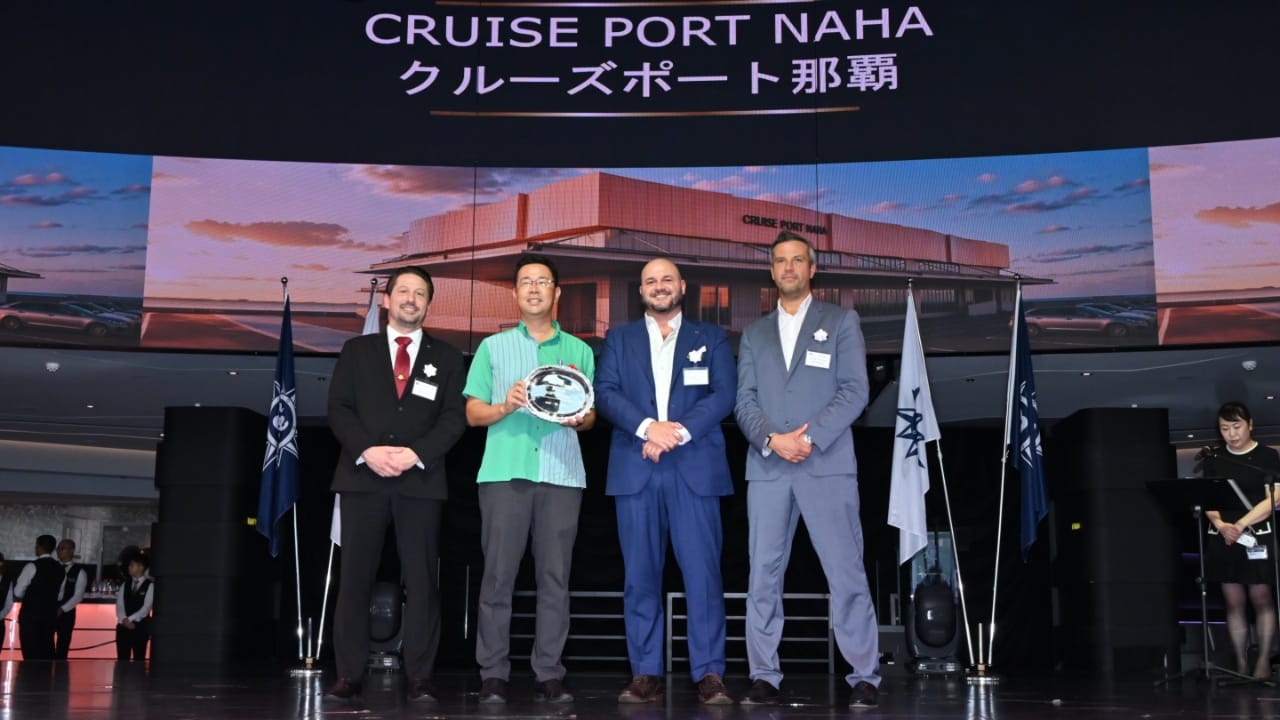
Cruise Port Naha G.K. will develop and operate the facility under a Cruise Hub Formation Agreement signed with Naha Port Authority in August 2026. The company is a joint venture between CTL Maritime and RCL Cruises Ltd., representing MSC Cruises and Royal Caribbean Group, respectively.
Preferential access does not mean exclusive access. The port authority will continue to manage the public berth. Even with that distinction, the agreement gives the two partners a long-term scheduling advantage.
The passenger facilities have a clear purpose
No. 12 berth began receiving cruise ships in February 2023. This project gives it dedicated passenger facilities.
The authority’s project plan specifies a 430-metre berth with a depth of 12 metres, designed for vessels of 220,000 gross tonnes. Ships of up to 230,000 gross tonnes may be accepted following a navigation-safety review.
The terminal building will cover 4,000 square metres, with another 500 square metres of covered curbside space. The stated goals are more efficient cruise operations and better passenger handling.
There is a concrete case for that work. The existing Naha Cruise Terminal at Tomari Wharf, which opened in April 2014, has limitations in passenger processing, bus and taxi parking, and turnaround facilities, according to the authority. The new terminal is a separate facility.
Those are unglamorous constraints, but they matter. A berth capable of taking a large ship does not, by itself, give a port the facilities to start and finish thousands of passengers’ holidays. Investing in that missing capability makes sense.
The development follows Naha’s selection in 2019 as an International Cruise Ship Hub Formation Port by Japan’s Ministry of Land, Infrastructure, Transport and Tourism. The partners announced the construction start on October 5, following a groundbreaking attended by Okinawa Governor Genta Koja, Cabinet Office representatives, port officials and cruise company representatives.
How MSC and Royal Caribbean plan to use Naha
Naha Port Authority forecasts 71 calls by the partner lines in the terminal’s opening year: 40 by MSC and 31 by Royal Caribbean Group. Twelve of MSC’s calls are planned as turnaround operations. That gives the new passenger facilities a specific role from the outset, although the figures are forecasts rather than completed business.
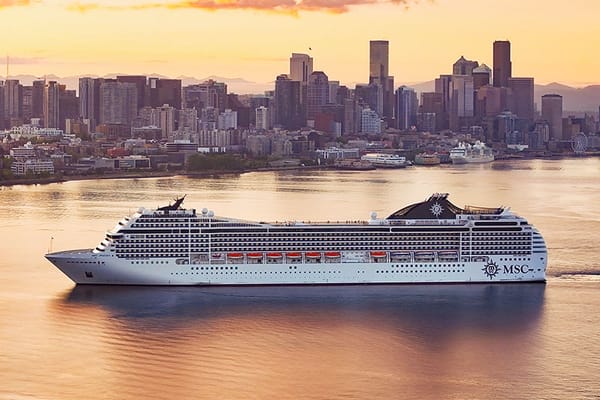
Both groups already use Naha. MSC Bellissima began sailing from the port in January 2024 as part of MSC Cruises’ first winter season in Japan. Royal Caribbean International’s Spectrum of the Seas regularly visits on four- and five-night Asian itineraries.
Naha recorded 175 cruise calls in 2024, up from 79 in 2023, when visits resumed in January. Before the pandemic, the port handled 260 calls and about 680,000 cruise passengers in 2019. Cruise visits stopped in March 2020.
Okinawa’s position southwest of mainland Japan, between Japan’s main islands and Taiwan, gives Naha year-round access for itineraries linking Japanese ports with other East Asian destinations.
MSC Group cruise division executive chairman Pierfrancesco Vago said the investment would help “create new opportunities for guests of MSC Cruises and Explora Journeys to enjoy Asia year-round.” Royal Caribbean Group chairman and CEO Jason Liberty described Japan as “one of the most important cruise markets in Asia” and said the infrastructure investment would benefit the local community over the long term.
That community benefit is the standard Naha should hold the arrangement to. Better passenger handling is a credible reason to build this terminal. It is not, on its own, a sufficient argument for giving two cruise groups berth priority for up to 30 years.