Rockland’s 2026 Cruise Estimate Leaves $180,000 Unexplained
Eight large-ship calls with approximately 13,574 lower berths remain after Seabourn Ovation’s final planned visit was canceled over a Cape Cod Canal transit issue.
Rockland’s Cruise-Spending Estimate Has a $180,000 Gap to Explain
Rockland’s report puts the value of its smaller 2026 cruise season at approximately $1.25 million in direct local economic activity and city revenue. But the three spending components it lists add up to about $1.07 million.
I’d want that roughly $180,000 difference explained before using the larger figure to assess the season. A city publishing an economic estimate needs to give readers a total they can reproduce.
There is useful evidence here about what cruise visitors spend, where they go and how Rockland manages their arrival. The unexplained arithmetic makes that evidence harder to use than it should be.
What goes into the 2026 estimate
Rockland originally expected nine large-ship visits in 2026. Seabourn Ovation’s second scheduled call, also the season’s final visit, was canceled because of a Cape Cod Canal transit issue. That left eight calls with a combined published lower-berth capacity of approximately 13,574 passengers.
The report estimates about $610,000 in potential passenger spending. It adjusts published capacity for typical occupancy and the proportion of passengers going ashore, then applies average shore visits and spending per visit.
The city’s municipal charge of $14 per lower berth produces approximately $190,000 from those calls. Separately, scaling the earlier study’s cruise-line purchases by call count suggests roughly $270,000 for pilotage, private docking, shipping-agent services, Maine goods, food and entertainment.
Those three components sum to approximately $1.07 million, not $1.25 million. Rounding does not explain a difference of that size.
These are also projections, not a measurement of purchases made during the 2026 season. They assume that visitor behavior and spending patterns from the earlier research continued across the reduced schedule. That is a reasonable distinction to make explicit whenever the city discusses the results.
The earlier research gives Rockland something useful to work with
The city-commissioned study, released Oct. 15, estimated that cruise visitors and cruise lines contributed $1.7 million to the Rockland area in 2025. Digital Research Inc. estimated that the activity supported 20 full-time-equivalent jobs and generated $113,000 in state tax revenue.
The research surveyed 232 passengers and crew members during 11 cruise arrivals. Rockland paid $5,400 for its portion of the work, which formed part of a larger state-commissioned study.
Passengers and crew accounted for an estimated $875,000 in direct local spending. Cruise lines spent another $600,000 on municipal charges, port fees, marine services, and Maine-sourced food and entertainment. Average visitor spending was $81 per person per trip ashore, including $24 on food and beverages and $20 on shopping.
“The research helps move the conversation from assumptions to measurable information,” City Manager Tom Luttrell said.
That is the right objective. It also sets the standard the city’s subsequent projections need to meet.
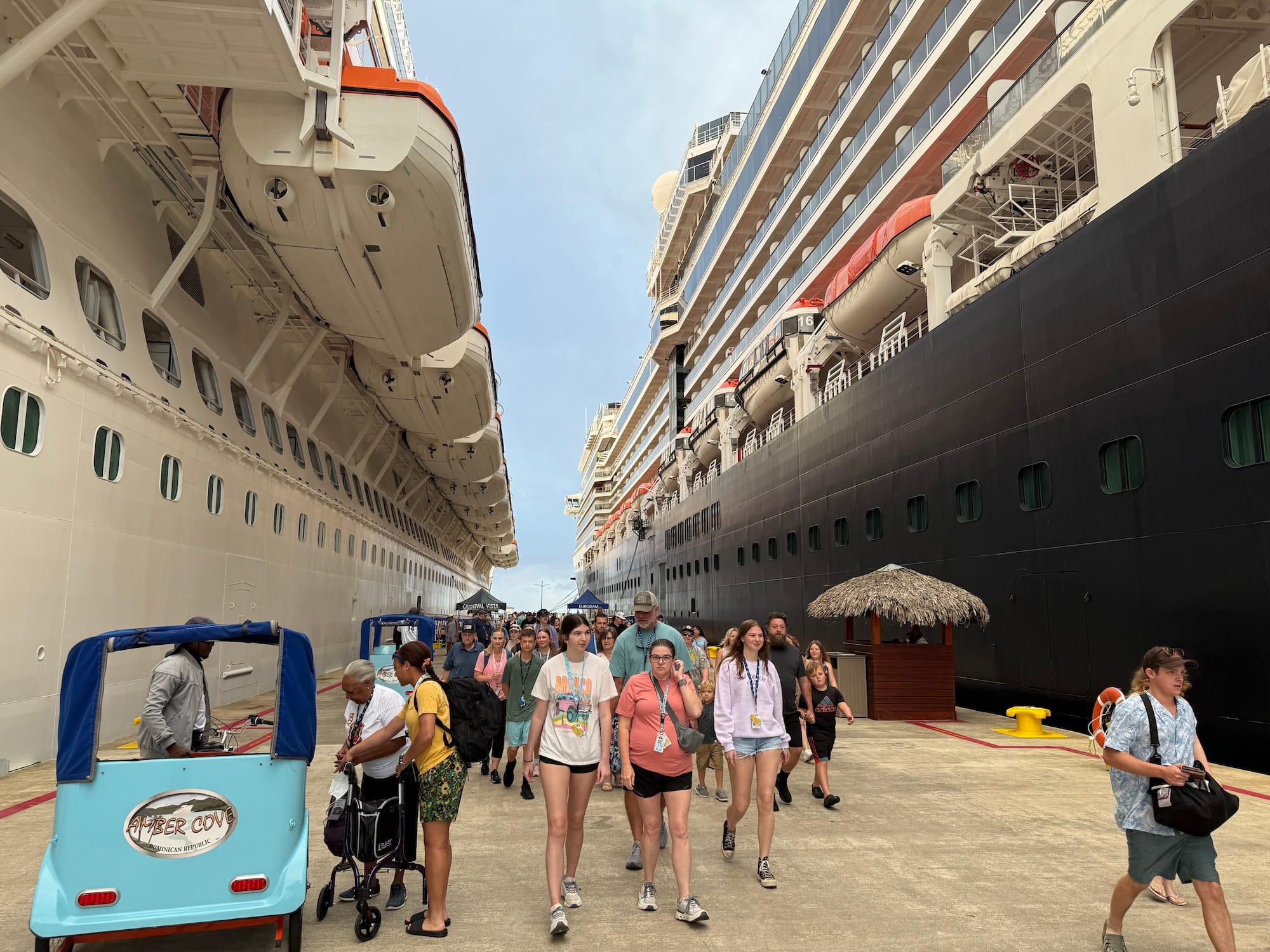
The visitor findings are particularly useful because they show how closely a Rockland cruise call is tied to downtown. Larger ships anchor in the harbor and tender passengers to the Public Landing at Harbor Park, about a two-minute walk away. Respondents spent an average of three hours ashore, and 76% visited downtown.
Among those downtown visitors, approximately 43% dined in restaurants, 34% shopped and 84% toured or otherwise explored. Across the survey, 71% explored on foot. The city cited that finding in emphasizing the Harbor Park-to-downtown connection.
Visits extended beyond Rockland, with 17% going to Camden, 10% to Rockport and 5% to Owls Head. The average respondent was 65 with household income of approximately $125,000, and 76% of respondents had a college degree.
Eighty-two percent reported being highly satisfied with their time ashore. Rockland’s welcome received excellent or very good ratings from 97%, natural beauty from 91%, and shop and restaurant service and cleanliness and upkeep from 90% each. Eighty-five percent said the visit made them likely to recommend a Maine trip to others.
Review the management work, and reconcile the money
The 2026 season was the pilot year for PortShare Promise Midcoast, a coordinated cruise-tourism management initiative intended to improve visits while addressing the needs of residents, businesses, cultural organizations and the working waterfront.
Its measures included a Harbor Park welcome center staffed by trained community volunteers, improved signage, an interactive visitor website and an onboard destination video. Transportation information, a pilot trolley program, a Harbor Park Makers Market and real-time communication with downtown businesses were also introduced.
I like the practical focus. With three hours ashore and most respondents exploring on foot, helping people get from the landing into town is a sensible place to put effort. The pilot’s results still need their own review. The earlier survey’s favorable ratings are not proof of its success.
The city and PortShare Promise team will review the season and research findings with Rockland City Council at 6:30 p.m. Monday, Oct. 19. That review should include a reconciliation of the spending estimate, not another repetition of the $1.25 million total. A smaller, clearly supported figure would serve Rockland better than a larger one the report does not explain.