Marseille Cruise Growth Pledge Needs Measurable Results
From January 2026, the strengthened Mediterranean Sustainable Cruise Charter will apply to signatory companies operating in Mediterranean waters under French jurisdiction.
Marseille’s Cruise Quality Pledge Needs Numbers of Its Own
Marseille expects 150 more cruise calls in 2026 while pledging to give greater weight to the quality of visits. I like that priority. But with traffic growing this quickly, “quality” needs to mean something people can check, not simply an ambition attached to a bigger passenger forecast.
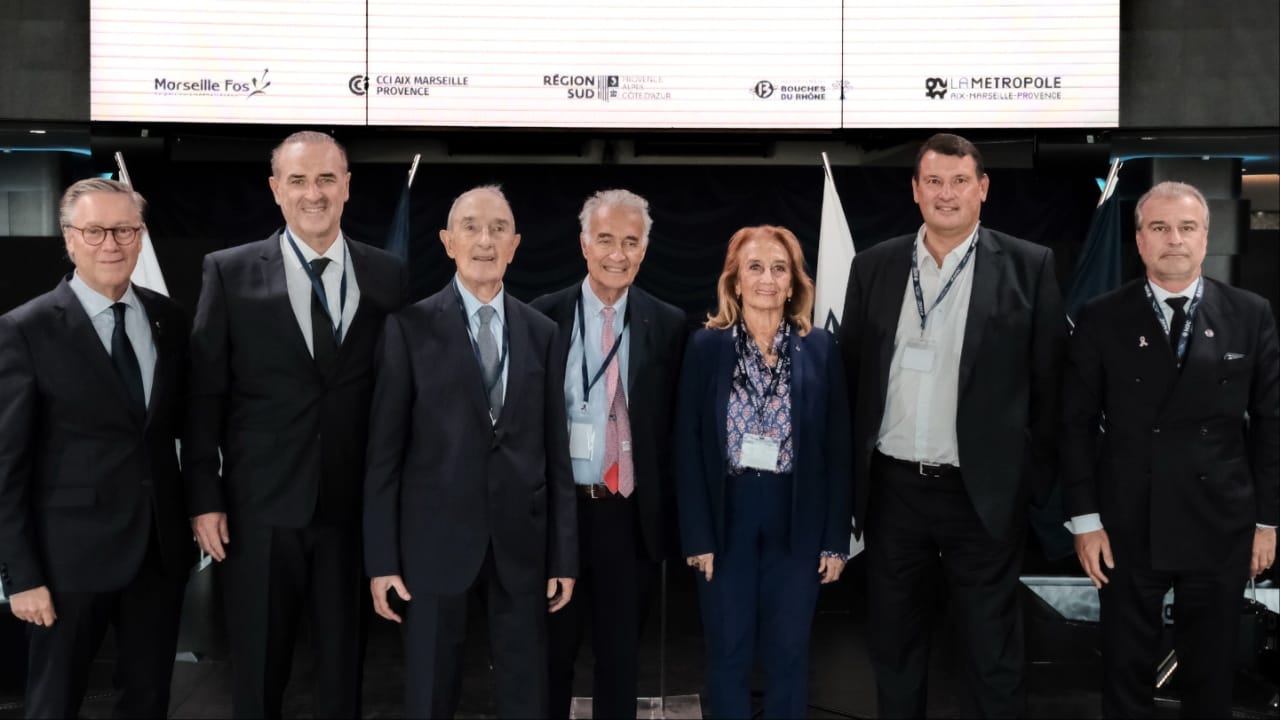
Marseille Provence Croisière presented its Horizon 2030 priorities at its 30th-anniversary celebration aboard MSC Meraviglia. Around 100 guests attended, including cruise line representatives, public institutions, business partners and past and present association members.
The forecast is for about 2.8 million cruise passengers and 750 calls in 2026, compared with 2,634,780 passengers and 600 calls in 2025. The region also recorded 165,616 river cruise passengers on the southern Rhône in 2025.
Jacques Hardelay, elected president of Marseille Provence Croisière in June 2025, put the intended shift plainly: “Our mission today is to prioritise the quality of port calls, their integration into the local territory and the reduction of their environmental impact.”
That is a more demanding brief than attracting another ship. It asks what happens after the gangway opens, where visitors go and what the region gains from their presence.
Spreading visitors deserves attention
Horizon 2030 includes expanding homeporting, spreading passenger flows more evenly and developing activities during calls that deliver greater benefits across the region. It also seeks to encourage cruise visitors to return for a longer stay.
Of those priorities, spreading visitors more evenly deserves particular attention. It gives the quality pledge a practical purpose beyond the terminal. The useful question is whether more places benefit from cruise visits, rather than whether Marseille can accommodate more arrivals.
There is substantial turnaround capacity already. Marseille Provence Cruise Terminal can accommodate up to six turnaround ships simultaneously. That supports the homeporting ambition, but terminal capacity alone cannot tell us how well a visit works for the destination.
Built for growth
The association’s original task was rather different. In 1993, when Marseille handled just 11,606 cruise passengers, 14 institutional and industry participants signed a Cruise Charter. The Marseille-Provence Chamber of Commerce and Industry, the City of Marseille and the Autonomous Port of Marseille subsequently founded the Club de la Croisière in 1996.
Its early work involved attracting international cruise lines, developing infrastructure, improving passenger services and coordinating regional participation. Marseille hosted Seatrade Cruise Med in 2012 and passed one million cruise passengers the following year as international calls and infrastructure expanded. The association now has 104 members.
That history explains the emphasis on growth. Horizon 2030 now sets a harder task for an organisation built to bring cruise business in: judging the value of that business once it arrives.
Environmental commitments need an operational test
The environmental work has its own history. Jean-François Suhas, president from 2015 to 2025 and now deputy president, launched the Blue Maritime Summit in 2019. It brought international industry participants together on energy and environmental issues and led to the Blue Charter, followed by the Mediterranean Sustainable Cruise Charter and the Sustainable Port Call Commitments.
The strengthened Mediterranean Sustainable Cruise Charter applies from January 2026. It is a voluntary framework for signatory cruise companies operating in Mediterranean waters under French jurisdiction.
Its measures include shore-power capability and connection where infrastructure is available, tighter controls on marine discharges, and lower-emission transport for port shuttles and excursions. Those are concrete operational subjects, but the infrastructure caveat matters. A commitment to connect cannot deliver a connection where the necessary facilities are absent.
Suhas called for continued cooperation so cruise development meets the region’s environmental and societal expectations. The charter gives that cooperation a framework. Delivery is what will give it credibility.
For me, the next useful number is how many eligible calls actually connect to shore power. That would say more about the quality of Marseille’s cruise growth than another passenger milestone.
See cruises departing Marseille on Cruise Lookup.