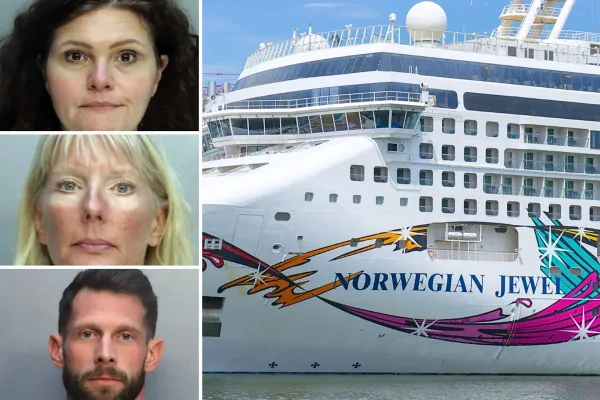
Norwegian Faces Pressure to Show Progress on Booking Strategy
In July, CEO John Chidsey said “the vast majority of our problems are self-inflicted,” referring to shortcomings in Norwegian’s booking strategy.
Norwegian needs a clearer answer on bookings after J.P. Morgan’s downgrade
Norwegian Cruise Line Holdings CEO John Chidsey supplied the line that deserves to hang over Thursday’s earnings report. Addressing shortcomings in the company’s booking strategy on the July 30 earnings call, he said “the vast majority of our problems are self-inflicted.”
I want to see evidence of a repair. Keeping the annual earnings forecast intact would be welcome, but it would not answer the question management itself has raised about how Norwegian is selling its cruises.
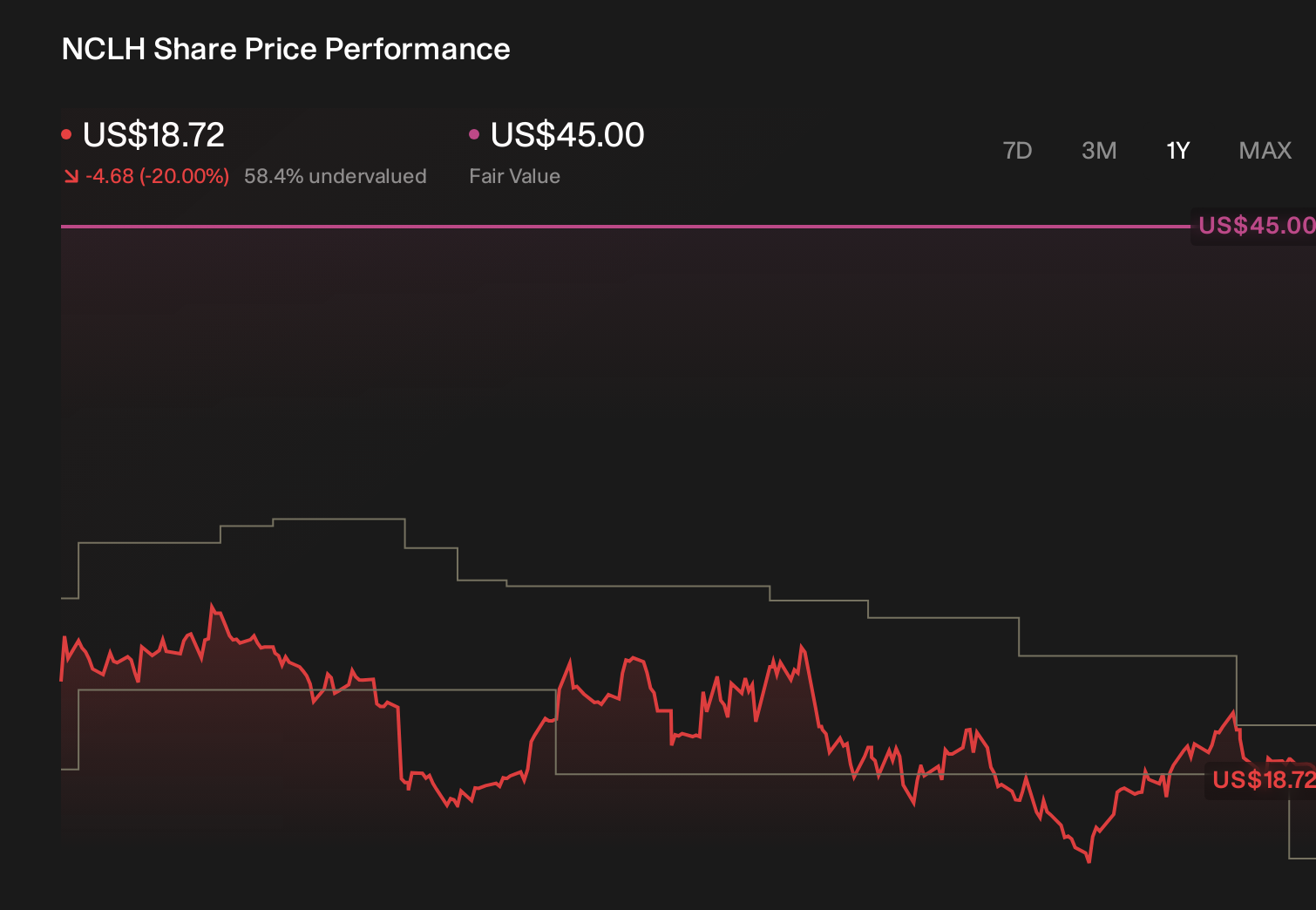
That distinction matters after J.P. Morgan downgraded Norwegian from Neutral to Underweight on Friday and cut its price target by $2 to $11. Shares were trading at $14.95, down 3.77%, at the time of publication, according to Benzinga Pro data.
The bank’s concerns include an expectation that annual yields will be unchanged on a constant-currency basis and the risk that prolonged geopolitical tensions could hinder a recovery in European demand, according to Investing.com. Those are meaningful pressures. But management’s own assessment makes it hard to treat Norwegian’s difficulties primarily as something happening to the company from outside.
The September update left an important gap
Norwegian is scheduled to report third-quarter results Thursday. J.P. Morgan expects it to maintain its full-year 2026 guidance for adjusted earnings of approximately $1.50 per share.
The company’s September 30 update said stronger-than-expected revenue should lift quarterly results above its previous outlook. It did not provide revised figures and maintained its annual guidance.
Analysts now expect third-quarter earnings of roughly 91 cents per share, about 24% below the year-earlier result and barely above Norwegian’s original 90-cent forecast. That leaves a fairly narrow numerical gap between the original outlook and current expectations, despite September’s better-revenue message.
A revenue update without revised figures gives investors little to measure. Thursday’s report can fill that gap and, more importantly, show whether the booking strategy is improving.
Norwegian’s July outlook projected an 8.9% constant-currency decline in third-quarter net yield. That quarterly forecast is separate from J.P. Morgan’s expectation for flat yields over the full year.
Costs the booking fix can’t touch
There are also pressures that a better booking strategy cannot simply remove. Second-quarter 2026 fuel prices after hedging reached $888 per metric ton, up from $659 a year earlier.
Second-quarter revenue rose 4.9% to $2.64 billion, supported by additional capacity days. Adjusted earnings were 48 cents per share, down from 51 cents in the corresponding prior-year quarter.
Executives have identified another $100 million in annualized cost savings beyond the $125 million previously announced. Management expects the newer initiatives to contribute only modestly to 2026 results.
The downgrade is sharper than the broader analyst view
J.P. Morgan had already lowered its target from $17 to $13 in late September. Its latest $11 target puts it well below the broader analyst average of around $20, with the consensus still at Hold, according to Investing.com.
Other brokerages have nevertheless been reducing their expectations. Citi cut its target from $22 to $19 on October 2. Bank of America lowered its target from $21 to $17 on October 13, and TD Cowen reduced its target from $24 to $20 on October 20. Norwegian shares have lost approximately 32% this year.
J.P. Morgan’s call is the most bearish of these, arriving after several other target cuts and just before management reports results.
Refinancing is not a repair
Norwegian also carries approximately $16 billion in total debt, according to Investing.com. It still has to fund debt service, capital spending and newbuild payments.
At December 31, 2024, Norwegian held $190.8 million in cash and cash equivalents. Total liquidity was approximately $2.0 billion, including revolving-facility availability and an undrawn backstop commitment.
Through its NCL Corporation subsidiary, Norwegian has outlined a $750 million senior-notes offering maturing in 2031. Proceeds would partly refinance existing 6.125% notes due in 2028. The plan also includes repaying $176.3 million on the revolving facility and prepaying $42.2 million of export-credit-backed debt.
Norwegian forecasts net interest expense of $860 million to $880 million for 2027. Refinancing addresses existing obligations, but it does not prove that the commercial problems are being resolved.
Norwegian has been candid about who owns the booking problem. It now needs to be just as specific about the repair.