DHS Removes 120 Cruise Workers in Boston, With One Prosecution
The campaign also removed 27 crew members from six ships in San Diego in April and 15 from vessels in San Juan in June and July, where one person faced prosecution.
Boston’s cruise crew crackdown needs more explanation than a removal count
More than 120 crew members taken into custody. One criminal prosecution. The rest removed from the United States, with officials saying the affected workers face a 10-year bar on entry.
That is the uncomfortable distinction at the center of Operation Tidal Wave, the Department of Homeland Security campaign targeting suspected possession or distribution of child sexual abuse material. In recent months, it has reached about 25 cruise ships at Boston’s Flynn Cruiseport, with further enforcement in San Diego and San Juan, Puerto Rico.
I’m not satisfied with a removal count as a measure of this operation’s success. Assistant U.S. Attorney Luke Goldworm told the Globe that a large share of the Boston detainees had no child sexual abuse material on their devices and were expelled based on allegations in earlier cyber tips. A decade-long exclusion is a serious consequence, and that finding deserves more attention than the size of the sweep.
The allegations include an exceptionally serious criminal case. They also include workers removed without criminal adjudication. Those outcomes need to remain distinct.
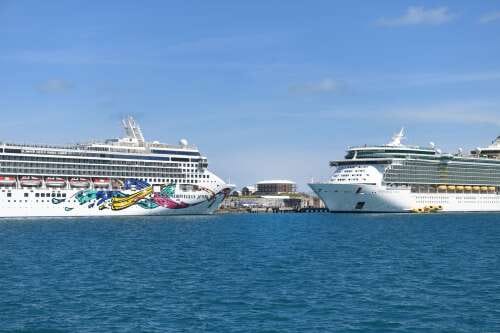
The Boston prosecution involves a Norwegian Jewel crew member
Bobby Prieto, a 35-year-old Philippine citizen employed aboard the Norwegian Jewel, was detained during a late-September call in Boston. Court filings say he had been the subject of approximately 75 reports to a clearinghouse for suspected child sexual exploitation before Customs and Border Protection officers searched him and two cellphones, assisted by Homeland Security Investigations.
Prosecutors allege the phones contained more than 1,200 files of child sexual abuse material. According to the filings, Prieto admitted that one video showed him sexually assaulting a girl who appeared to be no older than eight.
He is charged with transportation of child sexual abuse material and is being held without bail. His attorney declined to comment.
Other removals involved alleged admissions, too. CBP said six Norwegian Breakaway crew members removed on September 20 admitted previously possessing material involving child sexual abuse or exploitation.
Those details matter. The absence of a prosecution does not establish that an allegation was baseless. But the evidence alleged in Prieto’s case cannot stand in for the evidence against everyone else taken off a ship.
Beyond Boston, authorities removed 27 crew members from six ships in San Diego in April. Another 15 employees were removed from ships in San Juan during June and July, with one facing federal prosecution.
Earlier cyber tips drove the searches
Goldworm, the Massachusetts U.S. attorney’s office’s Project Safe Childhood coordinator, said investigators selected workers previously identified in reports to the National Center for Missing & Exploited Children’s CyberTipline.
“These weren’t random employees,” he said. Targeted individuals had been the subject of anywhere from one to more than 70 tips.
The CyberTipline receives reports of suspected exploitation from the public and electronic service providers, then refers them to law enforcement. Reports can include IP addresses, locations and identifying information connected to suspected downloading or trading of abuse material.
Federal authorities receive crew names before ships arrive at U.S. ports, allowing advance checks. Goldworm said agents questioned workers about the tips, examined electronic devices and referred dozens of cases to federal prosecutors for review. Cruise operators were notified of the allegations against employees sent home.
A tip is an investigative lead, not a criminal finding. Where searches turned up no abuse material, the basis for imposing such a lengthy exclusion warrants a clearer explanation.
CBP’s requirements for searching electronic devices at the border vary by search method and jurisdiction. Manual inspections generally do not require a warrant or individualized suspicion. Under CBP policy, advanced searches using external equipment or forensic tools require reasonable suspicion of a legal violation or a national-security concern.
Robert M. Jarvis, a Nova Southeastern University law professor and maritime law expert, said the government has “tremendous authority to search whenever anybody, or any ship, comes to the United States.” Officers can also make arrests based on evidence legally encountered during those searches, he said.
Removal carries consequences beyond the port
Authorities revoked the workers’ conditional landing permits, which allowed them to go ashore while their vessels were in U.S. ports. Those permits are generally documented on Form I-95 under 8 CFR § 252.1. Officials said the revocations left the workers ineligible to apply for U.S. entry for 10 years.
Federal officials maintain that countries can refuse admission to people deemed a safety risk. Jarvis said exclusion, rather than committing the resources required for criminal prosecution, was the government’s principal objective in many of these cases.
That helps explain the operation’s results. It does not settle the concern about workers losing their livelihoods without a criminal adjudication, which labor and immigrants’ rights groups have raised.
Many affected employees are from the Philippines. In a September speech, Senator Risa Hontiveros urged the Philippine government to support maritime workers.
“A person should not lose an entire career simply because an allegation followed him home,” she said, according to Rappler. She argued that protecting children and preserving due process were compatible obligations.
The Philippine Embassy had issued an advisory in July 2025 following an increase in arrests of Filipino ship workers over child sexual abuse material. It warned that consuming such material perpetuates child exploitation.
For cruise lines, cooperating with investigators is an obligation, not a complete answer. Cruise Lines International Association spokesperson Kenny Robinson said member lines “take any allegations of guest or crew criminal activity seriously and cooperate fully with law enforcement investigations.” CLIA did not answer the Globe’s questions about whether members were changing hiring practices to improve screening. Norwegian Cruise Line did not respond to the newspaper’s repeated requests for comment.
“These operations are part of CBP’s efforts to combat child exploitation, protect vulnerable populations, and enforce U.S. immigration laws,” CBP spokesperson Ryan Brissette told the Globe.
Those are legitimate responsibilities. The scrutiny should fall on how they were exercised, especially for workers whose devices contained no abuse material. A 10-year exclusion deserves a fuller public accounting than a count of people removed from ships.