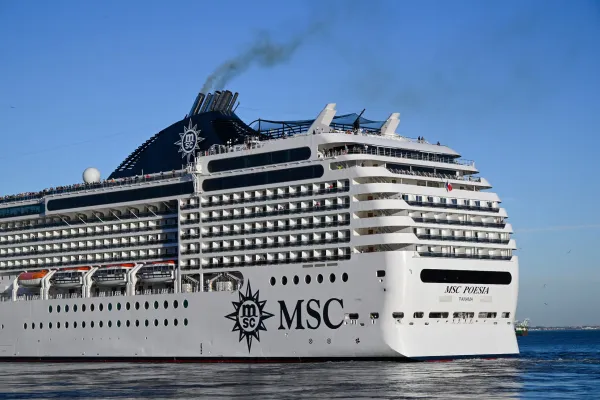
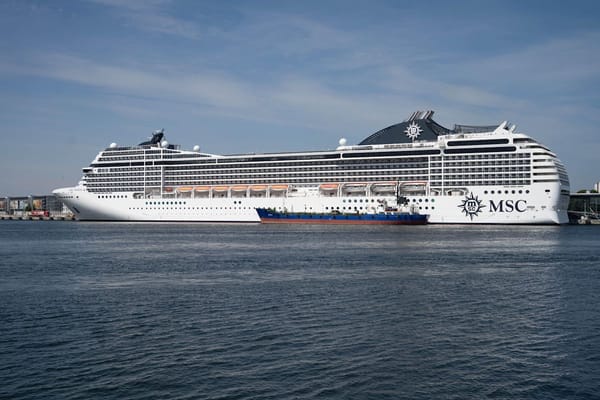
MSC World Asia Offers No Figure for LNG Methane-Slip Reductions
During sea trials, a steam turbine generated approximately 1.5 megawatts from recovered waste heat, equivalent to about 3% of MSC World Asia’s power demand.
MSC World Asia’s Efficiency Pitch Needs a Methane Number
MSC can put a figure on the electricity MSC World Asia recovered from waste heat during sea trials: approximately 1.5 megawatts. Its claim that the ship’s machinery significantly reduces methane slip comes without a disclosed reduction figure. I want that claim to be just as specific.
MSC Cruises took delivery of its 24th ship and third World Class vessel from Chantiers de l’Atlantique in Saint-Nazaire, France, on November 25, 2026. Passenger operations begin December 4 with a seven-night Mediterranean sailing from Barcelona.
A precise design-efficiency score and an unquantified methane claim are different kinds of information. They should not carry equal weight in judging the ship’s environmental performance.
What the efficiency figures actually show
MSC says World Asia has attained an Energy Efficiency Design Index 50% below the International Maritime Organization’s reference value for ships of its type and size. EEDI is a design standard under MARPOL Annex VI. That result does not mean the ship has demonstrated a 50% reduction in total operational greenhouse gas emissions. The distinction matters because the headline number is much easier to remember than the qualification.
The ship combines an optimized hull and thruster arrangement with a friction-reducing hull coating and improvements to propulsion, power generation, cooling and water production. A steam turbine turns recovered heat into electricity. Its approximately 1.5-megawatt output during sea trials was equivalent to about 3% of the vessel’s power demand.
That is a useful, concrete result. It puts a scale on what heat recovery delivers.
The dual-fuel engines can run on LNG or conventional marine fuels, with engines of different capacities allowing power generation to be matched more closely to demand. MSC’s methane-slip claim covers machinery that includes one prototype engine. The company continues to work with engine manufacturers and research partners on further improvements and independent methane-emissions measurements.
Those measurements are the important unfinished business. MSC calls the reduction significant but has not disclosed its size.
The fuel system can also accommodate bio-LNG and synthetic LNG when availability and pricing permit. Shore-power connectivity allows the engines to be switched off at suitably equipped ports. Both qualifications belong in the story: fuel compatibility does not establish fuel use, and a shore connection needs somewhere to plug in.
World Asia brings MSC’s LNG-capable fleet to four vessels. The company used around 7,000 metric tons of mass-balanced liquefied biomethane aboard MSC World Europa in 2025. These fuel and efficiency measures sit within MSC’s Energy Transition Plan, which targets net-zero greenhouse gas emissions from marine operations by 2050.
Onboard additions, from free food stalls to a dry slide
At approximately 216,000 gross tons and 333 meters long, MSC World Asia accommodates up to 6,758 passengers in 2,582 cabins. About 60% of its public venues are new or substantially redesigned, according to Pierfrancesco Vago, Executive Chairman of MSC Group’s Cruise Division.
The ship retains the World Class layout of seven districts, with interiors and attractions drawing on Asian cultures, art and landscapes. Its more than 40 restaurants, bars and lounges include 20 dining venues, covering main restaurants, specialty concepts, buffets and casual outlets.
The additions include a Pan-Asian venue combining a specialty restaurant, bar and complimentary takeaway counter. The poolside Aqua Food Market adds five complimentary food stalls. Eataly also makes its European cruise debut aboard World Asia, following its introduction on MSC World America.
I like the inclusion of complimentary options in that expansion. A new venue is more useful to the whole ship when passengers do not need another dining purchase to try it.
Family facilities include The Clubhouse, revised Luna Park Arena and Harbour areas, and two new LEGO rooms. The Spiral @ Tree of Life stretches 81.3 meters across 12 decks and is described by MSC as the longest dry slide at sea. The Harbour also brings the Cliffhanger overwater swing to Europe, suspending riders approximately 50 meters above the ocean.
Entertainment additions include three World Theatre productions and a new live music show in the Panorama Lounge. Pool areas have been redesigned, and the MSC Aurea Spa has been expanded.
Accommodation includes 144 MSC Yacht Club suites across seven categories. The new Royal Duplex Suite has two bedrooms and space for up to six guests, plus a living area and a private balcony with a whirlpool bath.
A Mediterranean debut and a long shipbuilding commitment
Following the handover, World Asia will sail to Le Havre for its naming ceremony on November 28. Its inaugural winter itinerary includes Marseille, Genoa, Civitavecchia for Rome, Messina and Valletta, with embarkation available at multiple ports.
Naples replaces Civitavecchia from April 2027. The ship will remain in the Western Mediterranean through November before crossing the Atlantic for winter 2027–2028. That season brings seven- and 14-night Southern Caribbean itineraries from Martinique, Guadeloupe and Barbados.
The delivery is Chantiers de l’Atlantique’s 20th to MSC Cruises in a partnership spanning more than 25 years. Construction involved more than 500 French suppliers and over two years of collaboration between the line and shipbuilder. Yard General Manager Laurent Castaing said MSC’s orders had generated more than 100 million hours of work during their relationship.
“Long-term investment in this sector is essential to maintaining Europe’s leading position in the construction of complex vessels,” Vago said at the handover.
The next World Class vessel, MSC World Atlantic, is scheduled for delivery in October 2027 before a November debut from Port Canaveral. Four additional ships in the class are on order at Chantiers de l’Atlantique, extending construction through 2031.
With five more World Class ships to come, publishing independently measured methane results should become part of the delivery brief.