Carnival Cuts Fuel Use 26% Since 2019, Saving Nearly $750 Million
Carnival does not hedge fuel; Chief Executive Josh Weinstein called hedging a short-term fix and said the best way to combat the input cost is to use less of it.
Carnival Is Right to Focus on Burning Less Fuel
Carnival has cut fuel consumption per available lower berth day by 26% since 2019. That is the number I would lead with in its latest earnings update. Artificial intelligence may help deliver the next round of efficiencies, but this is an operating improvement with a measurable value: nearly $750 million at current fuel prices, according to Chief Financial Officer David Bernstein.
The benefit is showing up when Carnival needs it. During Tuesday’s third-quarter earnings call, the company reported more than $150 million in operational improvements since its June guidance, fully offsetting the impact of higher fuel prices. Fuel consumption was three percentage points better than forecast and fell nearly 4% year over year, Bernstein said. The improvements extended beyond fuel: non-fuel unit costs rose 1.8% during the quarter, one percentage point below forecast.
Lower consumption earns its place in the strategy
Carnival does not hedge fuel. CEO Josh Weinstein described hedging as a short-term fix. “The best way you can combat the input cost is to use less of it,” he said.
I like the emphasis on changing how much fuel the business needs. A reduction in consumption is useful whether prices rise or fall. It does not cap the price Carnival pays for the fuel it still burns, so this quarter’s success should not be mistaken for protection against every future increase.
Weinstein credited work on itineraries and technology for the consumption gains, which he said delivered both environmental and financial benefits. Across more than 90 ships and eight cruise brands, that is substantial operational work.
AI joins a cost push already producing results
Carnival is applying AI to commercial systems to support employee decision-making and tailor guest experiences. It is also identifying ways to operate vessels more efficiently and expanding shoreside automation.
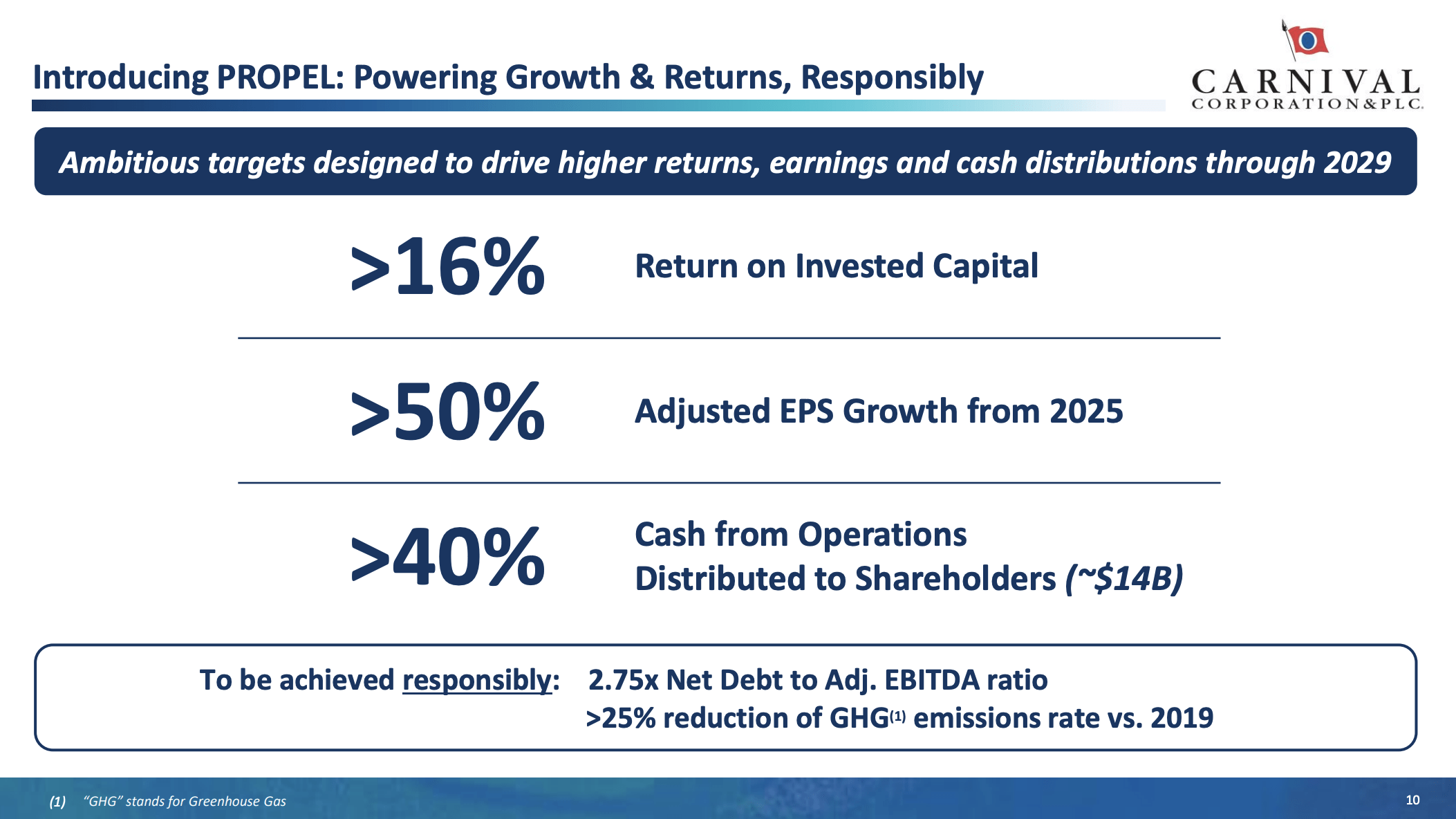
“While it’s still early, we are beginning to capture opportunities embedded in our Propel targets sooner than expected,” Weinstein said. Those targets include increasing adjusted earnings per share by more than 50% by 2029, measured against 2025.
The reported $150 million in operational improvements is not an AI savings figure. Carnival should next show what these newer tools contribute, alongside the consumption gains it can already quantify.
With moderate capacity growth ahead, Weinstein said Carnival would need to draw on its scale and evolving technologies to become more efficient. “Now, if fuel would cooperate, that makes it a hell of a lot easier,” he said. “But clearly, we can’t count on that.”
That is the discipline worth backing. For a company that chooses not to hedge fuel, using less of it cannot be an occasional savings campaign. It has to be part of how the fleet runs.