Analysts Keep Bullish Views on Carnival After Record Q2
Carnival completed a Celebration Key pier extension in early May, allowing as many as four ships and more than 13,000 guests on a given day.
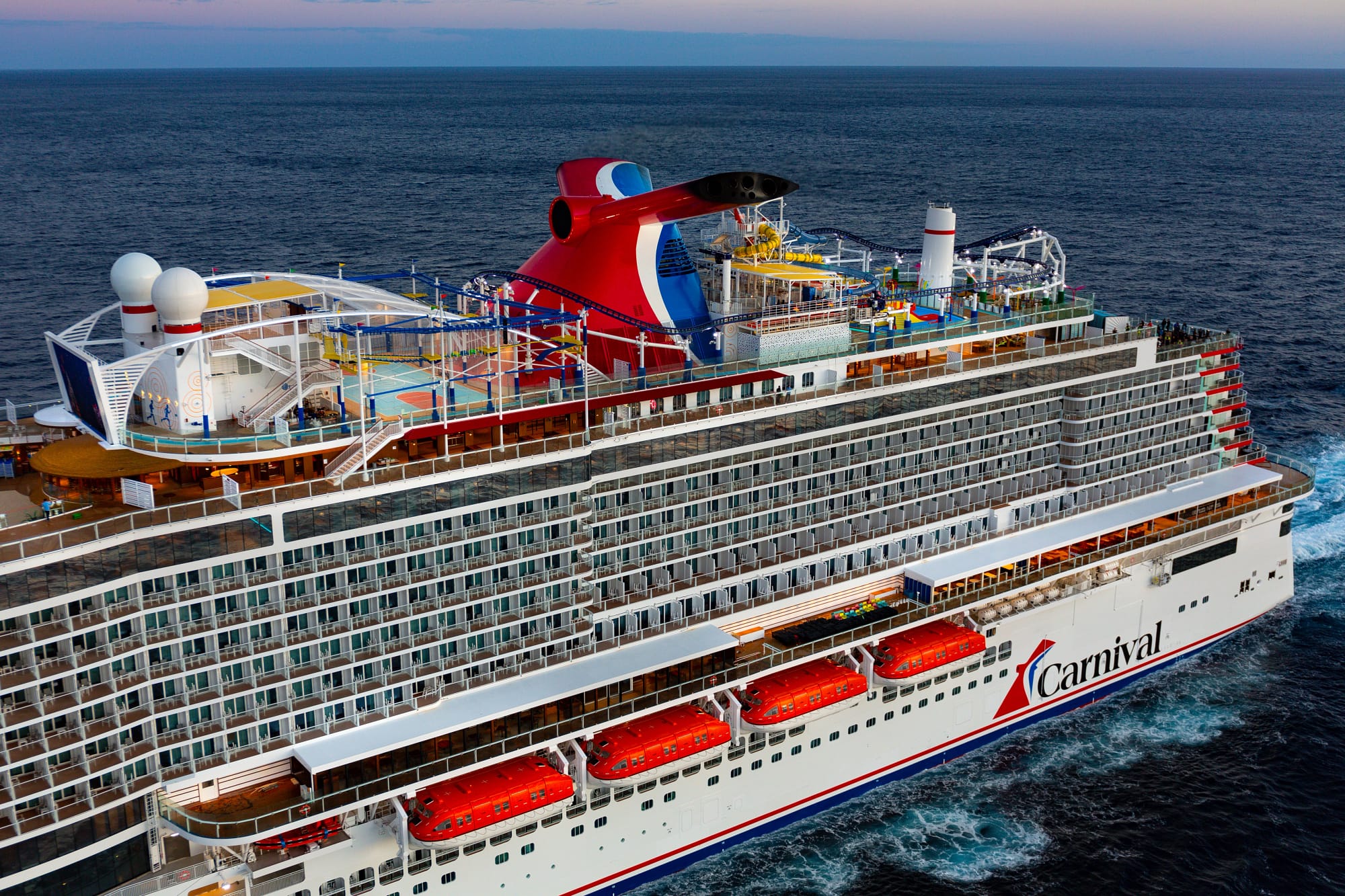
Wall Street analysts remained positive on Carnival Corporation after the company’s second-quarter earnings call Tuesday, with Susquehanna, Jefferies and William Blair keeping buy-equivalent views even after management reduced its yield outlook. The firms pointed to record quarterly performance, high forward bookings and Carnival’s destination strategy as reasons to look past near-term European softness tied to the Middle East conflict.
The stance followed a post-results selloff that left Carnival shares at $28.72. Carnival reported record second-quarter revenue of $6.7 billion, adjusted earnings per share of $0.41 and all-time-high customer deposits of $9 billion, while lowering net yield growth expectations for the remainder of the year to 3.2 percent from a prior projection of better than 4 percent.
Analysts keep buy-equivalent ratings
Susquehanna’s Christopher Stathoulopoulos maintained a Positive rating and lifted his price target to $33 from $30. In a note titled “We Believe Calmer Seas Are Ahead,” he wrote that Carnival’s explanation of the European weakness as temporary was reasonable and cited 2027 bookings at “historic highs” for both price and occupancy.
Jefferies analyst David Katz reiterated a Buy rating and a $35 price target, implying 22 percent upside from the share price cited in his note. Katz wrote that the yield revision did not change his long-term view, citing margin improvement and more than $9 billion of expected free cash flow generation across 2026 and 2027 to fund growth, debt reduction and capital returns.
Katz also noted that Carnival has beaten guidance on net yields, costs, EBITDA and earnings per share in every quarter since the first quarter of 2025, leaving room for the latest outlook to prove conservative. William Blair’s Sharon Zackfia reaffirmed an Outperform rating, treating the European pressure as offset by second-quarter upside and cost savings.
Zackfia said demand trends remained solid and pointed to stronger profit growth visibility in 2027 as Carnival laps higher fuel costs and European softness. She also wrote that Carnival appeared positioned to grow earnings per share by more than 50 percent by 2029 and reach a 16 percent return on invested capital, supported by limited capacity growth through 2033 concentrated at Carnival Cruise Line and AIDA.
Europe remains the near-term pressure point
Carnival executives tied the yield revision primarily to European deployments, especially the Mediterranean. Chief Financial Officer David Bernstein cited “extreme geopolitical volatility and historic low levels of consumer sentiment throughout the quarter,” along with higher crew travel and freight costs connected to the Middle East disruption.
President and CEO Josh Weinstein said the company entered the quarter with both pricing and occupancy advantages in Europe and used much of that occupancy cushion to protect pricing. Carnival remains 93 percent booked for the year, with less remaining inventory than at the same point last year.
“We achieved another quarter of record results,” Weinstein said, citing the company’s twelfth consecutive quarter of record net yields. He also said recent booking trends suggested the European drag was beginning to reverse, with 2027 European bookings up by mid-teen percentages year over year at higher prices.
The issue has not been limited to Carnival. Royal Caribbean Group in April cited softness in Mediterranean and West Coast of Mexico bookings, while Norwegian Cruise Line Holdings also identified Middle East-related pressure; both companies lowered their own net yield growth outlooks.
Destinations and fleet spending support the 2027 case
Stathoulopoulos cited Carnival’s exclusive-destination portfolio, led by Celebration Key, as a longer-term yield driver. Carnival expects more than 9 million guest visits across those destinations in 2027, including about 3.5 million at Celebration Key.
Weinstein said Carnival completed a pier extension at Celebration Key in early May, increasing scheduling flexibility and allowing as many as four ships and more than 13,000 guests on a given day. The Grand Bahama destination was initially designed around two of Carnival’s largest Excel-class ships at once, and management said the expanded pier gives the company more flexibility to mix ship sizes, though not three larger ships on the same day.
AIDA’s Evolution program includes AIDAdiva, AIDAbella and AIDAluna across 2025 and 2026, with cabin, suite, dining and efficiency upgrades; Stathoulopoulos also cited Holland America’s Evolution work as part of the same broader investment theme.
Management’s orderbook totals 10 ships: five for Carnival Cruise Line, two for AIDA and three longer-term ships for Princess Cruises. That compares with a 2024 corporate fleet count of 94 ships across Carnival’s brands.
AIDA has a Celebration Key call scheduled for 2027, and Princess Cruises will also add the destination on select Caribbean itineraries. Weinstein said Carnival expects to discuss possible landside expansion at Celebration Key during the latter half of the decade.