TUI Cruises’ Bio-LNG Savings Depend on Full Lifecycle Accounting
TUI’s newbuild contracts require ships to be five to 10 percent more efficient than their predecessors, with shipyards proving compliance in the first year of operation.
TUI is right to move beyond fossil LNG. The replacement fuel needs scrutiny too
TUI Cruises questioned the environmental benefits of conventional LNG and worked with ports and suppliers to secure bio-LNG instead. That is a decision I can get behind. Fossil LNG remains a fossil fuel, however useful it may be as a starting point for ships capable of using alternatives.
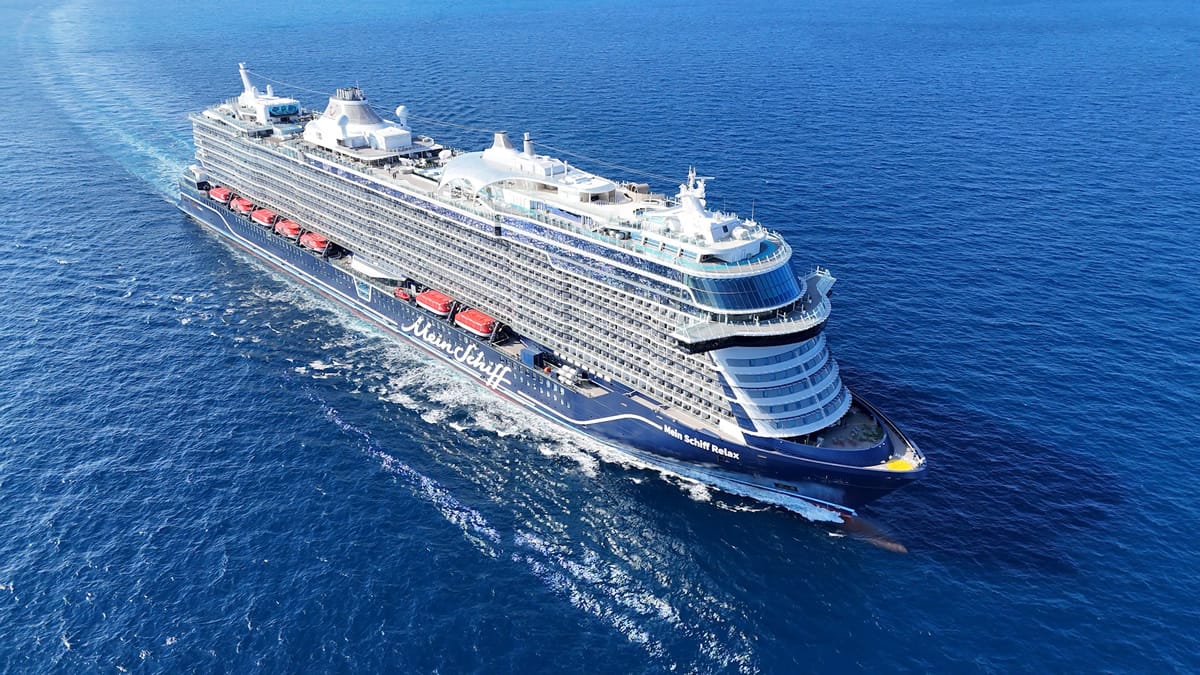
Mein Schiff Relax and Mein Schiff Flow now operate primarily on bio-LNG. TUI expects continued use during Flow’s Northern European winter deployment to reduce annual emissions by about 50,000 tons of CO2 equivalent. The test for that estimate is the fuel’s full production and consumption history. The word “bio” cannot do the accounting.
Relax began using bio-LNG in September 2025 with support from the Port of Barcelona. TUI reports that both new ships used the fuel throughout the summer season, although marine gas oil remains necessary in some circumstances. “Primarily” is an important qualification here. These ships have not eliminated fossil-fuel use.
The feedstock makes a difference
Bio-LNG burns much like fossil LNG. Its principal lifecycle advantage comes from how it is produced, rather than from eliminating exhaust emissions.
Waste- and manure-based production can deliver substantial reductions, particularly when capturing biogas prevents methane from escaping. Crop-based production can offer smaller benefits once cultivation, fertilizer use, land-use change and processing are counted.
Processing energy, methane leakage during production and distribution, and unburned methane released by engines also affect the result. These are material parts of the calculation, not technical details to leave outside an emissions claim.
I would want those production pathways and methane losses at the center of any assessment of TUI’s projected saving. A fuel purchase tells us what a ship is using. Well-to-wake accounting tells us how much that choice helps.
Efficiency requirements have a useful deadline
TUI’s broader emissions program covers nine Mein Schiff vessels and five Hapag-Lloyd Cruises ships. Alongside fuel changes, its newbuild contracts require each ship to be 5 percent to 10 percent more efficient than its predecessor, with higher standards for the latest InTUItion-class vessels.
Shipyards must demonstrate compliance during the vessel’s first year of operation. I like that requirement. It gives an efficiency promise a contractual test and a deadline.
Lucienne Damm, TUI Cruises’ head of sustainability, says the new class consumes less fuel per passenger day than the preceding generation despite its larger size. Relax, the first InTUItion-class ship, measures approximately 160,000 gross tons and accommodates 3,984 guests at double occupancy. The claim is per passenger day, not a reduction in the ship’s total fuel use.
TUI has established an internal fleet-performance department and is developing AI-driven systems to track consumption, support voyage planning and monitor onboard operations. A separate pilot linked fuel-saving targets for captains and engineers to donations for marine-plastic cleanup in Greece.
For Hapag-Lloyd Cruises, TUI is emphasizing efficiency, citing the smaller fleet’s worldwide operations and lower overall carbon footprint. Measures include second-generation biodiesel, route optimization, improved hull coatings and digital consumption tools. Further upgrades are scheduled for upcoming drydocks.
The next fuels still need supply
Green-methanol trials have begun aboard Mein Schiff 7. Damm sees green methanol and e-LNG as potentially significant contributors to TUI’s long-term zero-emission targets, but green methanol remains expensive and production capacity is limited.
She argues that cruise operators cannot build the necessary infrastructure alone and calls for investment from governments, fuel producers and other industry participants. E-methanol production also requires substantial renewable electricity to produce hydrogen and a continuing supply of captured CO2.
With additional InTUItion-class ships planned for 2031 and 2032, TUI has reason to pursue both efficiency and alternative fuels. The immediate achievement is getting bio-LNG into regular service. The harder standard, and the one that deserves to stick, is making every claimed ton of emissions savings stand up from feedstock to exhaust.