St. Petersburg Cruise Expansion Hinges on Passenger Access
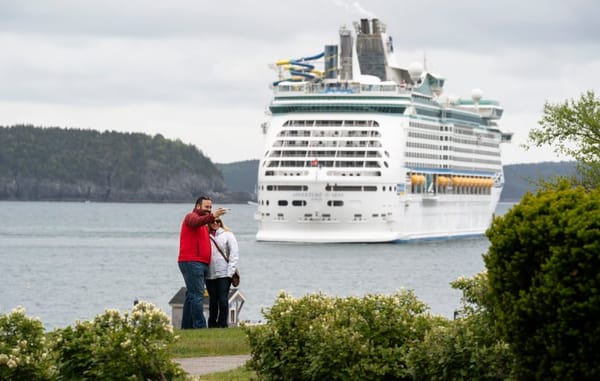
American Cruise Lines is expected to return Nov. 3 for its fourth season, with approximately three ships per week calling at St. Petersburg through April.
St. Petersburg’s Cruise Expansion Needs to Start With Passenger Access
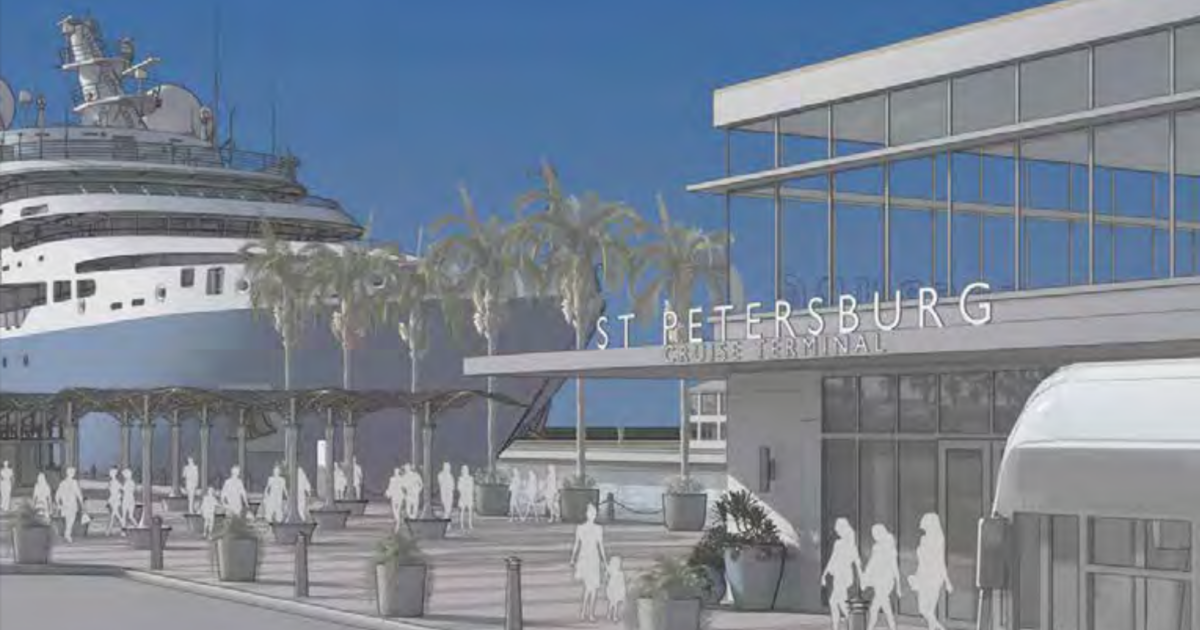
St. Petersburg is considering a 600-foot wharf extension for small cruise ships at a port that already has little room for buses, rideshare vehicles and arriving guests. I’d put solving that access problem ahead of adding more docking space. A small ship still needs a workable arrival.
City Council unanimously approved a new port master plan Thursday that includes a passenger terminal and the possible wharf extension. Cruise facilities are part of an estimated $93 million to $163 million in potential waterfront improvements over the next 10 to 20 years.
The proposals remain conceptual. Council has approved a direction, not committed the city to construction. That leaves time to get the priorities right at a port of only about four acres, where cruise passengers will be sharing space with maritime technology businesses and vessel repair operations.
The plan replaces one adopted in 1999 and focuses on those three uses. The challenge is making them fit together, rather than treating each proposal as though it has the waterfront to itself.
An existing cruise operation, with an existing constraint
American Cruise Lines already operates seasonal voyages from St. Petersburg and has expressed interest in partnering with the city on passenger facilities and additional docking space.
David Wirth, who oversees the city’s marina and port facilities, said the operator is expected back Nov. 3 for its fourth season, with approximately three ships per week through April.
The port, near downtown and the University of South Florida St. Petersburg campus, currently has 1,200 linear feet of wharf and berthing space, as well as passenger and customs-processing facilities. But Wirth identified limited space for buses, rideshare vehicles and arriving passengers as a constraint on expansion.
That deserves more attention than the wharf’s proposed length. A new terminal could improve passenger handling, but the building and the space around it need to work as one operation. Otherwise, the city risks adding capacity at the water’s edge without resolving the squeeze on land.
The other users need water access, too
The Maritime and Defense Technology Hub has its own expansion proposal. Its existing 32,000-square-foot facility opened in 2022, providing space for businesses and researchers developing and testing equipment for uses including coastal monitoring and defense.
A second building, known as Hub 2, would add approximately 50,000 square feet, with large workshops and direct waterfront access on the lower level and offices above.
Alison Barlow, CEO of the St. Petersburg Innovation District, said the hub has drawn interest from the National Oceanic and Atmospheric Administration, U.S. Coast Guard and Department of Defense, among other partners. Being able to launch equipment directly into the water is an advantage for testing, she said.
The marine maintenance and repair proposals could serve research users and commercial boat operators, using cranes or other lifting equipment to bring vessels out of the water. Wirth said the city would likely seek private partners rather than operate a boatyard itself.
These are working-waterfront uses with practical access needs. Councilmember Gina Driscoll pressed that point when she questioned illustrations showing recreational boating facilities and a superyacht marina near the technology hub and its proposed expansion.
Wirth said the illustrations predated the more developed Hub 2 plans. Updating them would have exceeded the planning study’s remaining budget, and a state transportation grant had funded part of the work. The recreational concepts were not city priorities, he said.
“We are certainly not trying to turn the port into a playground,” Driscoll said.
The construction estimate is only a starting point
The $93 million to $163 million construction estimate for the three priorities is below the earlier $150 million to $270 million range for a broader set of proposals. It excludes design, permitting and possible utility improvements, however, and uses current construction prices.
Council Chair Lisset Hanewicz cautioned that costs could rise substantially over the implementation period.
Each project would need its own market and financial studies before the city decides whether to proceed, Wirth said. The updated plan should help the port pursue Florida Department of Transportation funding, while state and federal grants, private investment and partnerships could cover portions of the work.
Those project-level decisions are where the passenger-access problem needs a concrete answer. More wharf is an easily understood measure of expansion. Making room for the people who use it is the less glamorous work that will determine whether the cruise investment earns its place on this waterfront.