Bar Harbor Needs a Landing Deal for Small Cruise Ships
Ells Pier, where American Cruise Lines has permits for vessels carrying no more than 250 passengers, lacks customs facilities for foreign-flagged cruise landings.
Bar Harbor needs a landing deal, not another fight over a small ship
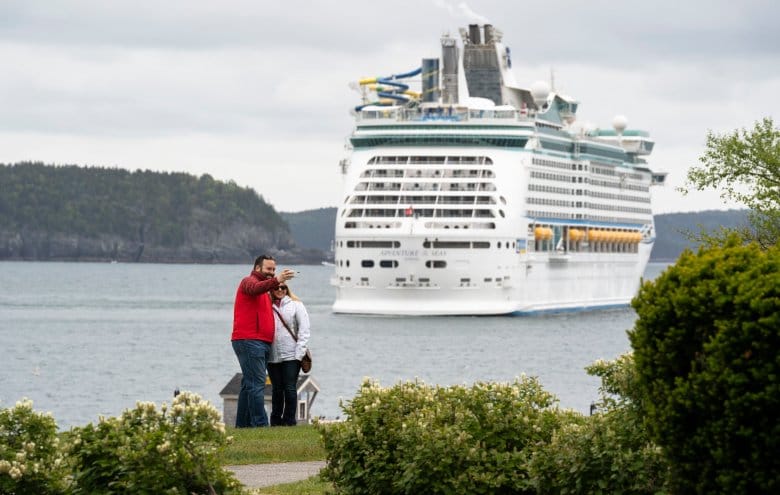
The 228-passenger Scenic Eclipse called at Bar Harbor on October 1, and its passengers came ashore at Golden Anchor’s private waterfront property. The result was another violation notice. The issue cited was a missing disembarkation permit, not a breach of the town’s 1,000-passenger daily ceiling.
That is a frustrating place for this dispute to have reached. I’d put a workable landing agreement for calls of this size ahead of another round of enforcement and appeals. Reducing ship size cannot resolve a disagreement over whether passengers may use the pier at all.
The distinction matters because Chief U.S. District Judge Lance Walker ruled in May that the passenger cap is constitutional and enforceable only during July and August. The October enforcement action concerns a permitting requirement that the town says remains applicable. Golden Anchor disputes that interpretation.
An available anchorage is not permission to land
Bar Harbor cannot berth cruise ships directly. Ships anchor offshore, and tenders bring passengers to waterfront facilities. Before Scenic Eclipse arrived, town staff advised the vessel that no privately owned property held a valid cruise ship disembarkation facility permit.
The town nevertheless identified Anchorage B as available. In its statement about the call, it distinguished the harbormaster’s coordination of anchorage under federal regulations from permission to land passengers ashore. Code Enforcement Officer Michael Gurtler documented the landing at Golden Anchor’s property at 55 West Street and issued the company’s second violation notice.
The Town Council introduced a framework requiring two separate permits in 2024. The private piers overseen by Golden Anchor Operations Manager Eben Salvatore have never applied. Golden Anchor maintains that its longstanding license to receive passengers remains valid and that it should not need the newer authorization.
This is not simply a permit application sitting unanswered on someone’s desk.
“There currently isn't a permit that Golden Anchor could apply for that is constitutional,” Salvatore said, arguing that Walker’s ruling prevents enforcement of the existing requirements outside July and August.
Town Manager James Smith says officials are trying to respect the voter-approved restrictions while protecting other parties’ legal rights. “We believe that there is a need for local regulations for disembarking cruise ship passengers,” he said.
An earlier violation notice, issued during the first enforcement season, has already produced litigation awaiting two separate appeals before the Maine Supreme Judicial Court. Golden Anchor could face substantial fines if that violation is upheld. Its lawyer, Timothy Woodcock, has objected to being drawn into another round of litigation.
A small-ship agreement exists, but it is not a ready-made substitute
American Cruise Lines reached a separate agreement with Bar Harbor and obtained permits to land passengers regularly at a public pier this year. Smith said those vessels carry no more than 250 passengers.
That is a useful example of an arrangement actually getting passengers ashore. It also has an important limitation: town-owned Ells Pier lacks the customs facilities required for foreign-flagged cruise passenger landings. Golden Anchor’s waterfront facility has that infrastructure.
Simply pointing other ships toward the public pier does not solve the problem. A negotiated arrangement involving the private waterfront would address a practical gap that the American Cruise Lines agreement cannot fill.
Nor would such an agreement require pretending that residents never voted for restrictions. They did, and they have defended them.
The 1,000-passenger limit passed in 2022 with 58% support. Businesses sued that year, beginning a federal challenge that has proceeded through a bench trial and an appeal. A repeal proposal failed in 2024 by 1,779 votes to 1,714. The council’s proposed replacement would have allowed a daily ceiling of 3,200 based on lower-berth capacity, along with monthly limits and cruise-free days.
Resident Charles Sidman, who intervened in the federal case to defend the ordinance, has asked Walker to reconsider and amend his May decision. That request remains unresolved. Sidman, a retired scientist who operates a local gallery with his wife, says peak cruise traffic brought congestion, safety problems and difficulties for businesses. He has said he would pursue another citizen initiative if the ordinance is ultimately overturned.
The mandate for limits deserves respect. It does not make an unresolved landing-permit fight a useful way to manage every subsequent call.
Businesses still have to make decisions
The town received 39 calls and 25,485 passengers in 1999, rising to 176 calls and 254,546 passengers in 2019. It recorded 143 vessel calls in 2022.
Scheduled lower-berth capacity later fell from 258,157 in 2023 to 181,926 in 2024, a decline of about 30%. Those are scheduled capacity figures, not counts of passengers who actually disembarked.
The town says calls remain below earlier levels. About a dozen ships with capacity exceeding 3,000 passengers visited this year under reservations made in 2020 that were exempt from the newer restrictions.
For businesses, the uncertainty extends beyond the eventual passenger ceiling. Everal Eaton, executive director of the Bar Harbor Chamber of Commerce, says unclear future passenger volumes complicate staffing and inventory decisions.
Kevin DesVeaux, owner of West Street Cafe, says lunch sales have fallen 30% since 2022 and the restaurant has not been profitable during that period. He is using savings to keep it operating and expects to decide this winter whether to sell or stay open another year.
“Let's sit down in a room and work this out,” Salvatore said. He and Woodcock are urging the town to prepare for cruise visitors in 2027, particularly during the shoulder seasons.
I’d take that invitation seriously. Preparing for 2027 is sensible, but a business deciding this winter whether to remain open needs something more immediate than another court date. That means a landing agreement both sides can use, not a third violation notice.