Galveston Tightens Oversight of Royal Caribbean Terminal Talks
Under the proposed Pier 14 arrangement, Royal Caribbean would build the terminal while Galveston would fill the adjacent slip and finance a passenger parking facility.
Galveston puts overdue guardrails on its fifth cruise terminal talks
Galveston’s trustees were asked in August to approve a second amendment to a memorandum of understanding with Royal Caribbean, despite not having approved the original memorandum or its first amendment. According to Wharves Board of Trustees Chairwoman Sheila Lidstone, that was where her concerns began.
That is a good reason to tighten oversight. On Tuesday, trustees voted unanimously to let negotiations over a fifth cruise terminal continue, but under greater board control. They had considered suspending all written and verbal talks until a comprehensive mobility study could be completed and presented to the board and public.
I back the decision to keep talking. With possible port borrowing and work on city streets in play, close scrutiny belongs at the negotiating table, not just at the final vote.
“We have put constraints around what those negotiations will be, and when they will go forward, and how the board wants to be informed about it,” Lidstone said.
Lidstone, Mayor John Paul Listowski and Trustee Richard Moore had placed the proposed pause on the agenda. Port Director and CEO Rodger Rees confirmed that staff could continue discussions with Royal Caribbean and would report their progress to trustees.
Royal Caribbean would build the terminal. The port still has substantial work.
The proposed Pier 14 arrangement gives Royal Caribbean responsibility for building the terminal. But the port’s side of the project extends well beyond handing over a site.
Under the arrangement described in port documents, Galveston would fill the slip east of Pier 14 and construct a pier and berth capable of accommodating an Icon-class ship. It would also modify Terminal 16 so vessels dock farther west and develop a passenger parking facility. The port would finance the parking project and retain its revenues.
Those obligations deserve as much attention as the terminal building. Listowski said this project would be more complicated than Royal Caribbean’s existing Cruise Terminal 10, with construction costs, potential borrowing and neighborhood traffic among the issues. Any additional port debt would need City Council approval.
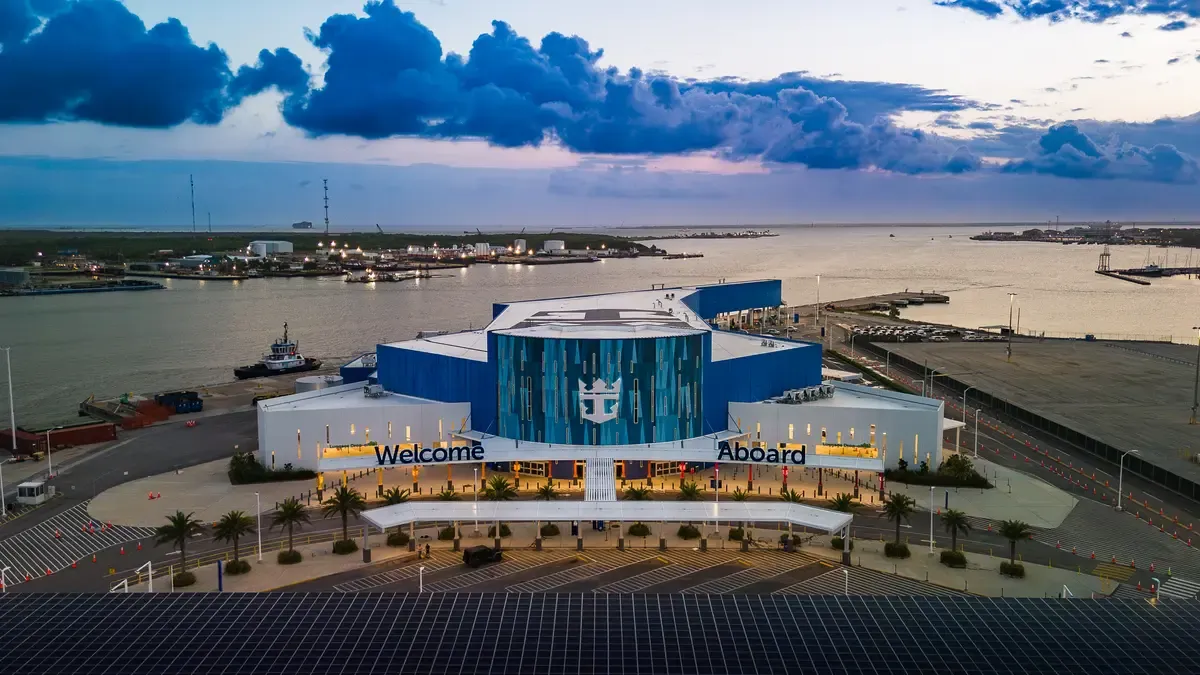
The proposed leasing structure resembles the partners’ agreement for Terminal 10, which opened in November 2022. That $125 million public-private project included the terminal, pier improvements, parking and roadways. A familiar leasing structure, though, does not settle the cost or complexity of this different site.
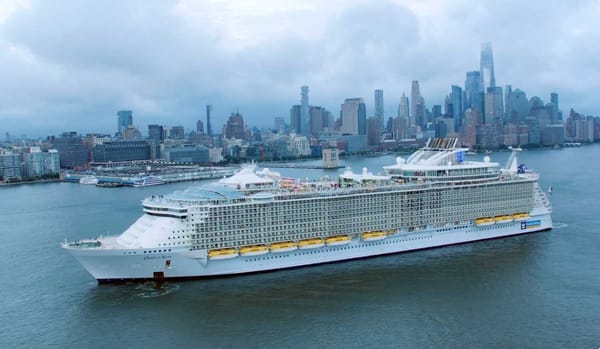
There is also a gap in the dates. The new facility is intended to accommodate Icon of the Seas, which carries 5,610 passengers at double occupancy and is scheduled to begin sailing from Texas in August 2027. The earliest opening identified for the proposed terminal is 2030. This terminal proposal should not be confused with the arrangements for Icon’s initial arrival.
A final development agreement would establish financing, construction and operating responsibilities for the terminal and berth. A draft operating agreement would then go to trustees for approval. Royal Caribbean had not responded to Chron’s request for comment on the proposed agreement.
The port’s updated master plan puts the terminal within a broader commercial redevelopment involving hotels, retail, green space and multifamily housing. Listowski said his questions about the implications of an exclusive agreement with Royal Caribbean were answered during the board’s discussions.
The roads need to be part of the decision
Trustees want the mobility study to identify what transportation improvements another terminal could require and what those improvements might cost. The review extends beyond the immediate terminal area. Listowski said Texas Department of Transportation construction had contributed to delays in completing it.
Lidstone cited cruise traffic along Harborside Drive and in Galveston’s East End, where vehicles increasingly use 14th and 16th streets as through routes. Depending on the study’s recommendations, the response could involve traffic signals, revised lane configurations or other work on city-controlled infrastructure.
I would want those answers before committing to another terminal. A berth that can handle an Icon-class ship answers only one part of the capacity question. The streets carrying its passengers matter too.
Galveston recorded more than 380 cruise sailings and approximately 1.7 million cruise guests in 2024. It now has four terminals, including Terminal 16, a converted cargo warehouse that opened in 2025 for MSC Cruises and Norwegian Cruise Line.
Lidstone said the board was not opposed to a fifth terminal, but needed to determine whether the port could finance it and safely accommodate more passengers and vehicles. She also cited the Covid-19 disruption as a reason to consider cruise industry volatility before taking on further borrowing.
An economic impact study cited by Galveston Wharves projects 1,500 jobs, $91.5 million in personal income, $278 million in direct business revenue and $7.9 million in state and local taxes from a fifth terminal. The port attributes more than 4,547 area jobs and $733 million in business revenues to its existing cruise operations.
Residents can give feedback on the port’s mobility projects Thursday from 5 to 6:30 p.m. at Cruise Terminal 16, 1602 Harborside Drive. Port officials will answer questions and gather comments, with a presentation scheduled for 5:30 p.m.
The economic projections make a case for pursuing the project. The next number trustees need is what Galveston would have to spend to make that growth work.
See cruises departing Galveston on Cruise Lookup.