Vancouver Cruise Growth Highlights Canada Place Shore-Power Gap
About 80 percent of Vancouver’s annual cruise calls involve shore-power-equipped ships, but Canada Place can connect only two vessels at once when three or four are alongside.
Vancouver’s cruise records make its shore-power bottleneck harder to ignore
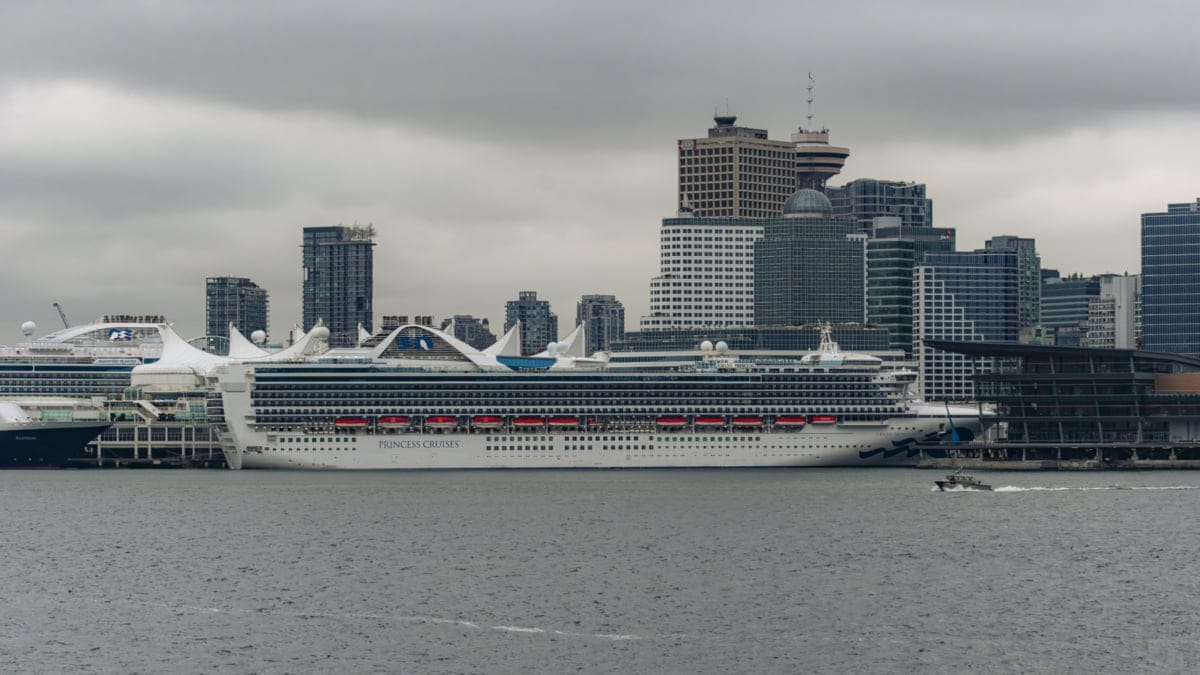
Canada Place can have three or four cruise ships alongside, but only two can connect to shore power at the same time. For a port that just handled nearly 1.4 million passenger visits and expects more growth next year, that is a capacity gap worth fixing quickly.
I’d put the planned shore-power expansion ahead of the next passenger milestone. About 80% of Vancouver’s annual cruise calls involve ships equipped to plug in, according to the port authority. Having the equipment aboard is only useful when the terminal can supply the electricity.
Vancouver closed its busiest cruise season on record in 2026, with 358 calls at Canada Place. Passenger visits rose 18% from approximately 1.2 million in 2025, while calls increased 19% from 300. Both figures also surpassed the previous records from 2024, when the port handled roughly 1.32 million visits and 327 calls.
Norwegian Cruise Line’s Norwegian Encore ended the February-to-October season when it departed early October 13 on a six-night Pacific Coast voyage to Los Angeles. July alone accounted for more than 290,000 passenger visits, the terminal’s highest monthly total.
The spending case is substantial
Most ships use Canada Place to begin or end Alaska voyages, bringing work for suppliers providing food, fuel, repairs and other vessel services, alongside passenger spending.
The Vancouver Fraser Port Authority estimates that each call generates an average of C$3 million in economic activity. Jeff Scott, its vice president of operations and supply chain, said the season injected more than C$1 billion into the local economy.
The Pacific Rim Cruise Association’s latest passenger survey gives a more useful picture than the headline total alone. It found that 76% of passengers spent additional time in Vancouver before or after their cruise, up from 70% in 2023. Average local spending reached C$1,144 per passenger across accommodation, dining, shopping, tours and attractions.
Passengers stayed an average of 1.4 nights outside their cruise, rising to 2.6 nights for visitors from outside North America. That is business extending beyond a transfer between the airport and the pier.
Akari Minamihama, manager of nearby Snowggle Gifts, said: “Every time, I check how many cruises are coming and how many passengers are expected.”
More operators, bigger ships and another increase ahead
Canada Place marked its 40th year as an Alaska cruise homeport in 2026, having supported more than 10,000 sailings since 1986.
Virgin Voyages and The Ritz-Carlton Yacht Collection made their Vancouver debuts with Brilliant Lady and Luminara, respectively. Disney Magic visited for the first time and homeported throughout the season alongside Disney Wonder.
Princess Cruises’ 177,882-gross-ton Star Princess became the largest vessel by tonnage to visit Canada Place on September 27. Its arrival and departure were timed around low tide to clear the Lions Gate Bridge. Even a record-breaking visit has to work within the port’s physical limits.
Both Disney ships are scheduled to return in 2027, along with Brilliant Lady and Luminara. The preliminary calendar includes 10 Luminara calls.
Chance McKee, the port authority’s senior trade development representative, projects another 7% increase in both passenger visits and ship calls next year, although full-season forecast totals have not been released. The preliminary schedule opens March 24 with Europa, builds to almost daily calls from late April through early October, and closes October 8 with Ovation of the Seas.
The terminal investment that needs to deliver
Vancouver has already made progress on passenger processing. The port authority reports average embarkation times below 30 minutes since facial biometric screening began in 2024. Introduced with U.S. Customs and Border Protection for passengers requiring U.S. admission, the system cut border-control processing from roughly two to three minutes to about 10 seconds.
New elevators are also being added at passenger arrival points. Those are useful improvements, but the shore-power work addresses a different constraint: what ships can switch off once they are tied up.
Work on the Canada Place Shore Power Expansion Project is scheduled to begin in the coming months, with completion planned for 2027. It will add two connection stations, bringing the total to five and increasing capacity by 35%.
The port authority expects the additional capacity to prevent approximately 3,300 tonnes of greenhouse gas emissions each cruise season by allowing more ships to shut down auxiliary engines while berthed.
McKee noted that a shore-power-equipped ship does not necessarily connect on every visit. I’d judge the expansion by how many more ships actually plug in.
See cruises departing Vancouver on Cruise Lookup.