Two-Year Cruise Planning Window Puts Focus on Port Crowds
Cruise Lines International Association says itineraries are generally planned at least two years ahead, giving destinations time to prepare for schedules, passenger volumes and excursions.
Cruise’s growth targets need a port plan, not just more ships
Cruise itineraries are generally planned at least two years ahead, according to Cruise Lines International Association president and chief executive officer Bud Darr. That is a useful head start. I’d put what operators and destinations do with it near the top of any discussion about cruise growth, because ordering another ship does not settle how its passengers will move through a port.
There is plenty of expansion to plan for. Pune-based Maximize Market Research projects the global cruise market will reach $38.48 billion by 2034, nearly double its estimated $19.41 billion value in 2025. The forecast, released October 5, 2026, anticipates compound annual growth of 7.9% over 2026–2034.
The ship investment is substantial. Darr cited a current CLIA ocean-going fleet of 327 ships and an order book of 86 vessels representing $98 billion in investment. Separately, MMR counted 310 ocean-going ships operating in 2025 and a pipeline of nearly 80 vessels across ocean, expedition and river cruising through 2036. The two counts cover different scopes and timeframes.
Darr linked that expansion to infrastructure and visitor management. “Our members take community concerns seriously and are very willing to find solutions,” he said, “but we need the same commitment from the ports, destinations and policymakers.”
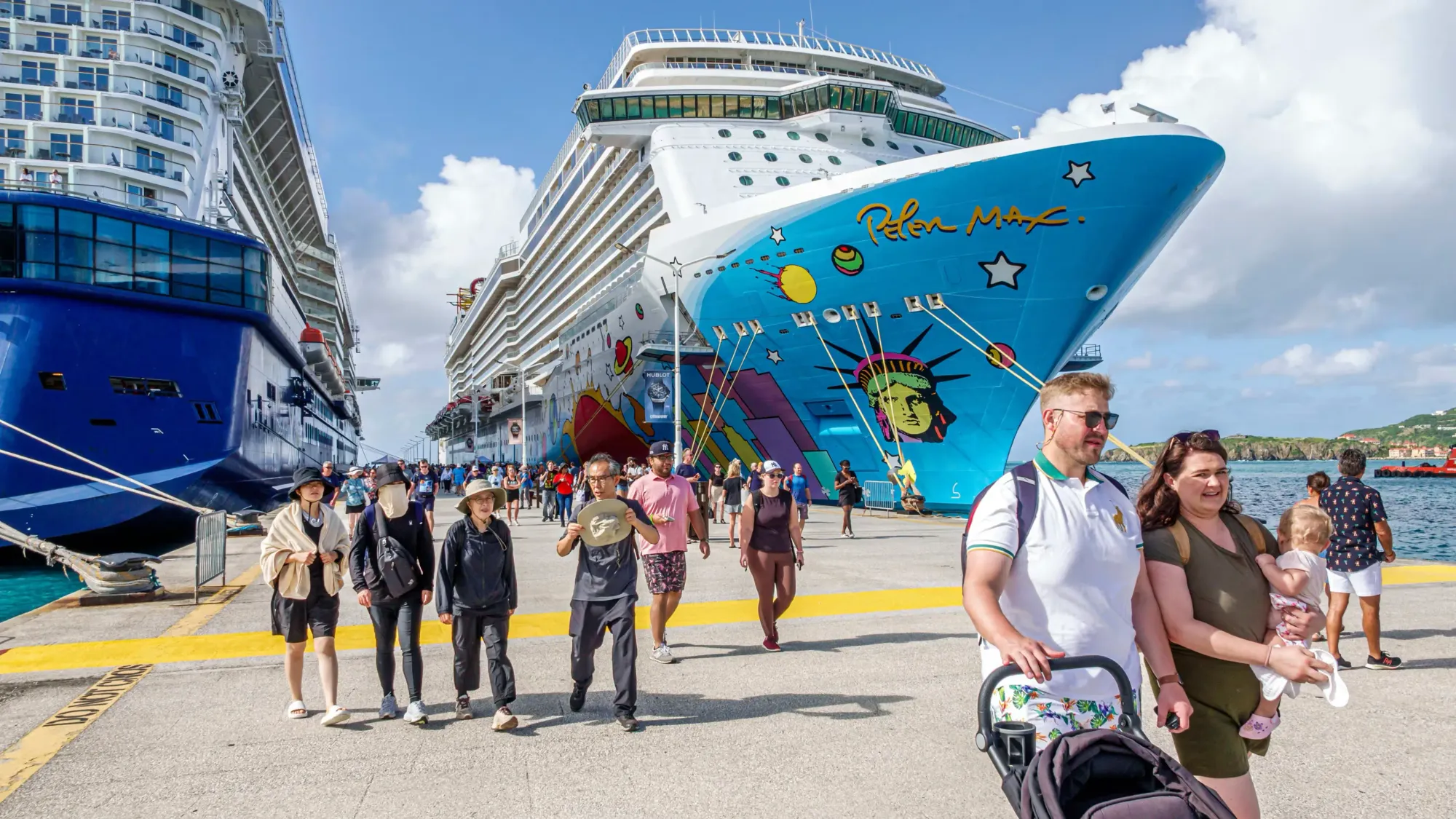
That is a fair request. But cooperation needs to produce something more concrete than agreement that growth is coming. The useful decisions concern when ships arrive, where excursions go and how many visitors reach the same attraction at the same time.
A large market with several routes to growth
MMR estimates ocean cruise traffic reached approximately 37.2 million passengers in 2025, up 7.5% from 2024. CLIA’s separate 2026 State of the Cruise Industry Report puts the total slightly higher, at 37.3 million, compared with 34.6 million the previous year.
North America supplied more than 22 million travelers, according to MMR, while the Caribbean received more than 16 million cruise passengers. This is already a high-volume business, before the next wave of ships arrives.
MMR attributes future expansion to first-time cruisers, multigenerational vacations, luxury and expedition travel, and additional capacity. It estimates that travelers younger than 40 accounted for about 35% of ocean cruise passengers in 2025.
Mainstream ships remain the largest segment in its analysis, with approximately 50%–55% of the 2025 market. Premium ships represented roughly 30%–32%, and luxury vessels about 15%. MMR links mainstream demand to pricing, capacity, family itineraries and onboard entertainment, while identifying personalized service and expedition travel as drivers for luxury products.
Ships that carry more than 1,500 passengers remain a focus of operator investment, the firm says. Smaller and medium-sized vessels serve luxury, river, expedition and destination-focused markets.
MMR identifies Asia-Pacific and the Middle East as growth opportunities, pointing to Dubai’s development as a cruise hub and contributions from China, Japan and Australia. Disney Adventure began operating from Singapore in March 2026 as Disney Cruise Line’s first Asia-homeported ship, adding family cruise capacity in Southeast Asia.
Mediterranean and Northern European itineraries remain important to the forecast, supported by cultural tourism and premium travel demand. The analysis also cites Royal Caribbean Group’s announced expansion of Celebrity’s river fleet, Norwegian Cruise Line’s introduction of Norwegian Luna and Viking’s addition of Viking Mira to its ocean offering.
Use the lead time to change the port day
Darr says advance itinerary planning gives destinations time to prepare for ship schedules, passenger volumes and likely excursion demand. Measures already in use include off-peak calls, staggered arrivals and departures, visits to major attractions during quieter periods, and excursions to less-visited locations.
I’d rather see that practical work become central to the growth discussion than hear another round of passenger targets. Staggering calls can change how a day unfolds ashore. A larger annual total tells a destination much less about what it needs to handle on a particular morning.
MMR also identifies fuel-flexible vessels, shore-power readiness, wastewater treatment and energy-efficiency technology among operator priorities, alongside mobile applications and personalized digital services. Darr said 28 ships in CLIA’s ocean-going fleet have dual-fuel engines, with another 47 in the global order book, as operators pursue the industry’s 2050 net-zero carbon emissions target.
CLIA says nearly 90% of passengers who cruised in 2025 intend to sail again and forecasts annual passenger volume of 42 million in 2029. That makes destination planning part of delivering the product, not a courtesy attached to fleet expansion.
The two-year window is valuable only if it changes decisions. Its best use is to agree on workable port days before an itinerary goes on sale, rather than leave destinations to manage the consequences after the calls are fixed.