TUI River Cruise Refund Rule Draws Criticism Over Coach Transfers
In June, Viking's Amsterdam-to-Basel Rhine Getaway guests took a five-hour coach from Koblenz to Strasbourg, where they joined a sister ship.
TUI’s coach-transfer refund rule asks too much of river cruise passengers
Richard Pearson says he spent 14 to 15 hours on buses, excluding waiting time, during a week-long river cruise holiday costing £3,300. TUI’s published terms say refunds are unavailable when an itinerary can be completed by coach.
That is a poor test of whether a river cruise has been delivered. I’d want passengers offered a refund option when substantial sailing time is replaced by road travel. Visiting the advertised cities matters, but so does travelling between them on the river.
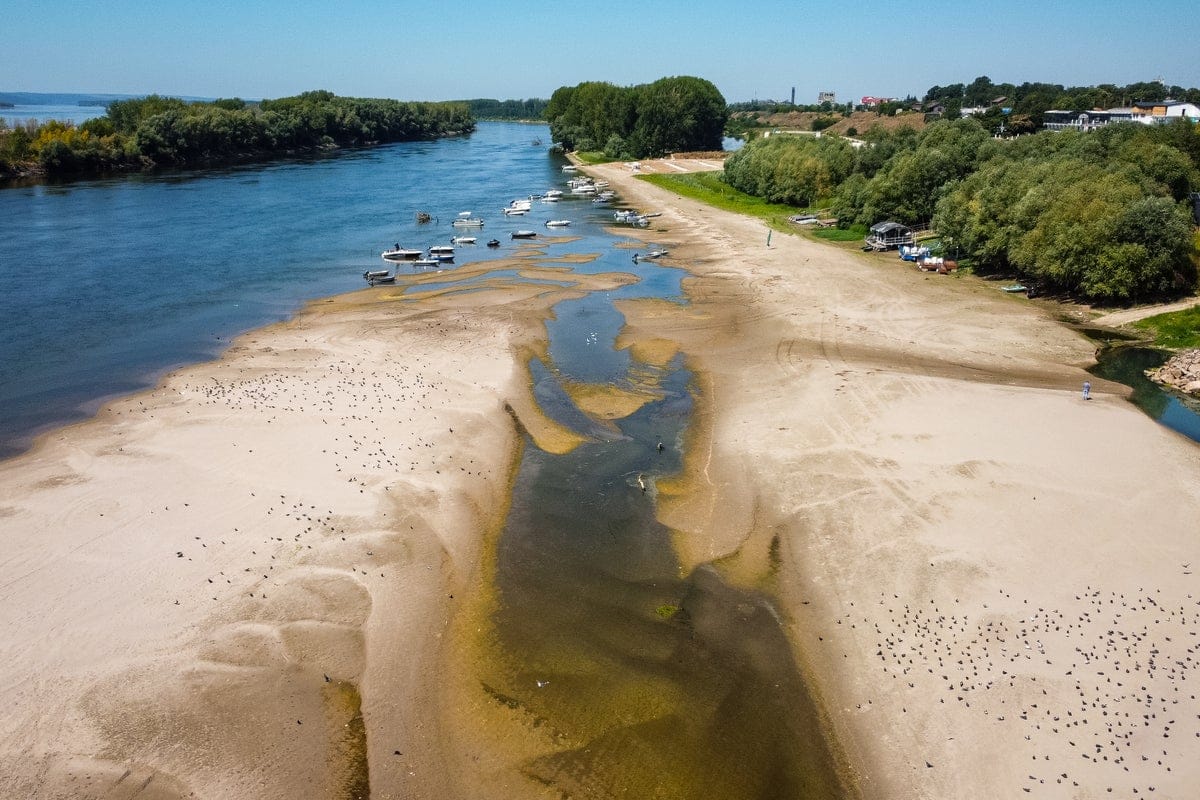
Persistent low water on the Danube and Rhine is forcing operators to cancel departures, reroute ships and arrange coach transfers and hotel stays into autumn 2026. Insufficient rainfall after summer droughts and heatwaves has prolonged the disruption. Operators cannot fix the rivers. They do have choices about what they ask passengers to accept.
The destinations survived. Much of the sailing did not.
Passengers on TUI Isla’s September 14 and 21 departures were among those affected. Pearson, whose holiday began on September 21, told the BBC he arrived in Budapest to find the ship was in Vienna and unable to reach the embarkation port.
Passengers stayed in a hotel before a four-hour coach transfer to the vessel the following day. Pearson said the ship subsequently remained in Krems for several days, with excursions operated by coach. He praised the food and onboard staff but said: “It wasn’t a river cruise.” He is seeking a partial refund.
Sue Crosby, who travelled on the earlier departure, said she requested a refund after receiving the revised itinerary and was refused. She and her husband travelled reluctantly, and she said further schedule changes followed during the holiday.
TUI said revised itineraries were sent before travel and that alternative arrangements preserved visits to destinations including Budapest, Vienna and Bratislava. It apologised that some customers had not received the river cruise experience they expected.
The company said each sailing was assessed with its nautical partners. Hotels, coach transfers and other adjustments were arranged to reduce transfer times. It maintained that the holidays continued under its standard booking conditions, which allow changes before or during a cruise.
Advance notice is useful. But Crosby’s account exposes the weakness in treating notification as sufficient. Being told about a replacement is different from being given a meaningful choice over it.
Riviera has drawn a line on what it can deliver
Riviera Travel has revised nine Rhine departures and cancelled three Danube departures in October. James Golding, its chief guest experience officer, told The Independent this had been “an unprecedented year for low water on parts of Europe’s rivers.” He said the Danube cancellations followed a judgment that the company could not deliver its expected guest experience.
That is the judgment I’d rather see an operator make than preserve a departure at almost any cost. Cancellation is disruptive, but there is a point at which keeping the holiday running leaves passengers with too little of what they booked.
Riviera’s Rhine changes show that rerouting can also preserve a river-based holiday. Restrictions through the Rhine Gorge led it to replace southern destinations including Rüdesheim, Speyer, Strasbourg and Breisach with a route incorporating the Moselle. Alternative calls included Cochem, Bernkastel, Trier and Koblenz. Guests on substantially changed itineraries received future travel vouchers.
The company has also sent head-office staff onto affected sailings where needed and said passengers were receiving daily updates. Its new Holiday Guarantee provides personal contact and choices when significant changes are necessary. Golding said those choices include moving the holiday or cancelling for a refund.
Ship swaps offer another way to keep passengers sailing beyond an affected stretch. Viking and Riviera both use them. In June, passengers on Viking’s Amsterdam-to-Basel Rhine Getaway spent 24 hours aboard in Koblenz before a five-hour coach journey to Strasbourg to join another vessel.
Viking said identical sister ships operate the same routes in opposite directions, allowing guests and luggage to transfer to corresponding staterooms beyond a restricted section. Five hours on a coach is hardly welcome, but a transfer that restarts the cruise serves a different purpose from repeated road excursions from a stationary ship.
AmaWaterways’ Jamie Loizou told The Independent that ship deployment is generally planned two years ahead, with spare vessels available when required. He said additional coach and hotel costs would not be passed on to clients. Uniworld said its teams were coordinating with local authorities and regional partners, while its France, Italy and Portugal sailings continued as scheduled.
What the water levels and booking terms actually mean
Budapest has been a particular difficulty. Chris Pitchford, founder of the World of Cruising research site, told The Independent that ships were struggling to dock there. Some passengers have started at nearby ports with higher water levels or stayed in Budapest hotels before transferring to their ships.
In August, Danube levels around Budapest approached historic lows, while levels in Romania fell to their lowest since 1996. But there is no single gauge reading that determines whether the entire river is navigable. Fairway depth is generally targeted at 2.5 metres at the locally defined Low Navigable Water Level.
The Rhine likewise has no universal low-water threshold that automatically stops all navigation. Gauge readings are not the same as available channel depth, and the vessel’s master determines whether passage is safe.
For passengers, cancelled sailings typically result in a refund or rebooking credit. Changes during a holiday may fall within booking conditions. Insurance may cover missed prepaid activities or onward flights, and some policies specifically cover insufficient or excessive river levels.
Jacqueline Mondelli, chief marketing officer at insurance platform Squaremouth, said protection differs between cruise operators, standard travel insurance and cruise-specific policies. Water-level cover depends on the policy purchased.
Those details deserve checking before departure. But they do not settle the product question at the centre of these complaints. The ability to reach Vienna by road is a poor measure of whether someone has received the river cruise they bought.