Tanker Strikes Docked American Heritage, Capsizing Riverboat
About 87 passengers reached shore before American Heritage capsized, while American Cruise Lines said Captain Leonard Stewart remained on the bridge to request assistance.
Updated November 23, 2026
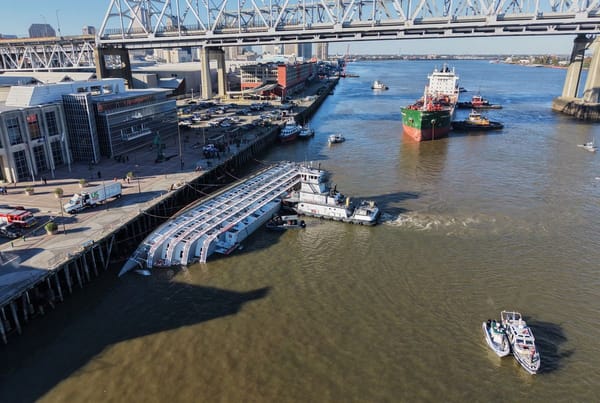
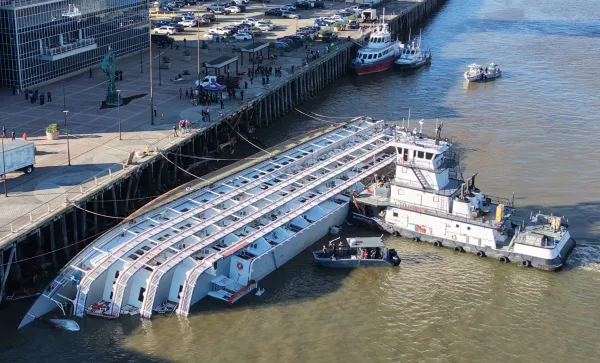
All passengers and crew survived after the tanker Atlantic Asphalt struck American Cruise Lines’ docked American Heritage in New Orleans at about 12:30 p.m. on Friday, November 13. The collision sent people into the Mississippi River as the paddlewheeler capsized. Thirty-two people were taken to hospitals, officials said.
The riverboat was completing an eight-day cruise through Louisiana and Mississippi and had docked about two hours earlier for disembarkation. The National Transportation Safety Board said it capsized approximately 22 minutes after impact, while evacuation and rescue efforts were still underway.
The hospitalized group included 30 passengers and two Harbor Police officers. Officials initially reported no critical injuries. By Monday, November 16, four people remained hospitalized, including one in serious condition and three in stable condition, according to New Orleans officials. The two Harbor Police officers were subsequently released. No injuries were reported aboard the tanker.
U.S. Coast Guard Captain Melanie Burnham, chief of Sector New Orleans, initially identified a possible steering failure aboard Atlantic Asphalt. “The exact reason why, we don’t know that,” she said at Friday’s briefing.
Rescuers worked as the riverboat overturned
Later investigative figures put the number aboard American Heritage at 140 passengers and 50 crew members. Atlantic Asphalt carried 19 crew members. Mayor Helena Moreno said no children were aboard the riverboat.
New Orleans Harbor Police Chief Melanie Montroll said about 87 passengers got ashore before the riverboat capsized. Two of her officers had boarded to assist with the evacuation. New Orleans Fire Department Superintendent Roman Nelson said two firefighters also went aboard before the vessel overturned. They then continued rescuing people from the water.
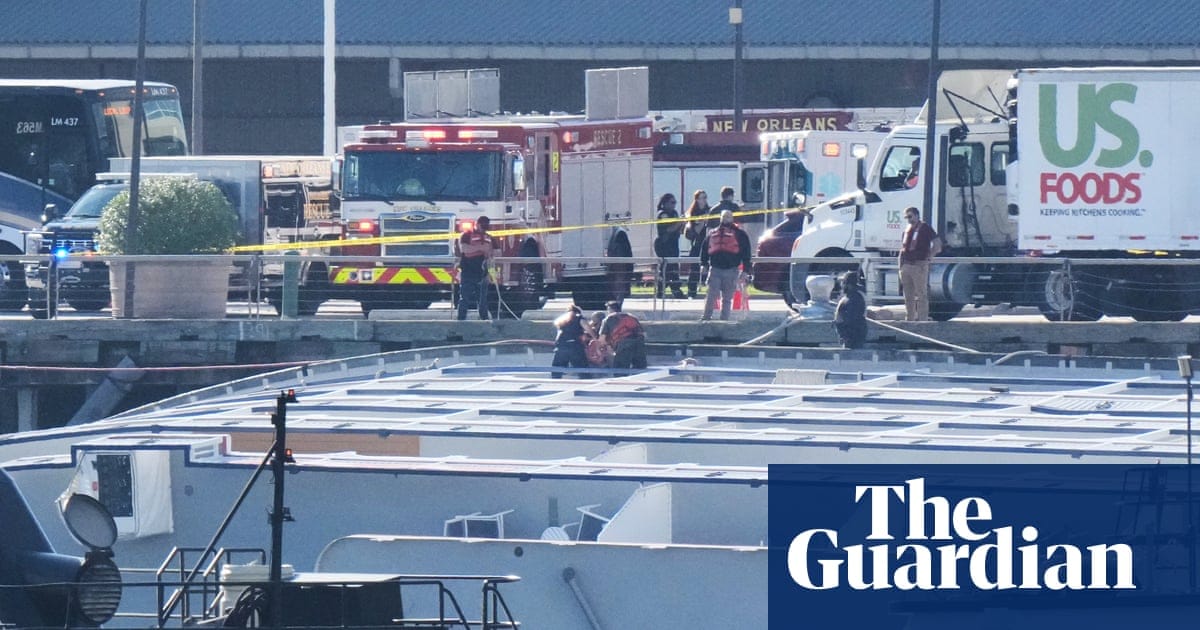
Tugboat crews, nearby vessels and workers joined Harbor Police, city police, firefighters and Coast Guard boat and helicopter personnel in the response. Video showed rescuers pulling people wearing lifejackets or holding flotation rings from the river. Moreno called the outcome a “miracle on the Mississippi.”
American Cruise Lines credited Captain Leonard Stewart and the crew with acting quickly to evacuate the vessel. The operator said Stewart stayed on the bridge as the ship capsized, requesting assistance and keeping it alongside the dock as long as possible. Moreno said Saturday that the captain was injured but declined treatment until everyone aboard had been accounted for.
Survivors were brought to the Port of New Orleans Administration Building for medical assessments and assistance. Many had lost identification and phones, along with keys and prescription medication. That complicated their onward travel and contact with relatives.
Louisiana Lieutenant Governor Billy Nungesser said 85 hotel rooms had been secured for affected passengers. American Cruise Lines worked to settle guests into hotels. City officials and partner organizations arranged food and transportation, as well as access to medication. Louisiana State Police assisted travelers needing replacement identification.
River reopens around a restricted wreck site
The Coast Guard initially closed the Mississippi between mile markers 93 and 96 for the emergency response. By Saturday, the river had reopened to traffic, with a 500-foot safety zone around American Heritage, Coast Guard public affairs officer Rachel Ault said. Regional Transit Authority ferry service also resumed after a precautionary suspension.
Built in 2015 by Chesapeake Shipbuilding in Salisbury, Maryland, the approximately 300-foot American Heritage accommodates up to 150 guests in 84 staterooms. The paddlewheeler previously sailed as Queen of the Mississippi.
Steering problem remains under investigation
Atlantic Asphalt is approximately 160 meters long, with a deadweight of 17,764 metric tons, and sails under the Marshall Islands flag. The asphalt and bitumen tanker is registered to Liberia-based Nave Shipping SA. Singapore-based Thome Ship Management oversees its technical, maintenance and safety operations. Whether it was carrying cargo at the time of the collision was not immediately clear.
A pilot from the New Orleans-Baton Rouge Steamship Pilots Association was aboard Atlantic Asphalt and had boarded about 30 minutes before the collision, according to a river pilot with direct knowledge of the situation.
State transportation engineers determined that Atlantic Asphalt did not strike the Crescent City Connection bridge before hitting American Heritage. Preliminary investigative information indicates that the tanker’s rudder remained turned to starboard, sending it toward the river’s east bank and the docked cruise ship. The cause of the steering problem has not been established.
Investigators recovered the tanker’s voyage data recorder and reviewed bridge audio and vessel-movement information. The recordings included sounds consistent with whistle signals and radio warnings, along with requests for assistance, anchor commands and emergency handling orders.
Friday’s nationwide aviation ground stop disrupted the NTSB’s travel to the site. The agency subsequently arranged for investigators to travel to New Orleans by road and canceled a board member’s planned attendance.
The Coast Guard is assessing the damaged riverboat and planning salvage work. American Cruise Lines is cooperating with the authorities. The NTSB expects to issue a preliminary report within about 30 days.