Coast Guard Prepares Fuel Removal From Capsized American Heritage
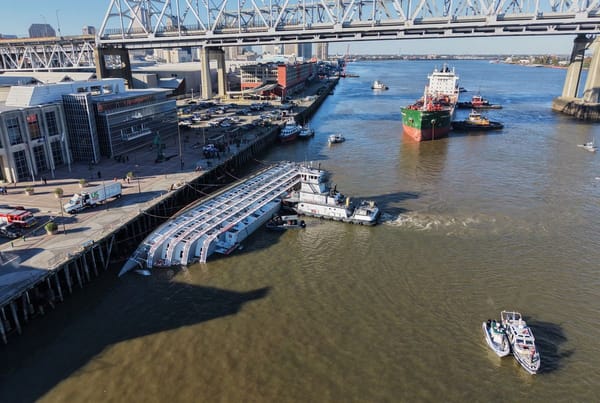
American Heritage remained on its side as crews prepared to remove 16,000 gallons of fuel from the vessel before a recovery the Coast Guard said could take weeks.
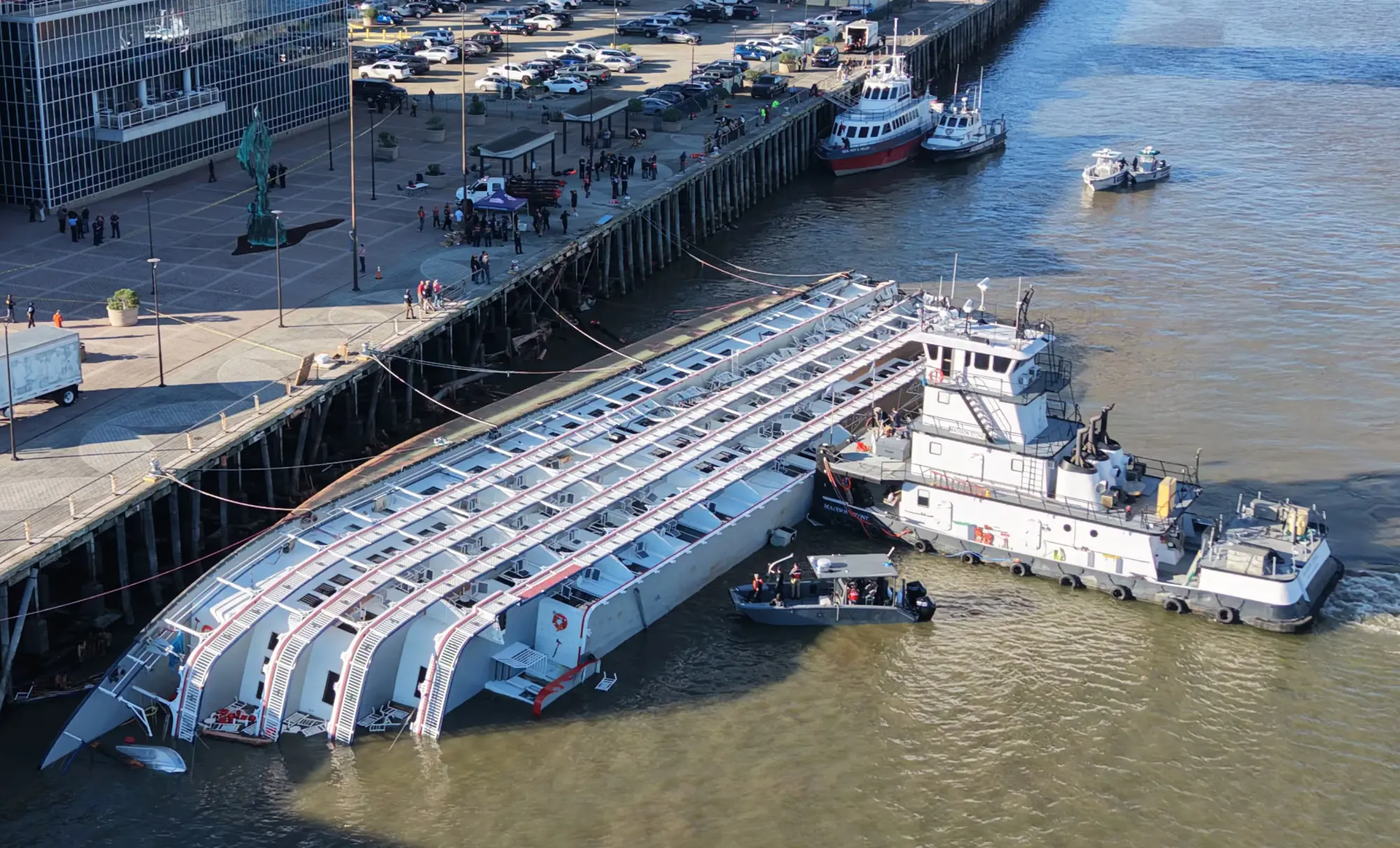
A tanker struck and capsized American Cruise Lines’ docked American Heritage on the Mississippi River in New Orleans on Friday. At least 180 passengers and crew were rescued. Thirty-two people were taken to hospitals, with no deaths or initially reported critical injuries, New Orleans Mayor Helena Moreno said.
Four people remained hospitalized Monday, including one in serious condition, according to New Orleans officials. The National Transportation Safety Board said Sunday that the Atlantic Asphalt tanker’s steering system failed and its rudder became stuck; investigators were still determining what caused that failure.
The Coast Guard closed the surrounding stretch of river after the collision. Traffic had resumed by Saturday, with a 500-foot safety zone around the cruise vessel, Coast Guard public affairs officer Rachel Ault said.
Evacuation interrupted by capsizing
The collision occurred at about 12:30 p.m. local time, roughly two hours after the riverboat docked for passengers to disembark, according to the Port of New Orleans. American Heritage was completing an eight-day itinerary calling at destinations in Louisiana and Mississippi.
The approximately 295-foot, U.S.-flagged paddlewheeler was built in 2015 by Chesapeake Shipbuilding in Salisbury, Maryland, and accommodates up to 150 guests.
Harbor Police Chief Melanie Montroll said about 87 passengers got ashore before the vessel capsized. Crew members had distributed life jackets and were evacuating people when the boat overturned, sending dozens into the river.
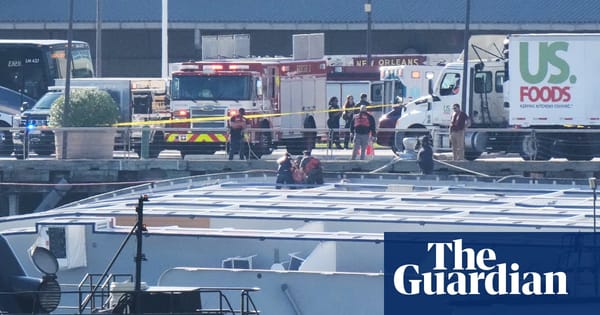
Tugboat crews, nearby workers and private vessels joined harbor police, firefighters and Coast Guard personnel in pulling people from the 66-degree Fahrenheit water. Montroll said two harbor police officers were hospitalized and were in good condition. New Orleans Fire Department Superintendent Roman Nelson said two firefighters boarded the sinking vessel and continued rescuing people in the water after it overturned.
“Fifteen minutes from impact to where it rolled over,” witness Jamie Holford told WDSU-TV.
Moreno called the rescue “a miracle on the Mississippi.” No injuries were reported aboard the tanker.
Survivors who did not need hospital treatment were taken to a nearby auditorium, where cruise officials conducted a roll call. Most passengers were visiting from outside New Orleans, and many lost identification, phones and car keys, Moreno said. The city was helping arrange prescription medications, phone access and other immediate needs, while passengers also needed accommodation and onward transportation.
American Cruise Lines said it was coordinating with the Coast Guard and local authorities. “Guests and crew were evacuated, and we are deeply concerned for everyone involved,” the company said in an emailed statement.
Tanker records and recovery work
The Atlantic Asphalt is a 160-meter, 14,485-gross-ton asphalt and bitumen tanker built in 2017 and registered in the Marshall Islands. Whether it was carrying cargo at the time of the collision was not immediately clear.
The tanker is owned by Nave Shipping SA, registered in Monrovia, Liberia, according to the International Maritime Organization. Its manager, OSM Thome, expressed regret over the collision and said it was cooperating with authorities. The company did not respond to an Associated Press request for further comment Monday.
NTSB officials said the steering failure sent the tanker toward the river’s east bank. Investigators recovered its voyage data recorder, which contains vessel-speed information and bridge audio, and asked witnesses to submit photographs or video.
Coast Guard records document an autopilot malfunction as the tanker approached Baltimore in July 2024, followed the next month by a loss of communication between the bridge and main engine. Those problems were corrected. The tanker’s most recent Coast Guard inspection, on October 18, reported no problems.
Montroll described river conditions at the time of the collision as normal, without a high current. Martin Davies, a maritime law expert at Tulane University, said the tanker had been moving slowly upriver against the current and had already completed the Algiers Point turn before the impact.
The Port of New Orleans has filed a federal lawsuit alleging at least $1 million in terminal damage. Four cruise-ship crew members filed a separate personal-injury lawsuit alleging negligence by the tanker’s owners. A judge issued a warrant placing the tanker under U.S. officials’ control, and it was towed away from the collision site.
American Heritage remained on its side in the river. The Coast Guard said removing it could take weeks and that crews first needed to extract 16,000 gallons of fuel.
A 15-member NTSB team planned to spend a week examining the collision in New Orleans. The agency expects to issue a preliminary report within 30 days.