St. Vincent Signs 30-Year Deal to Expand Kingstown Cruise Berths
Kingstown Cruise Terminal has two deep-water berths for two large ships, while smaller vessels anchor offshore; its facilities include about 20 duty-free and souvenir shops.
Kingstown’s Berth Problem Makes the Case for Cruise Investment
A Carnival cruise call is due to use Kingstown’s Modern Port because the existing cruise terminal cannot accommodate the vessel. That is a more convincing argument for upgrading the terminal than a forecast of hundreds of thousands of future passengers.
I’m in favor of fixing a berth constraint that is already affecting where ships can dock. The government has a concrete problem to solve here. It should keep that problem, and the benefits for Vincentian businesses, at the center of its case for a 30-year concession.
St. Vincent and the Grenadines is due to sign an agreement with Global Ports Holding on Monday, following a July memorandum outlining the concession and up to EC$250 million in phased investment. The proposed program would modernize Kingstown Cruise Terminal, expand berthing capacity for larger vessels and upgrade passenger facilities, while supporting cruise tourism across the country.
Those qualifications matter. EC$250 million is the ceiling set out in the memorandum, and the spending comes in phases.
A terminal with a demonstrable limitation
Tourism Minister Dr. Kishore Shallow told Parliament that existing infrastructure cannot accommodate some larger cruise ships, including XL-class vessels. He described the Carnival call at Modern Port as an interim arrangement ahead of the planned improvements.
Kingstown Cruise Terminal already has two deep-water berths capable of accommodating two large cruise ships simultaneously. Smaller vessels can anchor offshore and tender passengers ashore. But “large” covers a considerable range in cruising, and the current facilities plainly do not cover all of it.
The terminal’s commercial facilities include about 20 duty-free and souvenir shops, restaurants and a small food court. An upgrade therefore has to work for the people doing business ashore as well as for the vessels alongside.
Shallow acknowledged the country’s financial constraints and competition from other Caribbean destinations. He said the government’s assessment of infrastructure needs included discussions with cruise lines and industry representatives.
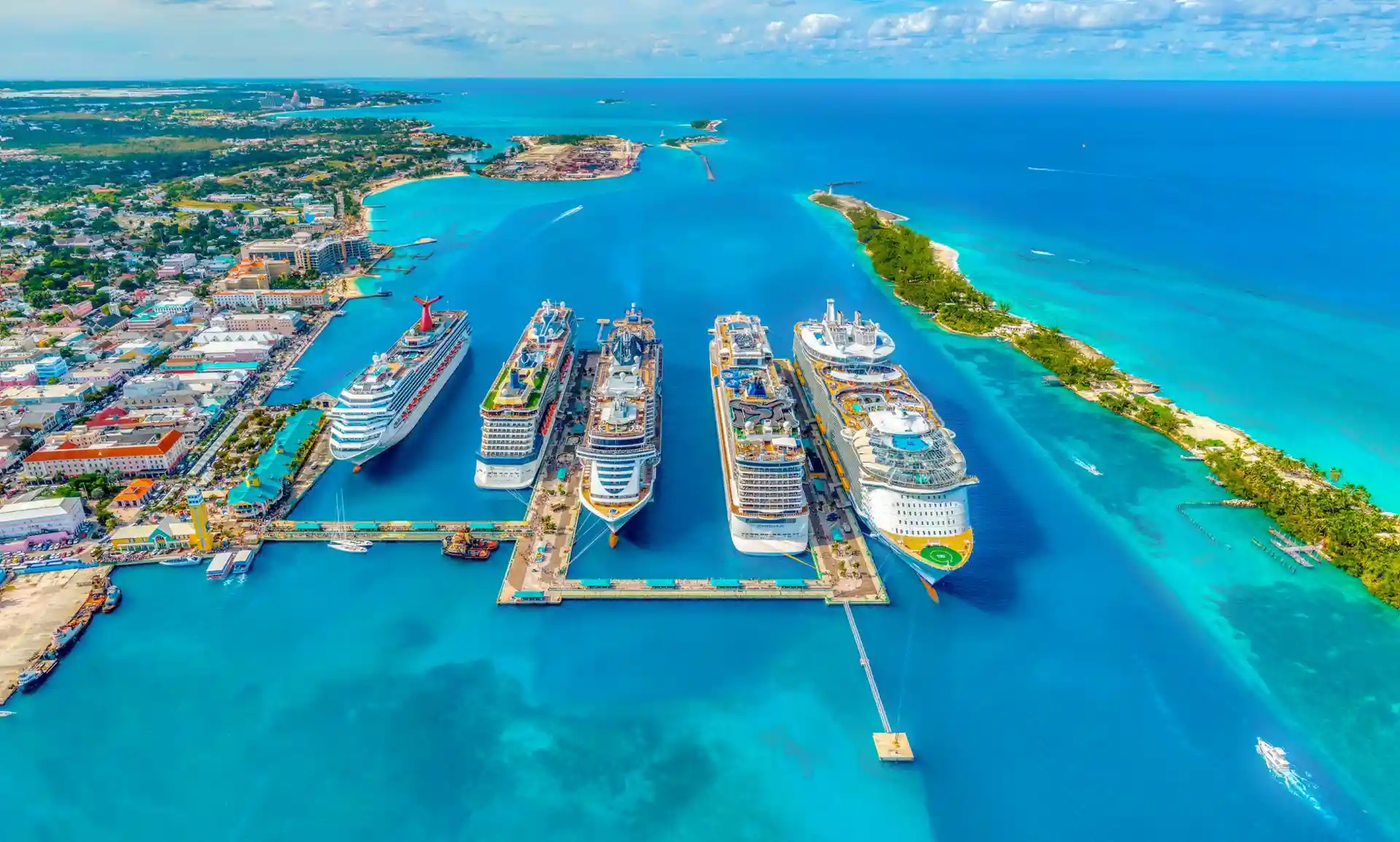
GPH brings relevant regional experience. Its portfolio includes Nassau, San Juan, Antigua and Saint Lucia, and it operates or manages 35 cruise ports across 20 countries, primarily through concession and management agreements. Shallow pointed to developments at GPH-managed ports in The Bahamas and Puerto Rico as examples the government hopes to follow.
The arrival figures need a careful reading
The government projects 355 cruise calls and 344,000 passengers for 2026-27, compared with 246 calls and 239,000 passengers in 2025-26. That would be a substantial increase, but it remains a forecast.
The preceding figures also complicate a simple growth story. In 2024-25, the country recorded 231 calls and 247,000 passengers. The following season’s figures show more calls but fewer passengers. Counting ship visits alone can give a misleading impression of how much traffic is actually coming ashore.
Neither measure establishes how much money reaches local businesses. Shallow identified taxi drivers, tour operators, vendors, restaurants and retailers as businesses that should receive more of cruising’s economic value. That is the outcome I would put ahead of a headline arrival total.
For the Carnival visit, the government plans a fun fair alongside a jump-up that Shallow called “Carnival for Carnival.”
The berth limitation is real, and addressing it is a defensible use of investment. But the government also says the partnership is intended to deliver a broader local payoff. A 30-year concession needs a better measure of success than a busier pier.