Havila Pauses Car Upgrades Over Norway Coastal Contract Uncertainty
The proposed budget is due for a December vote, with its framework set to underpin the next coastal-route tender expected in the first half of 2027.
Havila’s paused car-handling upgrades expose the cost of shorter coastal contracts
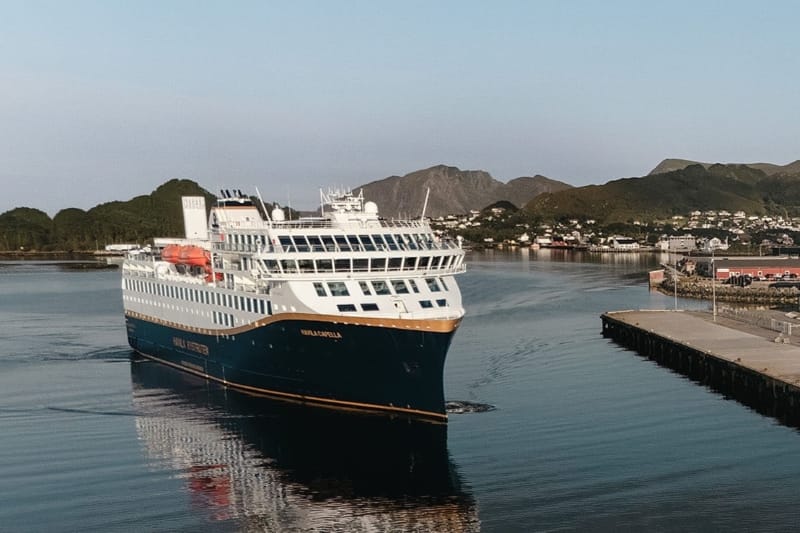
Havila Voyages has put planned vessel modifications on hold that would allow private cars to be handled at every port. Norway has not yet approved its proposed shorter coastal-service contract, but an improvement to the service is already waiting on the decision.
That is a poor start. I would rather see the next contract give operators a credible reason to improve their ships than shorten the state’s commitment at the expense of investment.
The government’s draft national budget for 2027 proposes cutting the next Bergen–Kirkenes coastal-service contract from ten years to four or five years after 2030. Havila is reassessing other investments while it waits for clarification.
“A ship is built to sail for decades,” said Havila CEO Bent Martini. “A four- to five-year contract provides no basis for investing in new ships or major technological advances.”
A short contract favors the ships already there
Havila argues that the proposed term would effectively restrict competition to incumbent operators using their existing fleets. Martini also says operators could charge the state more because they would need to recover investment over fewer years.
Those are the company’s arguments, not established outcomes of a tender that has yet to happen. Havila is itself an incumbent, operating four coastal ships alongside fellow route operator Hurtigruten. It has an obvious commercial interest in the contract terms.
But the paused car-handling modifications give its objection substance. They turn a warning about what an unfavorable contract might do someday into a specific investment decision.
The coastal service, which began in 1893, combines passenger voyages with public-service transport. Its ships carry residents and tourists, freight and vehicles. The ability to handle private cars at every port belongs firmly in that transport role. It deserves more weight than a debate framed only around how long shipping companies should hold a government contract.
Unclear climate rules compound the problem
The Ministry of Transport’s position is that emissions requirements beyond those already established in legislation should be imposed only where the cost of emissions abatement justifies them.
Havila opposes that approach. Martini warns that unclear requirements, combined with insufficient time to invest in improved technology, could interrupt emissions-reduction work already underway.
“The government must use its purchasing power to drive renewal and major emissions cuts,” he said.
A shorter contract and unsettled technical requirements are an awkward combination for fleet planning. Operators need to know both what they are expected to deliver and how long they will have to justify the spending.
Havila also argues that the shorter award, limited additional climate requirements and further assessments through the National Transport Plan create uncertainty about the route’s long-term future. In its view, that could leave open the possibility of discontinuing the service after 2035.
The company has raised concerns about coastal employment, settlement and emergency preparedness. Founder Per Saevik argues that the ships and the jobs supporting them require commitments extending beyond four or five years.
The proposed budget is due for a vote in December. The resulting framework will underpin the next coastal-route tender, expected in the first half of 2027.
A shorter public-service contract is hard to defend when one of its first effects is to put a better public service on hold.