Southern Cone Nations Plan Unified Cruise Pitch for Miami
Uruguay’s Pablo Menoni urged a collective Southern Cone presence at Seatrade Cruise Global in Miami rather than separate country and port promotions.
Updated September 18, 2026
Brazil expects eight cruise ships to homeport in the country during the 2026-2027 season, up from seven in 2025, as tourism authorities pursue regional partnerships and new South American itineraries. The projected addition is Corazul Cruceros, which plans to enter the Brazilian market with the chartered Piano Land, to be renamed Buenavista.
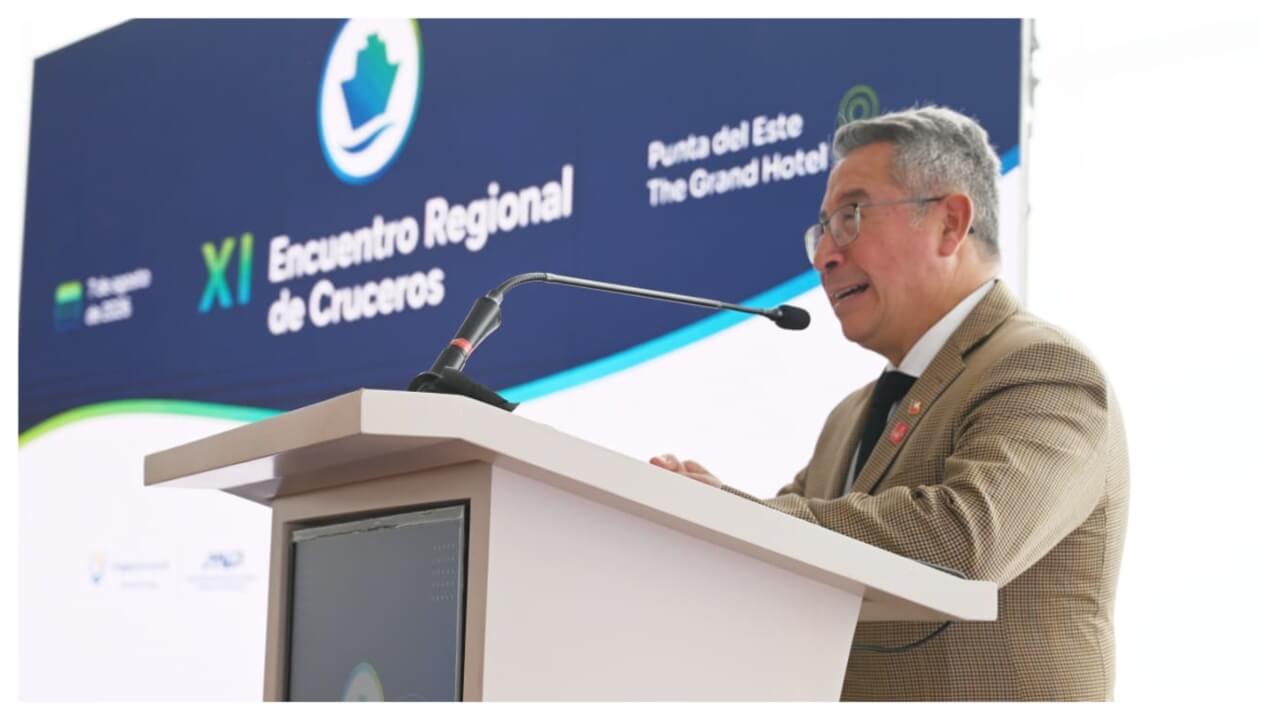
Tourism ministers and cruise stakeholders from Uruguay, Brazil, Argentina, Paraguay and Chile discussed the capacity plans at the 11th Regional Cruise Meeting in Punta del Este. Joint destination marketing, port costs, connectivity and closer coordination among South American countries were central to the program.
Brazil targets eight homeported ships
Plans for the 2026-2027 season call for MSC Cruises to operate five ships from Brazil: MSC Divina, MSC Musica, MSC Seaview, MSC Splendida and MSC Virtuosa. Costa Cruises is expected to homeport Costa Diadema and Costa Serena, while Corazul would bring the total to eight.
Corazul is considering operating from late October through April 2027, extending beyond Brazil’s traditional November-to-March cruise season. Brazil Tourism Minister Gustavo Costa Feliciano said the longer deployment could add as many as 30,000 berths.
The Corazul plans remain uncertain. The company canceled its planned European launch season and had not yet taken delivery of the Chinese-owned Piano Land.
Brazil recorded more than 783,000 cruise passengers in 2025, an increase of about 1 percent, according to CLIA. South America as a whole reached 1.22 million passengers, up 4.4 percent from 2024. Brazilian officials also said seven ports will be available for cruise embarkation and disembarkation.
Regional promotion and route planning
Feliciano called for stronger links between South American cruise markets as well as broader promotion overseas. “We need to expand regionalization, strengthening circulation between South American countries, and, at the same time, expand the internationalization of our destination, with a wider distribution of routes to attract visitors from other parts of the world,” he said.
Uruguay Tourism Minister Pablo Menoni advocated presenting the Southern Cone collectively at trade events, including Seatrade Cruise Global in Miami, instead of promoting individual countries and ports separately. “Nobody saves themselves alone here,” he said. Menoni also addressed cruise operating costs, connectivity and opportunities arising from current geopolitical conditions.
A panel on building a Southern Cone cruise route included José Miguel Cruz, president of Chile’s Corporación de Puertos del Conosur and chairman of Empresa Portuaria Austral, and Nicolás Belgrano, deputy manager of promotion and development for Argentina’s National Agency of Ports and Navigation. Elisa Kuster of the Argentine agency moderated the discussion.
Conosur’s network has 17 members, including 10 Chilean state port companies and seven private or adherent companies. Its ports include Arica, Valparaíso, Puerto Montt and Punta Arenas.
Cruz called the meeting “a valuable forum for exchange and dialogue” that supports regional cooperation, stronger institutional ties and joint development of cruise and port activity in South America.
Ports, cities and cruise lines discuss cooperation
Eric Petri, executive secretary of Conosur, addressed links among ports, communities and tourism organizations during a presentation on sustainable port-city integration. Uruguay National Port Administration Vice President Constante Mendiondo discussed the role of port infrastructure, while National Director of Hydrography Mauro Toledo addressed weather-related operational challenges off Punta del Este.
Cruise line representatives also took part. Dario Rustico, general manager of the Americas for Costa Cruises, and Marisa Schwarbock, MSC Cruises’ operations manager for Argentina and Latin America, discussed alliances and operational considerations. Marco Ferraz, executive director of CLIA Brazil, covered cruise industry trends and challenges. The program also included an artificial intelligence workshop led by authorities from Panama.
Petri called for lower port costs and concrete regional initiatives to market the region’s tourism assets internationally. “It is crucial to advance coordinated efforts,” he said, to develop “a more attractive and competitive regional system.”
Compare current South America cruise fares on Cruise Lookup.