Royal Caribbean Keeps Spectrum of the Seas in China Through 2027
On Spectrum’s March 21 departure from Shanghai, nearly 3,700 international passengers made up 88 percent of those aboard, with almost 80 percent entering China visa-free.
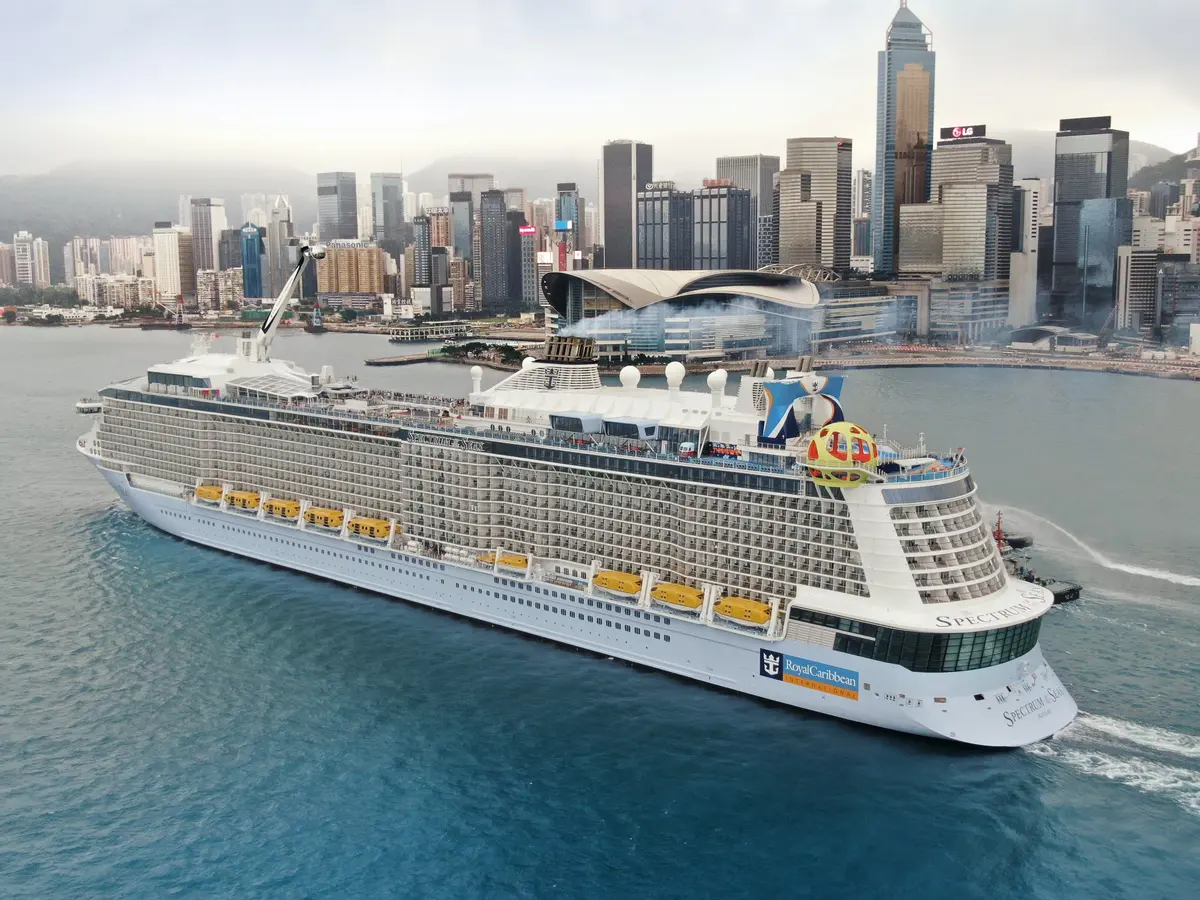
Royal Caribbean is keeping China central to its Asia strategy while expanding regional deployments and one-way itineraries. Spectrum of the Seas will continue sailing from Shanghai and Hong Kong in 2026-27, with more than 70 cruises scheduled across Japan, South Korea and Vietnam.
After 17 years of investment in China, the company is developing a more integrated operation linking Greater China, Southeast Asia and other regional markets, according to Benjamin Bouldin, Royal Caribbean’s president of Greater China and managing director of Asia. The strategy combines Chinese demand with international passenger sourcing and a wider range of itineraries.
Spectrum’s program will span two to nine nights and about 20 destinations. Bouldin described its homeports as complementary: Shanghai draws on mainland China’s outbound travel market, while Hong Kong provides an international gateway for Southeast Asian and longer-haul passengers.
For 2027-28, Royal Caribbean plans 56 sailings lasting three to 11 nights and covering 22 Asian destinations. The program will introduce open-jaw options. Yokohama will serve as an embarkation or disembarkation port on different itineraries.
Full ships and a broader guest mix
Spectrum, which accommodates 4,246 passengers at double occupancy, carried about 100,000 guests across 20 China sailings in the second quarter of 2026. Bouldin told China Daily that load factors on the company’s Chinese-market sailings had exceeded 110 percent during the year.
Royal Caribbean expects international travelers to account for nearly 15 percent of its guests in China in 2026. Bouldin attributed part of that demand to China’s visa-free entry measures.
“Longer sailings tend to attract more international guests because they offer more time and a broader range of destinations,” he said.
On Spectrum’s March 21 departure from Shanghai, nearly 3,700 international passengers represented 88 percent of those aboard. Almost 80 percent of those international guests entered China under its visa-free transit policy. Passenger source markets included the United States, United Kingdom, Singapore, Australia, Russia, Germany and France.
Royal Caribbean is adapting onboard services to that broader passenger mix through multilingual communications, varied dining and entertainment. At the same time, Bouldin said Chinese travelers are seeking new experiences, more substantial destination visits and greater flexibility, with less emphasis on shopping-focused trips.
Asia generated about 3 million cruise passengers in 2025, an increase of approximately 17 percent, according to Cruise Lines International Association figures. Mainland China accounted for 37.2 percent of the region’s passenger source market.
Singapore expansion connects regional markets
Navigator of the Seas begins its Singapore program in October 2026 after Royal Caribbean extended its planned six-month season into a year-round Asian deployment through October 2027. The 3,348-passenger vessel’s revised schedule replaces a planned summer return to Los Angeles with departures from Singapore and Yokohama. It is subsequently scheduled to return to California for winter cruises to the Mexican Riviera and Baja California.
Quantum of the Seas will operate from Singapore between October 2027 and March 2028. Voyager of the Seas will sail from Singapore and Hong Kong from January through April 2028, adding Hong Kong round trips and a voyage from Singapore to Hong Kong.
“Australia is a key market for fly-cruise holidays in Asia,” Bouldin told Cruise Passenger, citing flight connections, relatively short flying times and favorable time zones for access to Singapore, Hong Kong and Shanghai.
Bouldin said Australian travelers can combine shorter cruises with stays in an Asian homeport or use one-way itineraries to build longer land-and-sea holidays. Examples include a Singapore stay followed by a four-night cruise visiting Penang and Thailand, or extended stays around embarkation and disembarkation in cities such as Tokyo and Hong Kong.
Digital distribution and further itinerary development
In China, Royal Caribbean is adjusting its sales approach as distribution becomes more focused on independent travelers and digital bookings, Bouldin said. Its Royal Partner+ platform gives travel agents access to live inventory, booking confirmations, sales resources, training and event support. By the end of the second quarter, more than 200 travel partners had joined, with nearly 6,000 registered users across over 40 Chinese cities.
Bouldin described China’s cruise industry as entering a “second golden decade,” arguing that a greater choice of brands and products can expand the market. He said Royal Caribbean’s emphasis is on developing its cruise offering and connections between Asian markets, with less focus on direct competition against individual brands.
Further itinerary expansion will involve assessments with ports, governments, tourism authorities and local partners. Bouldin said Royal Caribbean is examining potential destinations against port infrastructure, accessibility, available shore experiences and the operational capacity to accommodate cruise visitors.
Compare Royal Caribbean sailings by price on Cruise Lookup.