Rockland Cruise Growth Would Still Leave Harbor Funding Gap
One option would allow ships carrying up to 2,500 passengers from May 15 to Aug. 14, with a 3,700-passenger ceiling from Aug. 15 through October.
Rockland’s Cruise Growth Projections Still Leave a Harbor Funding Gap
Rockland, Maine, wants another $450,000 a year to operate and maintain its harbor. Even the highest municipal revenue projection presented for cruise growth would not deliver that much additional money.
That gap deserves more attention before the city expands large-ship cruise activity. I’d want the debate anchored in what additional calls would actually put into the harbor budget, rather than letting a broader estimate of local spending carry the argument.
City Manager Tom Luttrell reported approximately $180,000 in municipal cruise revenue across eight visits during the season that ended Oct. 18, nearly $4,000 more than the previous year. The growth scenarios under review could bring annual municipal cruise revenue to between $280,000 and $540,000 over the next few years.
At the upper end, that would mean roughly $360,000 more than the current figure. A useful contribution, certainly. But still short of the additional $450,000 officials are seeking, and a projection rather than money committed to the waterfront.
Residents divided over the proposal at an Oct. 19 city forum. Councillor Penny York said any regulatory changes would not take effect before 2028. That gives Rockland time to make a more specific case for what it would gain by changing its limits.
The maintenance bill is substantial
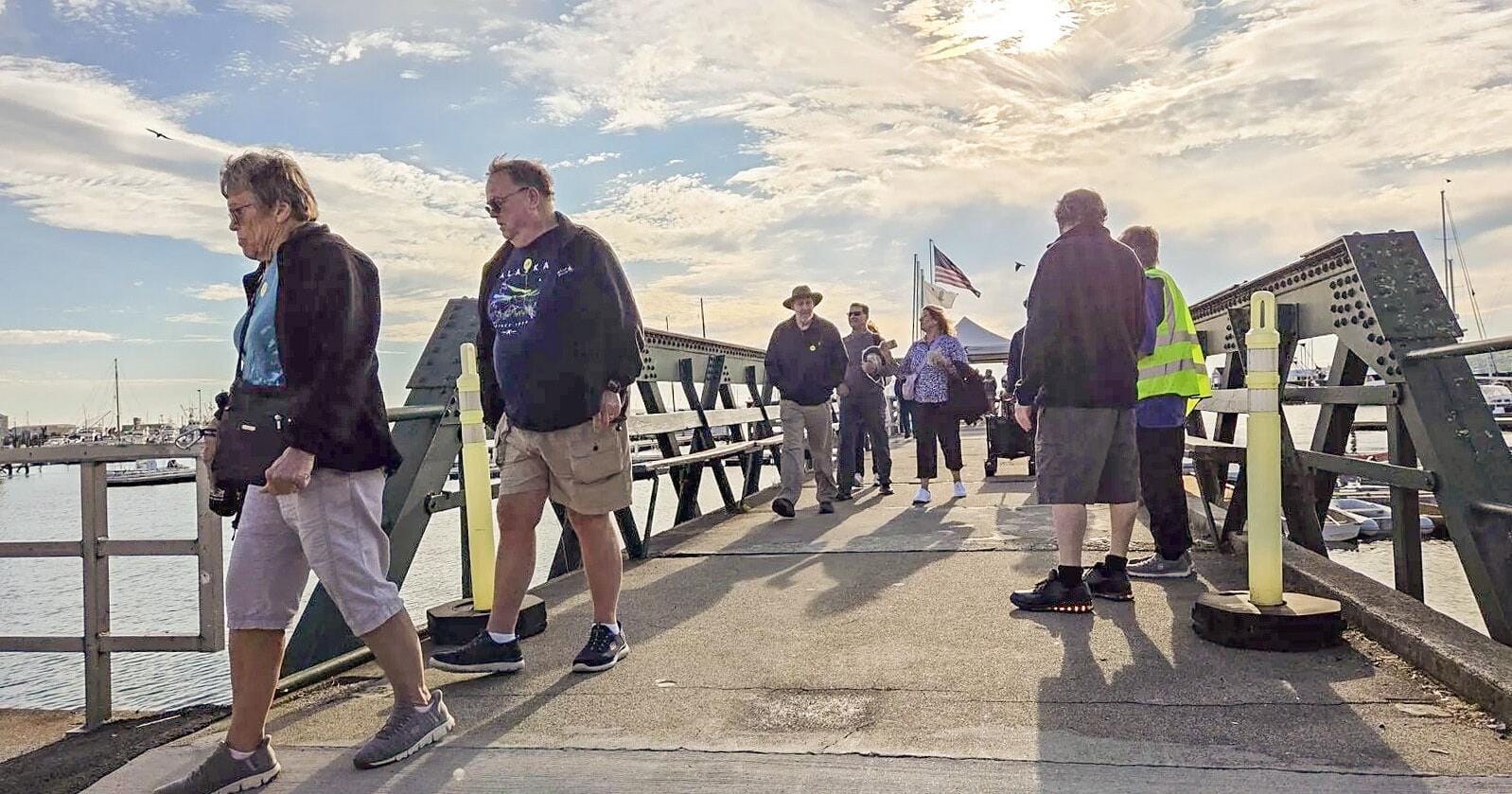
Large cruise ships anchor offshore, and passengers tender to the Public Landing beside Harbor Park, close to downtown. But the waterfront needs outlined by Luttrell extend beyond cruise operations.
Replacing 26 floats and 72 pilings is estimated to cost $1.153 million. The harbor maintenance reserve holds $972,000, below the city’s desired $2 million balance.
A $6 million rebuilding project at Middle Pier and Buoy Park is being funded through federal grants and city reserves. Rockland is also seeking grants for a separate $14 million Harbor Park upgrade.
“Deferred maintenance in our harbor and working waterfront is a reality we have to address,” Luttrell said. He called for dependable revenue to support waterfront upkeep and local businesses while reducing pressure on property taxes.
There is a sound argument for asking cruise activity to contribute to those costs. The harder sell is changing when and how many large ships can visit without a clearer account of how much of the funding problem that change would solve.
Summer cruise growth is a meaningful concession
Rockland currently defines large cruise ships as vessels carrying more than 500 passengers. Its policy allows ships carrying up to 3,000 passengers and limits large-ship calls to nine during September and October.
One option presented by Sarah Flink of SpringTide Destination Strategies would allow vessels carrying up to 2,500 passengers between May 15 and Aug. 14. The ceiling would rise to 3,700 passengers from Aug. 15 through October.
Other controls examined at the workshop included a maximum of 7,200 cruise passengers over any seven consecutive days and no more than two foreign-flagged cruise ships per day.
Those details matter more than a general promise of “controlled growth.” A rolling weekly passenger limit would address the concentration of arrivals, while the proposed 3,700-passenger ceiling would permit larger ships from Aug. 15 through October.
The city commissioned SpringTide to develop growth options. Flink said roughly two-thirds of Maine’s large-cruise-ship visits occur in September and October, and the consultancy modeled the financial effects of four calls beyond Rockland’s existing autumn cap. About 13,000 passengers arrived on large ships during the season just ended. Six large-ship calls are booked for next year.
Resident Tyler Waterson argued against adding calls in July and August, saying the harbor and community were already at capacity. He warned that additional large-ship traffic could discourage visitors who stay several days and spend more time in local restaurants and the community. He also said smaller ships have less impact.
That is an objection the city needs to answer directly. Annual revenue projections alone cannot establish whether a July call is a good trade for Rockland.
Local spending matters, but it is a different measure
The city-commissioned economic study estimated $1.7 million in cruise-related spending in the Rockland area, supporting 20 full-time-equivalent jobs. Those benefits should not be dismissed simply because they do not all flow into city accounts.
Digital Research Inc. surveyed 232 passengers and crew members during 11 ship arrivals. It estimated $875,000 in direct passenger and crew spending, alongside approximately $600,000 in cruise-line purchases covering port and municipal charges, marine services, and Maine food and entertainment.
Visitors spent an average of three hours ashore. Seventy-six percent visited downtown Rockland, and 71% explored the area on foot. Seventeen percent visited Camden, while 10% went to Rockport and 5% to Owls Head.
Kate McAleer, founder and operator of Bixby Chocolate, supported large-ship visits because of the revenue they bring local businesses. Joe Steinberger said he enjoyed talking with arriving passengers and regarded their enjoyment of Rockland as a community benefit.
Others wanted a pause. Former Mayor Louise MacKellen-Ruf opposed allowing more large ships for now. Kyle Swan urged officials to consider a temporary moratorium while residents assess the benefits and drawbacks, citing noise, pollution and the possible introduction of illnesses.
Before Rockland decides
The forum also reviewed PortShare Promise’s first season under city management. Services included onboard destination information, a volunteer-staffed welcome center, a coordinated Makers Market and a pilot trolley program. Transportation access still needs work, as does closer coordination with businesses and attractions.
Luttrell plans a resident sentiment survey. The city is accepting online comments through Oct. 22, to be considered alongside workshop input and Harbor Management Commission feedback.
Rockland may decide that more cruise calls are worth allowing. But summer cruise growth is a substantial concession, and it deserves a case built on its own benefits and costs. The city should not present a partial contribution to harbor upkeep as a funding problem solved.