NOAA Probes Dead Fin Whale Found on Norwegian Joy Near Sitka
Passengers began disembarking about two hours late. Norwegian extended the Sitka call by one hour, and crews towed the carcass away from the cruise terminal.
Updated September 25, 2026
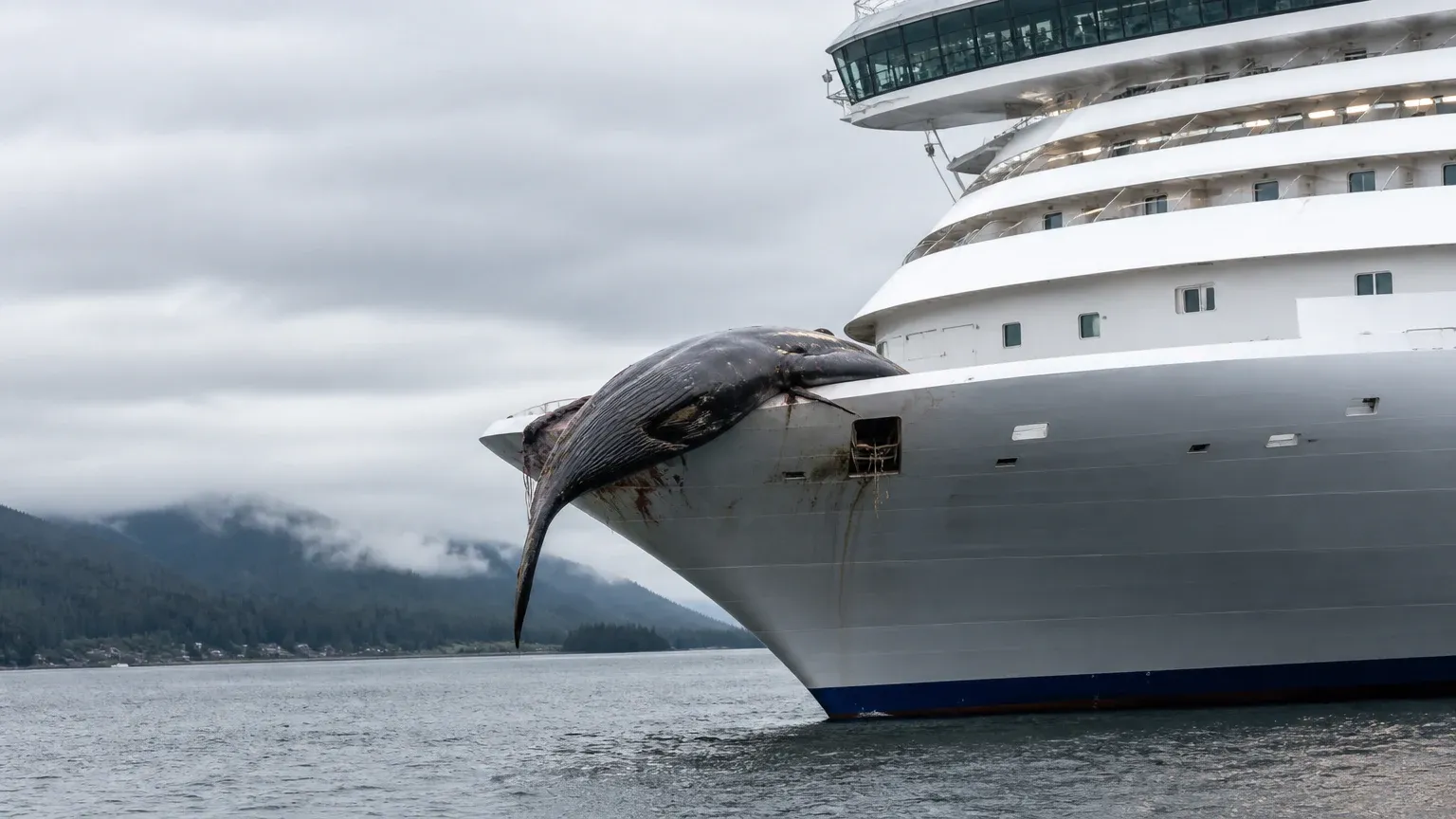
An endangered fin whale was found dead on Norwegian Joy’s bulbous bow as the cruise ship approached Sitka, Alaska, on Sept. 17, 2026, delaying the vessel’s port call. NOAA Fisheries is assessing the death but has not determined whether contact with the ship killed the whale or the animal was already dead.
It was the second time since June that a cruise ship arrived at an Alaska port with a dead fin whale on its bow. Preliminary findings in the earlier case determined that a pregnant whale died from injuries consistent with a vessel strike.
NOAA assesses the death as the Sitka call runs late
Norwegian Joy was scheduled to arrive in Sitka at 8 a.m. but docked approximately three hours late after waiting about two miles offshore during the response. The ship was carrying roughly 4,000 passengers on its voyage from Hoonah. Norwegian Cruise Line extended the port call by one hour, moving the ship’s departure from 3:30 p.m. to 4:30 p.m. The incident occurred during the ship’s penultimate Alaska cruise of the 2026 season, a 10-night round trip from Seattle that departed Sept. 11.
A response team from the U.S. Coast Guard, NOAA and the Alaska Marine Mammal Stranding Network used a tugboat to remove the whale from the bow. Passenger Gretchen McLaurin told KIRO Newsradio that she heard an onboard announcement at approximately 7:45 a.m. as the ship approached its berth. She said the whale was belly-up during the removal and had a pink area on its lower body. Wildlife officials have not released findings about any visible injuries.
Lauren Wild, a local whale biologist and member of the stranding network response team, estimated that the whale was 35 to 45 feet long and likely a juvenile male. The carcass sank in a cove while being towed toward a Sitka-area beach and came to rest about 40 feet offshore. Responders secured it to trees on the beach while planning an effort to recover it for a necropsy. Wild said the examination could help determine the whale’s cause of death, health, age and whether it was already dead before contact with the ship.
NOAA Fisheries dispatched its Alaska Marine Mammal Stranding Network, the statewide response network for dead, injured, stranded or entangled marine mammals. “We don’t have any of that information yet,” said Jennifer Angelo, a spokesperson for the NOAA Fisheries Alaska Region, when asked whether the whale died from a vessel strike or was dead before the encounter.
Angelo said 10 whale strikes involving cruise ships had been documented in Alaska since 2001, although not all were confirmed and not every incident necessarily killed the whale. She said the actual number is difficult to determine because some collisions go unnoticed, occur in remote areas or involve carcasses that sink or drift away.
“We are deeply saddened by this situation, and we are cooperating with the appropriate authorities and any relevant scientific and wildlife experts,” Norwegian Cruise Line said in a statement. The company added: “This is a sobering reminder of the importance of ongoing collaboration among the maritime, scientific and conservation communities. We remain committed to operating responsibly, complying with applicable laws and regulations and supporting efforts that contribute to the long-term health of marine life.”
A second fin whale found on a bow since June
Royal Caribbean International’s Ovation of the Seas arrived in Seward on June 19 with another dead fin whale on its bow. The Alaska SeaLife Center said a preliminary necropsy found blunt-force trauma to the animal’s jaw, spine and ribs consistent with a vessel strike.
After that case, the Center for Biological Diversity asked Royal Caribbean Group to reduce vessel speeds in known whale habitat. Royal Caribbean had not publicly responded to the request.
Fin whales are protected under the Endangered Species Act, and NOAA Fisheries also enforces marine mammal protections under the Marine Mammal Protection Act. The species feeds in Alaska during summer before migrating to subtropical waters to give birth in winter. Fin whales are the world’s second-largest whale species after blue whales, and NOAA identifies vessel strikes as their main current threat.
At the time of the Sitka delay, no further itinerary modifications had been confirmed. Norwegian Joy’s planned itinerary included Skagway on Sept. 18 and Victoria, British Columbia, on Sept. 20 before its scheduled return to Seattle on Sept. 21.