Mitsui Ocean Sakura to Launch Domestic Japan Cruises in 2026
Japanese registration allows Sakura to sail entirely between domestic ports, unlike Bahamas-flagged Mitsui Ocean Fuji, which must include a foreign call.
MOL’s Short Japan Cruises Still Ask Travelers for a Luxury Budget
Three days aboard Mitsui Ocean Sakura will start at 194,000 yen per person on a Seto Inland Sea voyage departing Kobe on January 3, 2027. That is a compact holiday, but hardly an obvious low-cost introduction to cruising.
MOL Cruises’ new ship is due to enter service on September 19, 2026, with a focus on one- to three-night voyages. I see a sensible answer to the problem of limited vacation time. The harder question is how much this does for people who have stayed away because of the price.
Japanese shipping and entertainment companies are introducing shorter cruises to attract younger travelers beyond their traditional affluent retiree clientele. In a transport ministry survey, 58 percent of respondents who had never cruised cited high costs as a reason. Another 24 percent said they could not take extended holidays. Shorter sailings address the second barrier directly. The first remains a substantial sales challenge.
Japan’s Ministry of Land, Infrastructure, Transport and Tourism wants Japanese cruise participation to reach 1 million travelers by 2030. Cruise Lines International Association figures put the total at 240,000 in 2025, less than 1 percent of the approximately 37 million cruise passengers worldwide. That ambition requires considerably more than giving existing cruise customers another itinerary choice.
A Japanese flag makes the shorter schedule possible
Sakura’s Japanese registration is the practical decision behind its domestic program. Article 3 of Japan’s Ship Act generally reserves passenger carriage between domestic ports for Japanese vessels, subject to exceptions or ministerial permission.
MOL’s Bahamas-registered Mitsui Ocean Fuji must include a foreign port on its Japan-based routes, extending voyage lengths. Sakura can operate entirely within Japan. For a company trying to sell short breaks, removing that requirement is a meaningful advantage.
Fuji entered service in December 2024 and will concentrate on medium- and long-duration cruises. Sakura gives the Mitsui Ocean Cruises brand a two-ship fleet with distinct itinerary focuses.
“More ships will create new demand. The entire market is beginning to enter a virtuous cycle,” MOL Cruises President Tsunemichi Mukai said at Sakura’s unveiling in Yokohama on September 16.
An upscale ship for short breaks
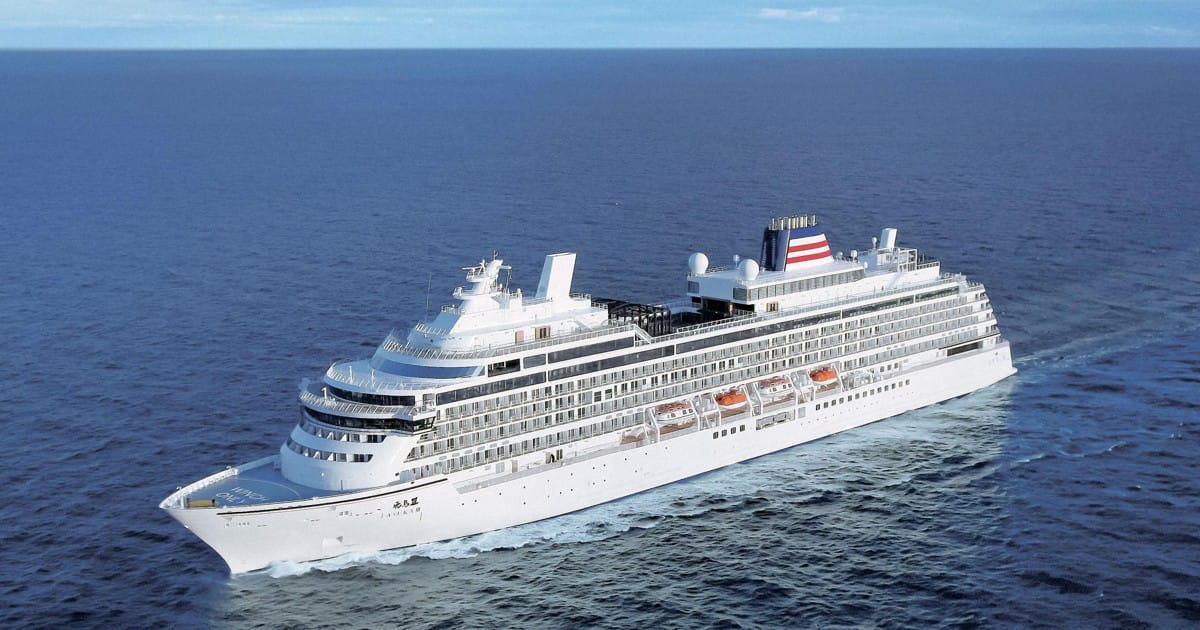
The new capacity comes in a distinctly upscale format. Mitsui O.S.K. Lines acquired the former Seabourn Sojourn in March 2025. Renamed Sakura, the 34,138-gross-ton ship accommodates up to 458 passengers in 229 ocean-view suites. It succeeds Nippon Maru, which completed its final voyage on May 10, 2026, after approximately 35 years of service.
Sakura has 29 inaugural cruises scheduled through December 2026. Its first sailing will be longer than its main short-cruise focus: a four-night round trip from Yokohama, calling at Toba in Mie Prefecture and Hidaka in Wakayama Prefecture. Fares start at 372,000 yen per person, based on double occupancy.
The three-day January 3 voyage returns to Kobe. Sakura’s fares include basic onboard meals and drinks, activities and shore excursions, although some dining venues and menu items carry additional charges. Those inclusions belong in any assessment of value. They do not remove the upfront amount a newcomer has to commit.
At 198.15 meters long, Sakura can visit smaller ports, remote islands and bays that are difficult for larger ships to reach. Ships can also bring visitors to destinations with limited land transport or accommodation without relying on local hotel capacity.
“If a culture of traveling around Japan by ship takes root, it will also contribute to regional revitalization,” said Masashi Onozuka, a senior partner at management consultancy Roland Berger.
Mitsui O.S.K. Lines’ management plan designates cruising as a stable-revenue business intended to help offset volatility in shipping markets.
More ships, but what kind of entry point?
MOL is not expanding alone. NYK Cruises, part of the Nippon Yusen group, added Asuka III in July 2025. Built by Meyer Werft in Germany, the 680-passenger vessel was its first newly built passenger ship in 34 years.
Oriental Land, which operates Tokyo Disneyland and Tokyo DisneySea, plans to launch its Japan-based Disney cruise service in fiscal 2028. It intends to offer two- to four-night voyages from ports in the Tokyo metropolitan area, with onboard shows featuring Mickey Mouse and other Disney characters. Standard fares are expected to range from about 100,000 yen to 300,000 yen per person.
That fare range shows why fewer nights should not automatically be treated as an affordability strategy.
I like Sakura’s domestic flexibility. It gives MOL a way to offer a cruise that does not demand an extended holiday or an international port call. That is a useful product change on its own merits.
Japan’s million-passenger ambition faces a tougher test. With 58 percent of never-cruised respondents citing high costs in the ministry’s survey, a shorter luxury cruise leaves a major objection largely unanswered.