Manhattan Cruise Terminal Plan Targets Congestion With Transport Hub
Operated by Ports America, the city-owned terminal handles about one million passengers a year, with roughly half visiting New York before or after their cruise.
Manhattan Cruise Terminal needs more than room for bigger ships
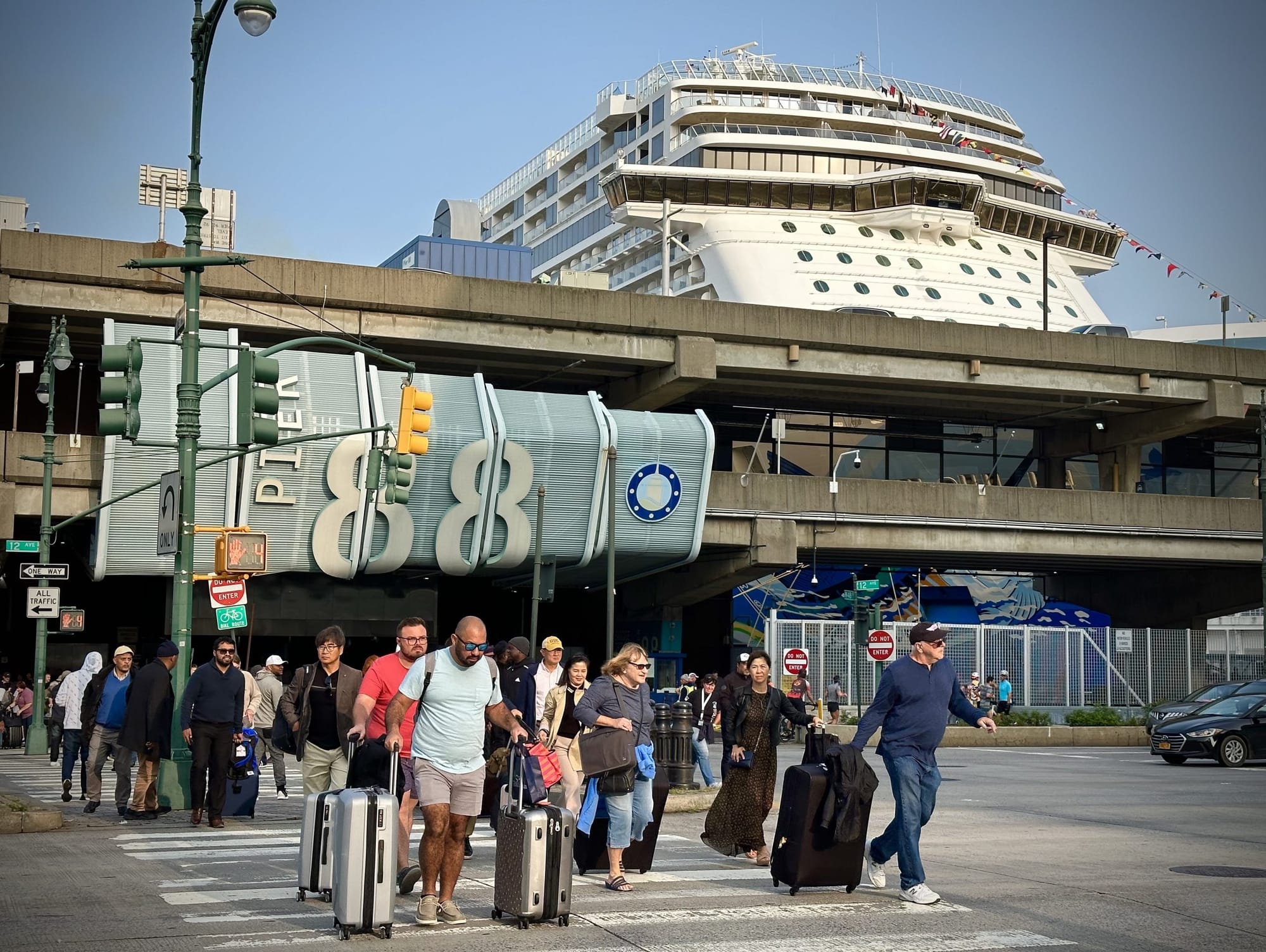
A consolidated ground-transportation area might be the least glamorous part of Manhattan Cruise Terminal’s redevelopment plan. I’d put it near the top of the priorities. The terminal already has a space problem on land, before the larger cruise ships expected around 2032 arrive.
“We are short on space; even where we can handle the actual ship, we are struggling on the upland side,” said Allison Dees, NYCEDC vice president and head of New York City’s cruise portfolio.
That is a refreshingly direct description of the challenge. Accommodating a ship alongside is only part of a terminal’s job. Its passengers still need to get through the building, find their transportation and leave without making the surrounding neighborhood absorb the congestion.
The New York City Economic Development Corporation is refining a master plan that would add passenger-handling space and shore power at three berths. First presented in late 2025, the plan also proposes the consolidated ground-transportation area and a publicly accessible waterfront promenade. A larger ship does not make a constrained terminal less constrained.
The pressure is already on land
The city-owned terminal, operated by Ports America, occupies the Hudson River waterfront between West 46th and West 54th streets. It handles approximately 1 million passengers annually. About half are visitors who spend on hotels, restaurants and shopping before or after their cruise.
Homeport operations account for approximately 85% of the lower-berth capacity calling there. That makes passenger arrivals, departures and ground transportation central to the operation.
I like that the proposal includes public waterfront access alongside the cruise facilities. But a promenade and a transportation area have to work together. The useful test will be whether passengers can move through the terminal while nearby residents can still use their neighborhood and waterfront.
NYCEDC is continuing discussions with neighborhood groups, cruise lines and service providers, including tugboat companies. Dees outlined the work at “The Next Wave of Cruise,” a seminar organized by New York Maritime and the Cruise Lines International Association and hosted by Holland & Knight.
There is also a financing question. Craig Fuehrer, managing director and head of transportation investment banking at Deutsche Bank Securities, approached it from his experience financing container terminals in the Port of New York and New Jersey.
“You have to develop some trunk load of committed capacity that you can finance off of,” Fuehrer said. He pointed to cruise line commitments to terminal slots as a potential foundation.
He also cited the large population around New York as part of its appeal to cruise operators and emphasized the passenger experience. Committed calls can anchor the financing, but processing the people on those ships is the physical problem the investment still has to solve.
Shore power is part of being a better neighbor
NYCEDC is working with Con Edison on electricity supply. The master plan includes a 70 MVA substation, and the agency is also pursuing shore-power capability at the existing terminal.
Brooklyn Cruise Terminal already offers shore power, allowing connected ships to draw electricity from the grid and shut down their auxiliary diesel generators at berth. Dees said expanding the technology addresses both local particulate emissions and greenhouse gases.
Shore power belongs in a redevelopment whose effects reach beyond passengers. Its benefits still need to be described accurately. The Environmental Protection Agency’s shore-power assessment estimated net carbon dioxide reductions of 38% to 55% after accounting for electricity-generation emissions. Results depend on the regional grid mix and vessel electricity demand. Boilers and other systems that must remain operating can continue producing emissions.
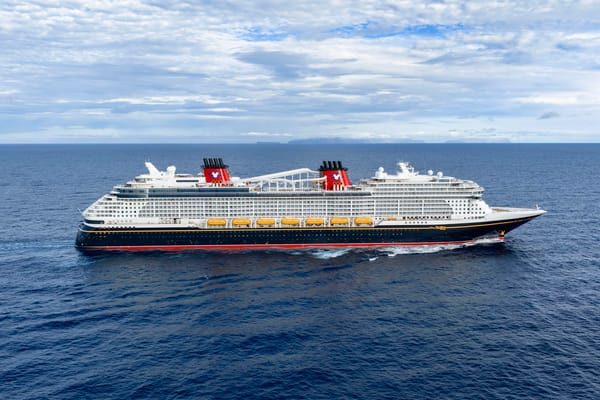
LNG bunkering is a separate, unresolved issue. It is not currently permitted in the port. Dees cited upcoming visits by Disney Cruise Line’s LNG-powered Wish-class ships as a reason to pursue access, which would require work with the U.S. Coast Guard and the New York City Fire Department.
The redevelopment has to address those ship-side requirements. But Dees’s admission about the existing shortage of landside space should set the urgency. The larger ships are a future planning issue. Getting passengers through the terminal without overwhelming the streets around it is already the job.