Low Danube and Rhine Water Disrupts Peak River Cruise Season
Hungary’s Water Authority put the Danube at Budapest within eight centimeters of the record low, with Gönyű and Komárom handling the heaviest cruise traffic.
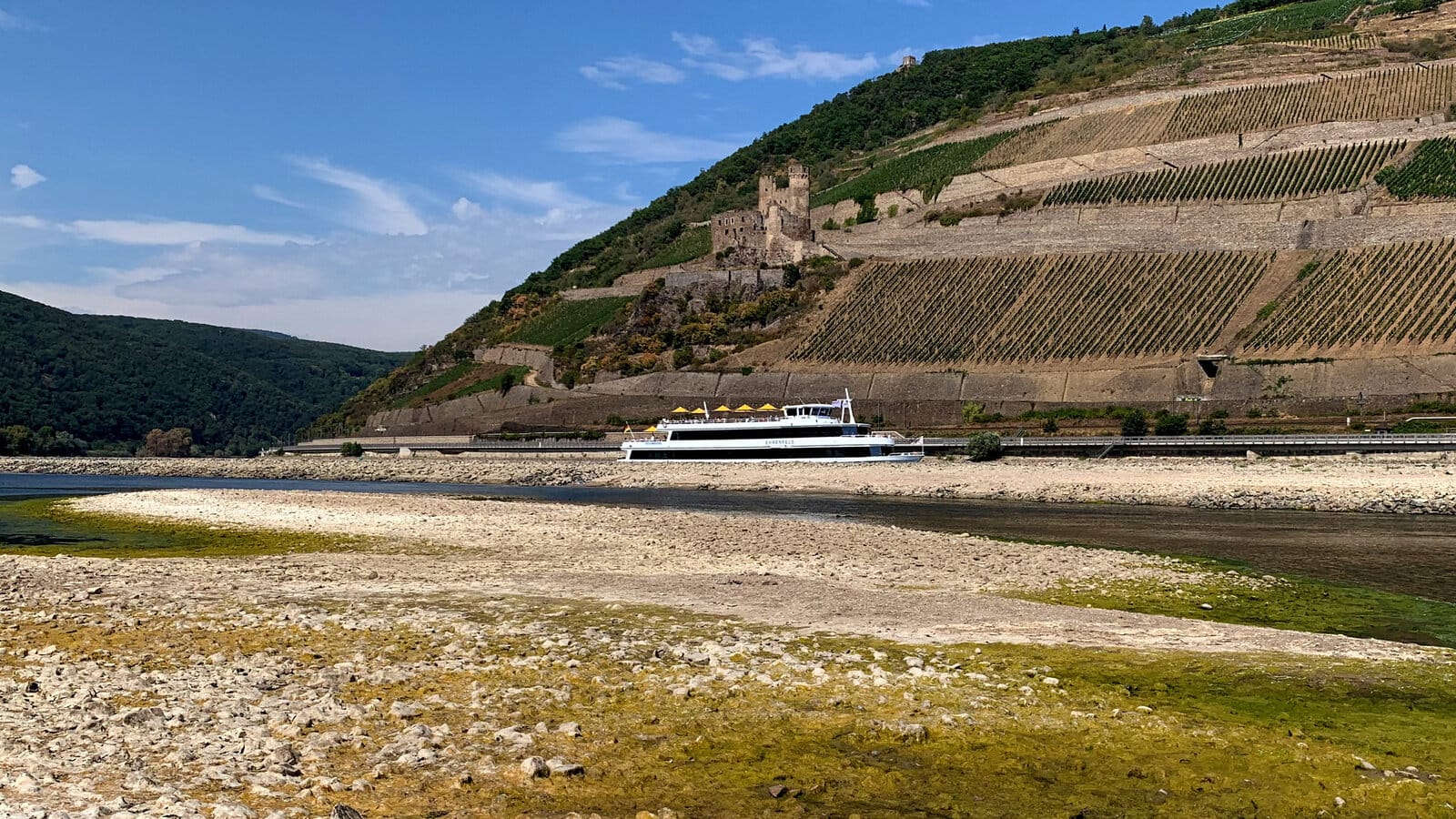
Low water levels on the Danube and Rhine are disrupting European river cruise operations at the height of the summer season, forcing cruise lines to cancel some departures, alter ports, move guests by bus and use ship swaps across affected sections. Hungary’s Water Authority data showed the Danube at Budapest within eight centimeters of the record low set eight years ago.
European river cruising grew 8 percent in 2024 to 1.5 million passengers, while CLIA calculates that the river cruise market has expanded at an annual rate of 10 to 15 percent over the past decade.
Danube restrictions hit Hungary’s cruise traffic
Hungary is one of the most exposed markets because about 600,000 travelers take river cruises through the country each year. Laszlo Somodi, chief executive officer of Hungarian tour operator MAHART-PassNave, told Reuters that river cruise vessels could still enter Hungary, “but several ships are stranded or waiting in ports because of the low water levels.”
Somodi said international river cruising has become the most economically important part of Hungary’s shipping industry as tourism has grown. The northern ports of Gönyű and Komárom are handling the heaviest traffic, while some cruise vessels remain idle in Budapest and Mohács. MAHART-PassNave’s bookings were down 18 percent so far in July, and sightseeing tours to cities north of Budapest were suspended for the week.
Navigation gauges around the Middle Danube showed the severity of the constraints. Budapest was at 70 centimeters, Komárom at 27 centimeters and Gönyű at minus 21 centimeters, while Passau on the Upper Danube was more stable at 433 centimeters. Gauge readings do not directly equal fairway depth, and skippers still have to judge each passage with a safety margin.
The Rhine is also under pressure. The Kaub gauge on the Middle Rhine was around 100 to 110 centimeters, a level that triggers strict draft restrictions and forces cargo barges to operate well below full loads. German cargo operators have already had to reduce shipments, in some cases requiring multiple vessels to move freight normally carried by one.
Cruise lines shift itineraries and guest logistics
Avalon Waterways canceled a small number of upcoming Danube and Rhine departures and shifted some cruises scheduled to embark in Nuremberg to Passau. AmaWaterways disembarked guests above Budapest from AmaMagna, its 196-passenger double-width river ship, and moved them into hotels and buses as low water affected the Budapest-Vienna stretch. The line tells guests it monitors river conditions and may use alternate docking locations, modified excursions or ship swaps when navigation is affected.
Riviera Travel River Cruises said it is continuing sailings while changing excursions and destinations, with guests receiving daily updates as schedules change. Viking has notified affected guests and travel advisors that select Danube and Rhine itineraries may be modified, and said its Switzerland-based nautical team is coordinating with local authorities and port partners.
Viking also uses sister ships on the same itineraries in opposite directions. When a river section becomes difficult to pass, guests and luggage can be transferred to an identical ship positioned beyond the affected stretch, with passengers assigned to the same stateroom category on the replacement vessel.
Expansion continues despite recurring low water
More than 380 river cruise ships are active in Europe, with as many as 60 more on order. Celebrity Cruises has five river ships on order, while AmaWaterways, Emerald/Scenic, TUI and Viking continue to add capacity.
AmaWaterways has released details of AmaRudi, its second double-width river ship, due to enter service in 2027, and plans to add 15 ships in Europe in the coming years. Viking took delivery of two new river ships in June and expects 22 additional deliveries by 2028, which would bring its river fleet to 114 vessels.
Water levels may offer limited relief in the coming days. Near Nagymaros, north of Budapest, forecasts showed the gauge improving from minus 34 centimeters on July 19 to minus 10 centimeters on July 21, still below levels needed for unrestricted navigation. Hungarian sightseeing services north of Budapest could resume next week if the anticipated rise materializes.