Greenland Backs Phased Ban on Cruise Ship Scrubber Discharges
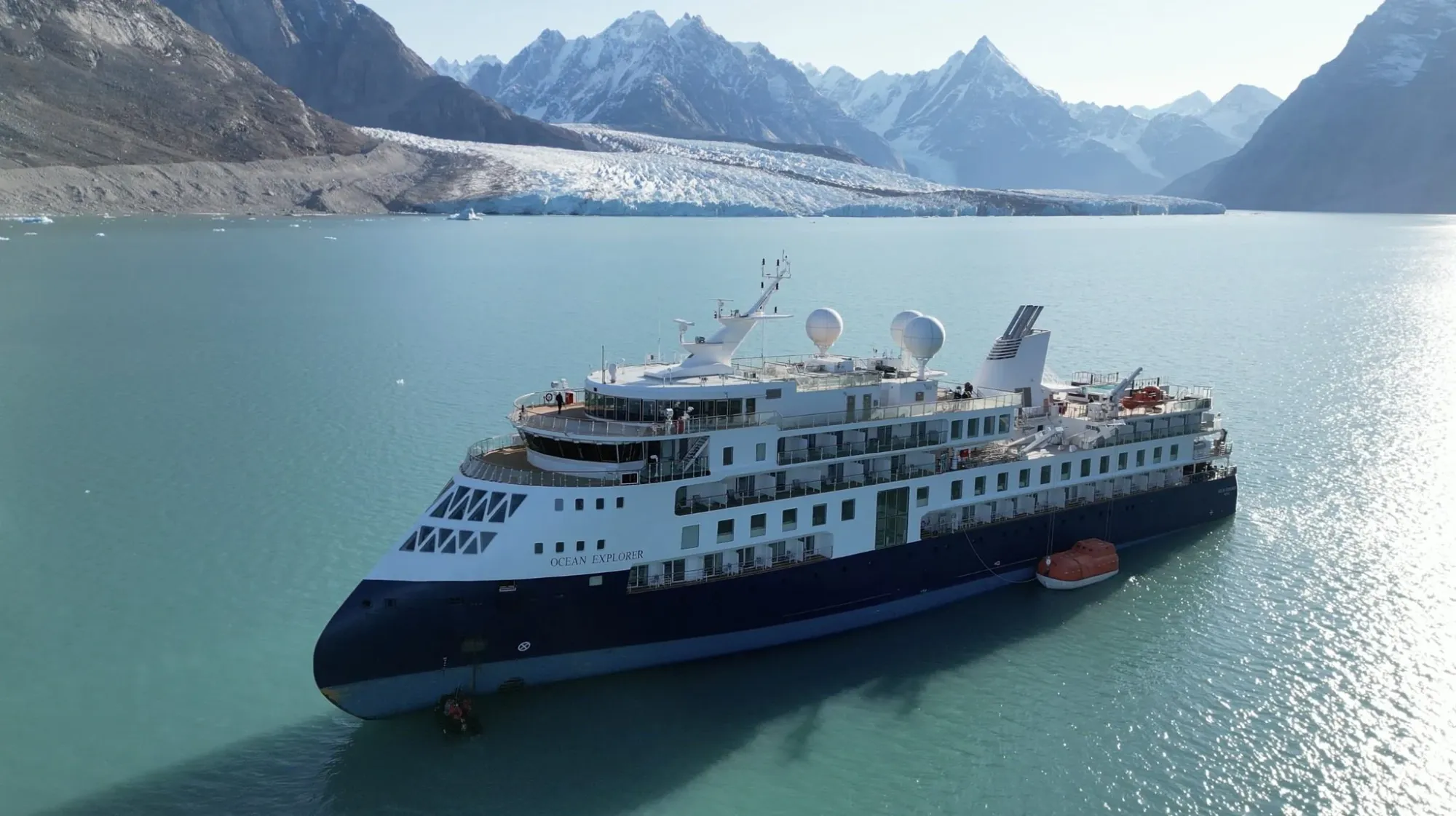
Arctic Council data recorded about 94,000 cruise passengers on 232 voyages to Greenland and its surrounding waters in 2025, though scrubber use among those ships is unknown.
Greenland is right to draw the line at scrubber wastewater
Cruise ships could comply with Greenland’s proposed scrubber restrictions without removing the equipment or abandoning their itineraries. Switching to compliant lower-sulfur fuel, including marine gas oil, would let them avoid producing scrubber wastewater in the first place. I consider that a reasonable adjustment to ask of operators visiting these waters.
Greenland’s parliament, the Inatsisartut, unanimously backed a plan on Nov. 4 to prohibit open-loop scrubber discharges from July 1, 2027, then extend the restriction to all scrubber systems from July 1, 2029. The vote directs the government to introduce the restrictions in ports, internal waters and the territorial sea.
The parliamentary decision followed a proposal from Justus Hansen of the Demokraatit party. The government put forward the phased timetable in line with an emerging regional approach under the OSPAR Convention, which covers the Northeast Atlantic.
An approved scrubber can make a ship compliant with sulfur-emissions rules while it burns higher-sulfur fuel. That does not make the wastewater harmless, or oblige Greenland to accept it.
The second deadline gives the plan its substance
Open-loop scrubbers wash exhaust gases with seawater, then discharge the resulting wastewater overboard. That water carries sulfur compounds, heavy metals and other contaminants.
Closed-loop systems recirculate their washwater, but they can still produce a controlled bleed-off and other waste requiring disposal. Including them in the second phase makes this a more meaningful restriction than an open-loop ban alone. Changing the type of scrubber would not preserve permission to discharge indefinitely.
Where discharge is prohibited, ships using scrubbers must retain washwater in dedicated tanks for delivery to suitable reception facilities. The proposal targets what enters the water.
The Clean Arctic Alliance welcomed the decision. Its lead adviser, Sian Prior, said: “Scrubbers simply offer a loophole for ships to continue burning the most polluting fuels — instead of using widely available cleaner fuels such as marine gas oil.”
The alliance argues that scrubbers transfer pollution from the air to the sea. It also says continued use of residual fuels produces more particulate matter and black carbon than cleaner distillate fuels.
The fleet impact is still an open question
There is no public breakdown showing how many ships visiting Greenland have scrubbers. That makes it hard to say how many operators would need to change their fuel use or wastewater arrangements.
According to the Arctic Council, Greenland and its surrounding waters received approximately 94,000 cruise passengers on 232 voyages in 2025. Separately, S&P Global’s worldwide fleet data for that year identified 338 scrubber-equipped passenger and cruise ships. The global figure cannot tell us how many of those vessels sailed Greenlandic itineraries.
That uncertainty does not weaken the case for a clear discharge rule.
Arctic fuel rules do not settle the wastewater question
Under MARPOL Annex VI, approved exhaust gas cleaning systems can provide equivalent compliance with sulfur-emissions requirements. The global marine fuel sulfur limit is 0.50%, falling to 0.10% in designated sulfur Emission Control Areas.
The Canadian Arctic and Norwegian Sea became IMO-designated ECAs on March 1, 2026, bringing stricter nitrogen oxide and sulfur oxide standards. Norway already had an ECA covering its North Sea waters. There is still no comprehensive ECA covering the entire Arctic, and sulfur requirements generally allow compliance through an approved scrubber.
Svalbard has taken a separate fuel-quality approach since January 2022. Ships entering its territorial waters may not use or carry petroleum-based fuels whose properties exceed those permitted for marine gas oil.
The IMO’s Arctic heavy fuel oil prohibition, under MARPOL Annex I, began applying to some vessels in July 2024. It addresses the risks and consequences of HFO spills, rather than scrubber wastewater or black carbon emissions. Certain vessels meeting specified fuel-tank protection standards have until July 1, 2029, to comply.
These measures address different problems. Greenland’s proposal deals directly with a discharge that sulfur-compliance rules can still permit. Keeping a ship compliant is the operator’s responsibility. Accepting its scrubber wastewater does not have to be Greenland’s.