Five Cruise Lines Drop Tracy Arm From 2026 Alaska Itineraries
Alaska cruising is learning to live with a shifting coastline as landslide risk forces operators to redesign signature glacier days, turning backup fjords into the new main route.
Updated May 26, 2026
A new study published in Science says the Aug. 10, 2025 landslide in Tracy Arm Fjord generated a tsunami that ran 481 meters, or 1,578 feet, up the opposite wall of the Alaska fjord, making it the world's second-tallest recorded tsunami and a near miss in a scenic cruising area visited by cruise and tour vessels.
Carnival Cruise Line, Royal Caribbean, MSC Cruises, Holland America Line, and Virgin Voyages have told booked guests that scenic cruising in Tracy Arm will be replaced by nearby Endicott Arm and glacier viewing at Dawes Glacier, keeping the scenic-cruising concept intact while shifting to a route operators describe as more navigable under current conditions.
What the new study found at Tracy Arm
The study, led by University of Calgary geomorphologist Dan Shugar, placed the start of the sequence at 5:26 a.m. local time on Aug. 10, 2025. A large landslide collapsed about 1 kilometer vertically onto the South Sawyer Glacier and into the narrow fjord, sending water up the opposite wall and down Tracy Arm.
Researchers said the 481-meter runup, the maximum height water reached on land, was only slightly lower than the 530-meter tsunami recorded at Lituya Bay, Alaska, in 1958. The Tracy Arm event also produced a 36-hour seiche, a standing wave oscillating within the fjord, and generated long-period seismic waves equivalent to a magnitude 5.4 earthquake.
The U.S. Geological Survey has estimated the slide displaced as much as 100 million cubic meters of debris into the fjord. Scientists have cautioned that steep landslide zones can remain dynamic long after an initial failure, with continued rockfalls and additional slides possible.
No cruise ships were in Tracy Arm at the time, and officials reported no injuries or deaths. The new study described the timing as a near miss. The area sees roughly three cruise ships daily, along with other vessels traveling within a few kilometers of the landslide site. The day before the landslide, two cruise ships carrying thousands of passengers had visited the area, and another was scheduled for the following day. Just hours after the collapse, a Juneau sightseeing vessel and a National Geographic tour boat, each capable of carrying more than 100 passengers, were due to enter the fjord.
Eyewitness accounts in the study included kayakers on Harbor Island, about 55 kilometers away, who reported water surging past their tent and sweeping away one kayak and other gear. Another observer aboard a motor vessel in No Name Bay, roughly 50 kilometers from the landslide, described a 2- to 2.5-meter wave cresting along the shoreline from the direction of Tracy Arm, followed by a second wave of about 1 meter.
Shugar said the team reconstructed the event from multiple types of evidence, including eyewitness accounts, seismic data, numerical models, satellite images, and field observations. He also said there was little advance warning. “Often these gigantic rock avalanches give some sort of warning signs in the weeks, months or years beforehand, when the slope is slowly moving down the mountain,” Shugar said. “In this case, that didn't happen.”
Why hazards officials remain concerned
Steven Sobieszczyk, a U.S. Geological Survey spokesperson, said by email that “continued rockfall and small-scale sliding from the exposed landslide scar are expected,” adding that impacts into the water could generate another localized tsunami.
Mike West, Alaska's state seismologist and director of the Alaska Earthquake Center, said, “Anytime you collapse the side of a mountain, I think it's a safe assumption to assume that you've got an unstable mountainside.” West has also described the aftermath as the “earth getting used to its new arrangement,” with follow-on geological activity considered “perfectly reasonable” as the landscape adjusts.
Dave Snider, the tsunami warning coordinator with the National Oceanic and Atmospheric Administration, said landslides near water are part of the region's natural setting and can be sudden, with natural warning signs sometimes the only alert, including unusual water behavior, strong shaking, or roaring from nearby slopes.
The study linked the landslide-tsunami sequence to rapid glacier retreat. Researchers wrote that “without the rapid glacier retreat, the landslide would likely not have resulted in such a wave because it would have collapsed entirely onto glacier ice or might not even have occurred at all.”
Goran Ekstrom, a seismologist at the Lamont-Doherty Earth Observatory and a study coauthor, said, “This event shows how glacier retreat can set off a chain of hazards in steep coastal landscapes.” He added that “the seismological detection of cracking in the rock many hours before the landslide occurred gives us new insights into the landslide process and provides opportunities to develop practical monitoring and warning systems.”
Cancellations spread across five brands for the 2026 season
Across five major cruise lines, at least 163 scheduled scenic-cruising visits to Tracy Arm have been canceled for 2026, affecting 11 ships. The changes were announced as the Alaska season was getting underway, with the first ships due April 21 in Ketchikan and in Juneau the following week.
Tracy Arm and Endicott Arm share an entrance at Holkham Bay, roughly 50 miles south of Juneau, before branching into separate waterways. Endicott Arm has long been used as a backup when ice or other hazards made Tracy Arm difficult to navigate, and cruise lines are now building that substitution into 2026 schedules.
How cruise lines are describing the Tracy Arm swap
In guest messages outlining the change, cruise lines have pointed to safety and waterway conditions, including ice and geologic instability.
MSC Cruises confirmed it is removing Tracy Arm from MSC Poesia's inaugural Alaska season from Seattle. In a message to guests, MSC said: “Unfortunately, we are unable to proceed with the planned navigation around the Tracy Arm Fjord, as current ice conditions and geological instability prevent safe navigation in the area.” MSC said Endicott Arm would provide an alternative scenic experience and apologized for the disappointment.
Royal Caribbean told booked guests that itineraries will substitute Endicott Arm and Dawes Glacier. In an email, the line said, “As guest safety remains our top priority, and current waterway conditions are not suitable for cruise ship navigation in Tracy Arm Fjord, Alaskan itineraries will instead visit the Endicott Arm and Dawes Glacier.” The adjustments apply to Serenade of the Seas and Voyager of the Seas.
Carnival Cruise Line has canceled all planned Tracy Arm scenic cruising for its 2026 Alaska program. In a letter to guests, Carnival wrote that it had been monitoring conditions and that “the waterway is currently not suitable for cruise ship navigation,” confirming itineraries would instead include Endicott Arm.
Holland America Line has also told passengers that Tracy Arm days are being replaced by Endicott Arm due to ongoing ice and geological concerns.
Virgin Voyages, preparing for its first Alaska season, removed Tracy Arm from Brilliant Lady itineraries. In a letter to guests and travel advisors, Virgin said the ship will visit “Endicott Arm & Dawes Glacier in place of Tracy Arm Fjord due to ongoing landslide risk in the area.”
Known totals for canceled Tracy Arm scenic-cruising calls
- Carnival Cruise Line: 53 canceled calls across Carnival Spirit (21), Carnival Miracle (21), and Carnival Luminosa (11).
- Holland America Line: 46 canceled calls across Koningsdam (24), Zaandam (19), Eurodam (2), and Westerdam (1).
- Royal Caribbean: 31 canceled calls across Serenade of the Seas (16) and Voyager of the Seas (15).
- MSC Cruises: 20 canceled calls on MSC Poesia.
- Virgin Voyages: 13 canceled calls on Brilliant Lady.
Royal Caribbean's Seattle-based Anthem of the Seas has 12 Tracy Arm calls on its schedule, though whether those will be altered has not been confirmed.
What Endicott Arm and Dawes Glacier offer as the replacement day
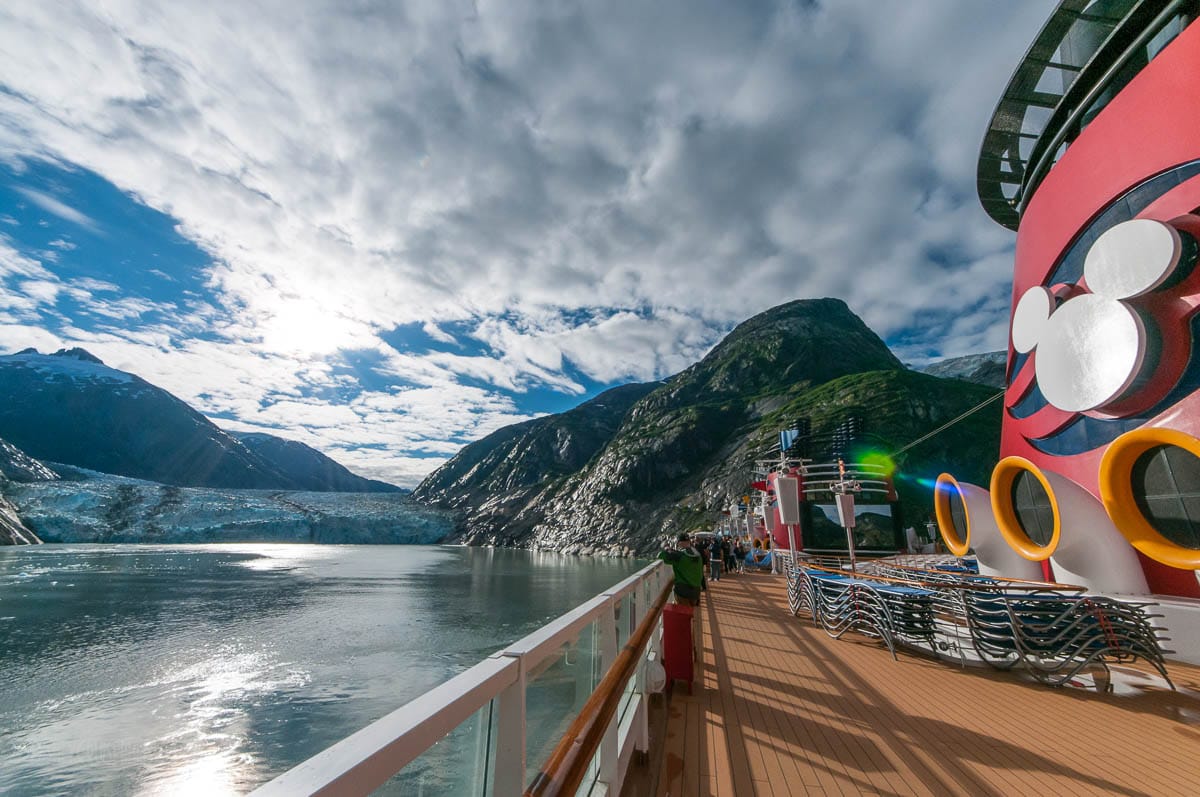
Endicott Arm sits roughly 20 miles south of Tracy Arm and is widely marketed around the Dawes Glacier, an actively calving tidewater glacier that rises at the head of the fjord. The route features steep granite cliffs, waterfalls, distinctive blue ice, and glacier viewing at Dawes.
Tracy Arm has long drawn ships for views of the North and South Sawyer glaciers. Cruise lines shifting to Endicott Arm are positioning it as a comparable scenic alternative, with Dawes Glacier providing the day's glacier viewing.
Some itineraries are being adjusted to fit the new routing. MSC Poesia's seven-night sailings from Seattle, for example, include calls such as Ketchikan, Icy Strait Point, Juneau, and Victoria, with scenic cruising moved to Endicott Arm and glacier viewing at Dawes.
What passengers should expect on timing and excursions
Because Tracy Arm was typically a glacier cruising segment rather than a docked port call, most changes center on the day's timing instead of a complete rework of ports. Cruise lines have warned that port arrival and departure times may shift to accommodate the Endicott Arm route.