Emerald Princess Receives Failing CDC Score Over Food-Safety Lapses
Emerald Princess's October result was its first failure in 31 VSP examinations, after a score of 99 on May 12 and seven perfect scores over its service history.
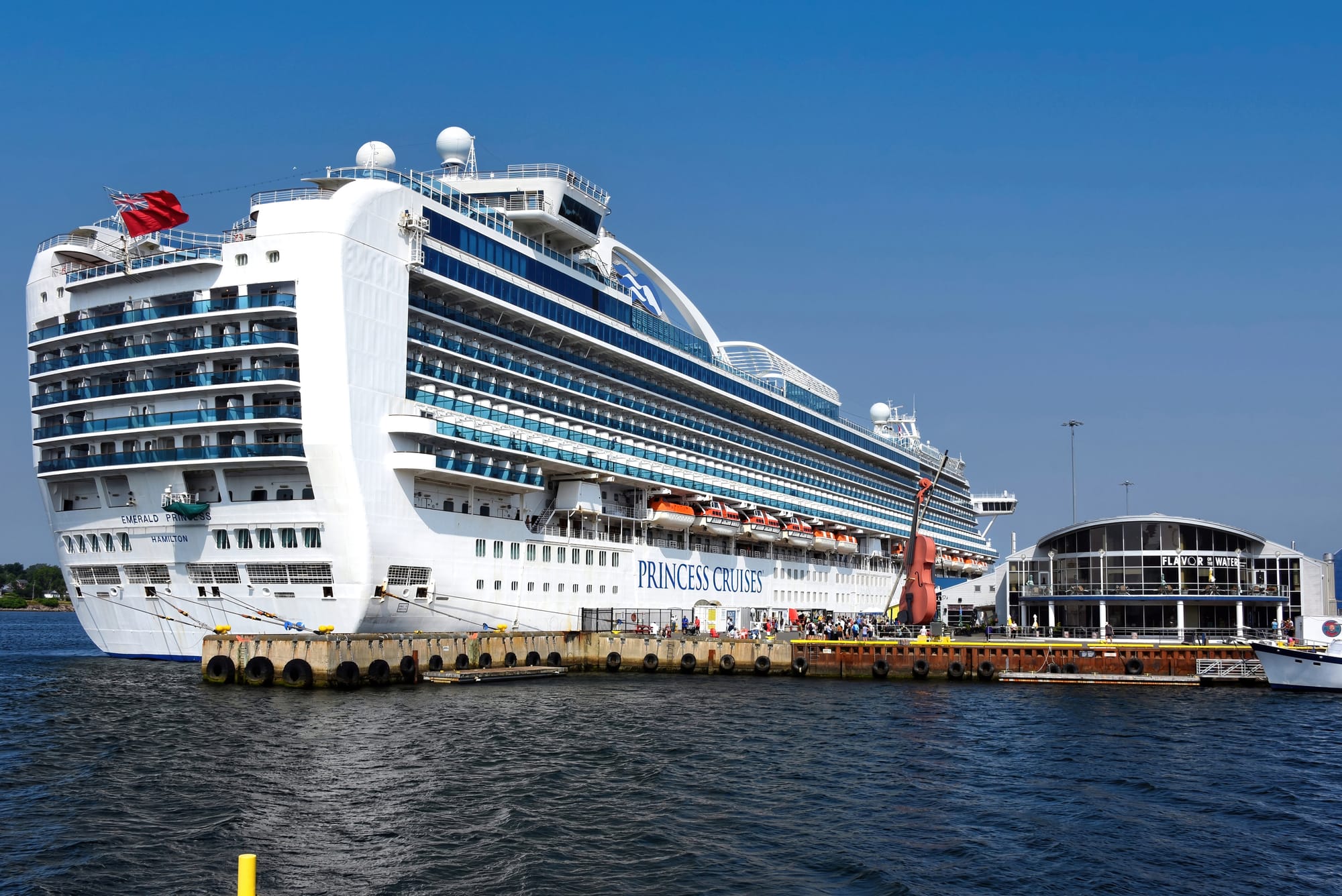
Emerald Princess’s draft 78 exposes a breakdown in food-safety basics
Three visibly moldy or rotten oranges were on the crew lunch serving line when CDC inspectors boarded Emerald Princess on October 16, 2026. This was a ship that had scored 99 just five months earlier.
I expect a ship with that record to get routine food handling right without an inspector’s intervention. Spoiled produce, dirty utensils and poorly controlled food temperatures are basic operational failures. Emerald Princess’s history of strong scores makes this inspection harder to explain, not easier to dismiss.
The ship received a draft score of 78 during its inspection in Long Beach, California, the lowest posted this year by the CDC’s Vessel Sanitation Program. Ships need at least 86 to pass. Inspectors recorded 39 deficiencies.
Ponant’s Le Lyrial also failed, scoring 83 in New York on October 17. The newly published findings bring this year’s total to three failed VSP inspections, following Norwegian Dawn in May.
Problems across the food operation
Emerald Princess’s result was its first failure in 31 VSP examinations. It scored 99 on May 12 and has earned seven perfect scores during its service history. The 113,561-gross-ton ship entered service in 2007 and accommodates approximately 3,090 guests, with about 1,200 crew.
The October findings extended well beyond those three oranges. Inspectors found spoiled peppers, a cucumber and washed avocados. Raw pork chops were stored above thawing hot dogs, partially cooked roast beef above boiled eggs, and raw-tuna sushi above ready-to-eat food.
Food temperature controls accounted for five of the 22 points deducted. Almost all cold food on the portside buffet lines lacked the required time-control labels establishing when it had to be discarded. Meats, cheeses, sandwiches and salads were thrown away during the inspection.
Prepared sandwiches were cooling too slowly. Ham-and-cheese sandwiches dropped only 3 degrees Fahrenheit over three hours. Tomato-and-mozzarella sandwiches cooled by 5 degrees over two and a half hours. At the International Cafe, mortadella-and-cheese sandwiches exceeded 41 degrees Fahrenheit, and crew members gave conflicting accounts of when they had been prepared.
That disagreement matters. A temperature-control procedure cannot do its job if the people responsible cannot establish when the food was made.
Inspectors also found dishes and utensils still visibly dirty after washing, obstructed or contaminated dishwasher spray nozzles, and black, brown and pink debris in ice-machine water trays. They counted 33 live flies across galleys, mess rooms, bar pantries and dishwashing stations.
The CDC identified shortcomings in food-safety management and crew knowledge. Some problems were corrected before inspectors left, including relocating the pork chops, cleaning equipment and giving a thermometer to a crew member preparing burgers. Those are necessary corrections, but the range of findings points to a supervision problem rather than one isolated mistake.
A separate drinking-water finding needs to be kept in proportion. After a blackout that morning, a chlorine analyzer stopped recording measurements. An alarm sounded in the engine control room, but the relevant crew were not notified. Manual testing confirmed chlorine was present. The failure concerned monitoring and communication, not evidence that the water lacked disinfectant.
Le Lyrial’s first inspection also falls short
Le Lyrial’s New York visit was its first inspection under the VSP. Inspectors recorded 27 deficiencies, principally involving cleaning supplies, along with food-contact surfaces that did not meet design, construction or maintenance requirements.
Rat guards were absent from the mooring lines when inspectors boarded. They were fitted an hour after the ship arrived.
Built by Fincantieri in Ancona in 2015, Le Lyrial accommodates up to 264 passengers and operates with approximately 140–145 crew. Its inspection findings were different from those aboard Emerald Princess and should not be treated as an identical set of failures simply because both ships fell below 86. No operator comment accompanied the findings.
The corrective work still needs verification
These inspections fall under the CDC’s 2025 Environmental Public Health Standards, which replaced the VSP’s 2018 operations manual. The program covers food handling, drinking and recreational water, medical facilities, housekeeping, pest management, child activity centers where provided, and ventilation. Inspectors also interview crew and review operating records.
Ships sailing to or from U.S. ports are subject to two inspections annually. Operators pay fees based on vessel size. Deductions depend on the severity of deficiencies, not simply how many inspectors find, and a failing score does not automatically stop a ship from sailing.
Operators must submit corrective-action statements for every deficiency, including those found during passing inspections. Emerald Princess’s documentation calls for measures to resolve critical problems and prevent them from recurring.
A completed corrective-action statement and subsequent inspection result were not yet available for Emerald Princess. The VSP verifies corrections at the next inspection or reinspection, with failed ships subject to timely follow-up.
That prevention requirement is where Princess needs to deliver. Cleaning equipment and moving food while inspectors are aboard addresses the immediate findings. The harder obligation is making sure the crew identifies and fixes these problems before the next CDC visit.