Alaska Sends $37.5M in Unused Cruise Tax Funds to Ports
The Senate Finance Committee added the drawdown in May after Governor Mike Dunleavy did not propose it; Alexei Painter said it basically empties the account.
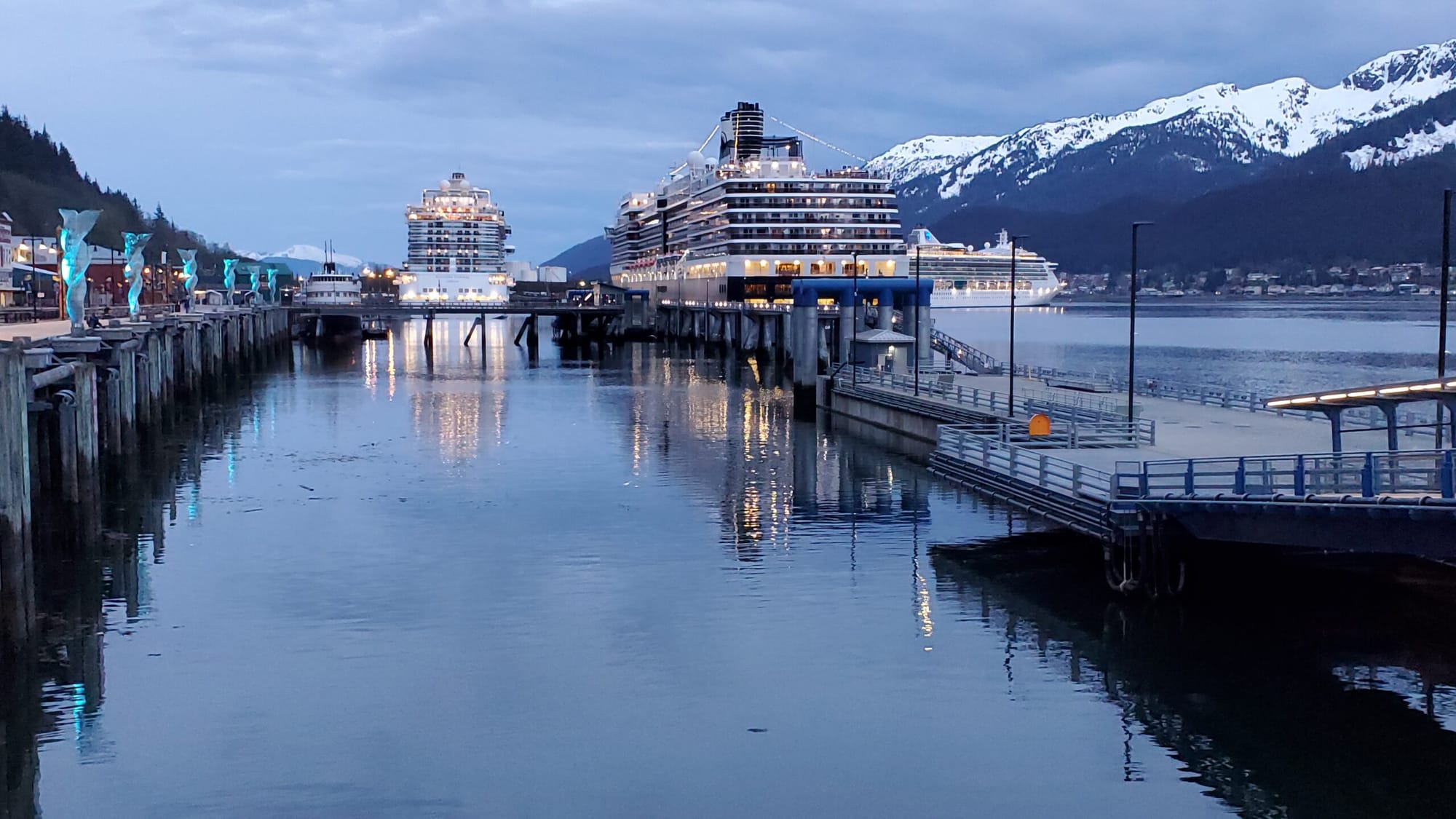
Alaska has appropriated $37.5 million from its Commercial Vessel Passenger Tax Account to 16 cruise-destination communities, sending out money collected from cruise passengers over several years but left unused in the state account. The one-time distribution, included in the state budget for the fiscal year that began July 1, gives Homer $125,000 and directs larger allocations to several Southeast Alaska ports.
The funds carry the same use limits as the state’s regular cruise passenger tax distributions, restricting spending to port and harbor work, passenger safety, and services for vessels and passengers.
Gov. Mike Dunleavy had not proposed drawing down the account, and the Senate Finance Committee added the appropriation to the budget in May. “It didn’t serve a public purpose building up an account balance,” said Juneau Sen. Jesse Kiehl, a member of the committee.
“The $37.5 million basically empties the account,” said Alexei Painter, director of the Legislative Finance Division. He said the account had stood at zero in 2022 before accumulating the unspent balance.
Largest allocations go to high-volume ports
The distribution is based on cruise visitor counts. Skagway will receive $9 million, Ketchikan $6.875 million, Juneau $6 million, Sitka $4.5 million and Hoonah $3 million.
Alaska’s commercial passenger vessel tax is $34.50 per passenger per voyage on qualifying large cruise vessels, generally those with at least 250 berths, overnight accommodations and voyages lasting more than 72 hours in Alaska marine waters. Revenue is deposited into the state account, and the first seven ports of call receive $5 per taxed passenger through legislative appropriation.
Alaska voters approved the tax by citizen initiative 20 years ago, after similar proposals failed in the Legislature. Municipalities receiving either the annual $5-per-passenger allocation or this year’s one-time distribution must use the money within the same statutory boundaries that apply to the state account.
Wrangell plans to hold its share in reserves
Wrangell’s allocation will be deposited in the borough’s commercial vessel passenger tax reserves account. Borough Manager Mason Villarma addressed the account during budget work with the assembly. “We’re going to have a lot of money ... saved up, which is great,” Villarma said.
The Wrangell account, which also receives the borough’s regular $5-per-passenger share of the state tax, was estimated at $545,000 on June 30. The borough expects $127,000 in passenger-tax revenue for the fiscal year that ended June 30 after cruise operators file returns with the state, up from $75,000 the prior year.
Wrangell’s cruise volume is also rising, and the borough is planning around as many as 75,000 passengers this summer if all berths are filled, compared with about 40,000 last year. Many of those visitors are traveling on vessels below the state tax threshold, so they do not generate commercial vessel passenger tax revenue for the borough.
Compare current Alaska cruise fares on Cruise Lookup.