Villa Vie Residents Await Answers After Odyssey Evacuation
On October 27, 2026, residents in Sihanoukville were given about seven hours to pack and disembark; Odyssey later sailed toward Singapore without them.
Villa Vie’s residents need answers before its parent talks expansion
Villa Vie’s parent company says it is acquiring at least one more cruise ship and pursuing two residential projects. Meanwhile, no refunds have been announced for residents put ashore from Villa Vie Odyssey, and the lender has taken control of their former floating home.
I’d put a funded plan for those residents ahead of another ship announcement. Some had sold their homes to move aboard. Expansion is a difficult story to sell while those people are dealing with the consequences of the last promise.
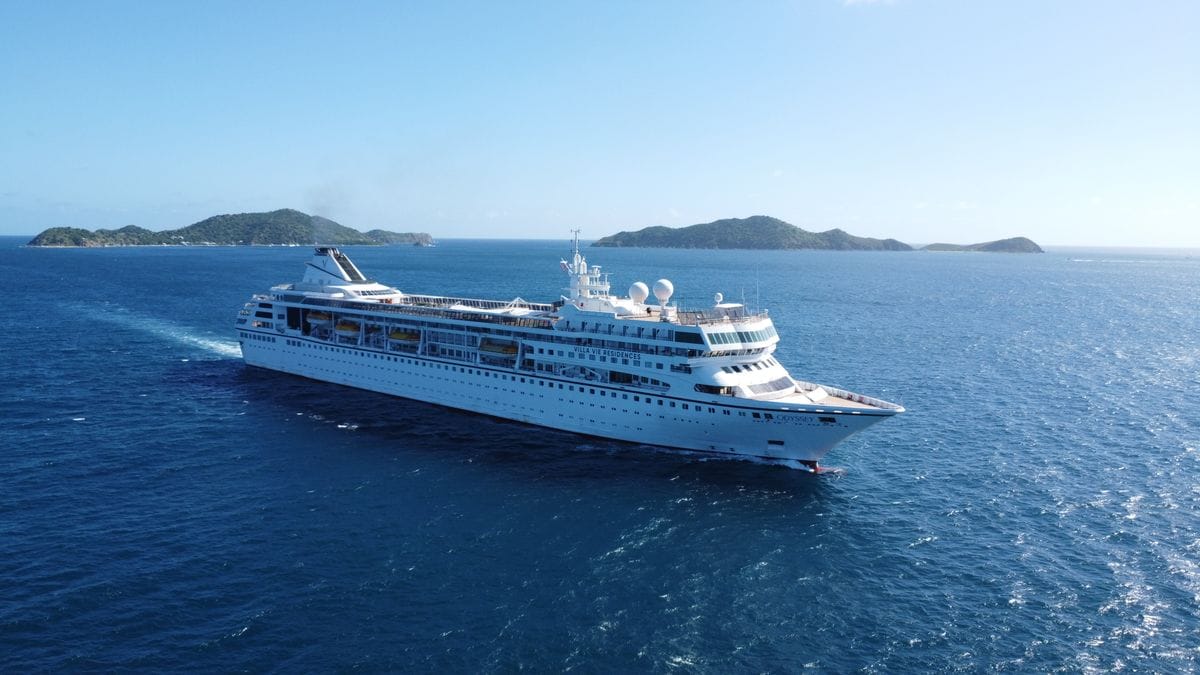
Villa Vie Residences suspended its residential cruise operation in Sihanoukville, Cambodia, on October 27, 2026. Residents were subsequently given about seven hours to pack and disembark. Odyssey, the former Fred. Olsen Cruise Lines ship Braemar, has since sailed toward Singapore without them, after lender Ness, Risan & Partners AS took control.
Preah Sihanouk province Deputy Governor Long Dimanche said the ship arrived carrying 203 passengers and 156 crew members. For residents who had made it their home, the interruption meant finding somewhere else to live with very little notice.
A fuel bill without a funded rescue
Villa Vie attributed the suspension to fuel expenses it estimated had risen from about US$1,800 per cabin each month to US$6,000–US$8,000 in parts of Asia. Founder and Executive Chairman Mikael Petterson linked that increase to the Iran war and said slower sailing and longer port stays had not produced enough savings.
“Passing the full increase on to residents is not a realistic solution,” Petterson said.
That is a substantial cost increase on the company’s figures. But residents also described financial pressure before the suspension. “We were tired of every two to four weeks being asked for money for fuel, money for everything,” Lynn Montoya, who boarded with her husband in Panama, told The Associated Press.
A residential programme needs a more durable answer to rising costs than repeatedly asking the people living aboard to find more money. Their commitment was already substantial. Permanent residency packages ranged from US$119,999 to US$439,999, five-year residency started at US$59,999, and a rent-to-own option began at US$3,499 a month.
Brisbane resident Rina Cavazza told Australia’s 7NEWS she had paid A$170,000, approximately US$118,000, for two years aboard. Back in Australia, she watched remotely as Odyssey departed Cambodia.
“It was really, really sad seeing it just sailing away like that,” she said.
At the suspension, Villa Vie outlined a 60-day restructuring and recapitalisation effort. It had not finalised rescue financing or a transaction, and Petterson cautioned that “no outcome is assured.” That leaves residents with a proposed process, rather than a secured return to the life they paid for.
Permanent residency carries a different promise
Villa Vie’s Endless Horizons programme offered permanent residency rights in exchange for an upfront payment and maintenance fees. Residents could remain aboard beyond Odyssey’s initial planned three-and-a-half-year circuit, which began in Belfast on October 3, 2024, promising more than 425 destinations in 147 countries.
That continuing right to stay is the appeal. It is also why I would hold a residential operator to a tougher standard than a company selling a long holiday. When customers make housing decisions around a product, keeping them accommodated through a disruption becomes a central test of the business.
A conventional world-cruise passenger buys accommodation and cruise services for a defined voyage, without owning a cabin or voting on the itinerary. These sailings commonly last two to six months, though longer programmes exist. Individual segments can run from a week to more than a month.
The “world cruise” label does not necessarily mean a complete circumnavigation. Crystal’s 2027 programme focuses entirely on the Pacific. Holland America’s 129-night itinerary departs Florida, crosses the Pacific and visits the South Pacific, Australia and Southeast Asia before continuing to southern and western Africa.
Oceania Cruises’ 244-day voyage aboard Oceania Vista covers six continents, including almost three months in the Mediterranean and Northern Europe. Starting fares for 2027 world cruises are nearly US$17,000, and some itineraries are already sold out. Those are lengthy commitments, but they have scheduled conclusions.
Residential cruising itself has a much longer-running example. The World launched in 2002 and operates as a condominium at sea, with 165 privately owned residences and owners from about 20 countries. Its global circuits take two to three years, followed by dry-dock refurbishment. One advertised residence has an asking price of US$3.75 million.
That is a substantially different price level and ownership model. Its continuing operation matters, though: Odyssey’s suspension is a failure of this operator to sustain its service, not evidence that every residential ship must fail.
The next ship is still a future promise
Parent company Residential Cruise Holdings set out those expansion plans to CBS despite Odyssey’s disruption.
Sister company Avora Residences has reported a nine-year charter of Regent Seven Seas Cruises’ Seven Seas Navigator, with an option to purchase the vessel for a nominal sum. Avora plans to take over the ship in late 2027 and relaunch it as Avora Lumina.
Those plans do not resolve the immediate problem aboard Odyssey, and there is no basis to assume they will fund its rescue.
Before asking people to trust another promise of a home at sea, the group needs to show what it can do for the people who have just lost theirs.