Steering Loss Probed in New Orleans Riverboat Capsizing
Investigators are examining an apparent steering loss aboard Atlantic Asphalt as crews prepare to remove about 16,000 gallons of fuel from American Heritage before salvage begins.
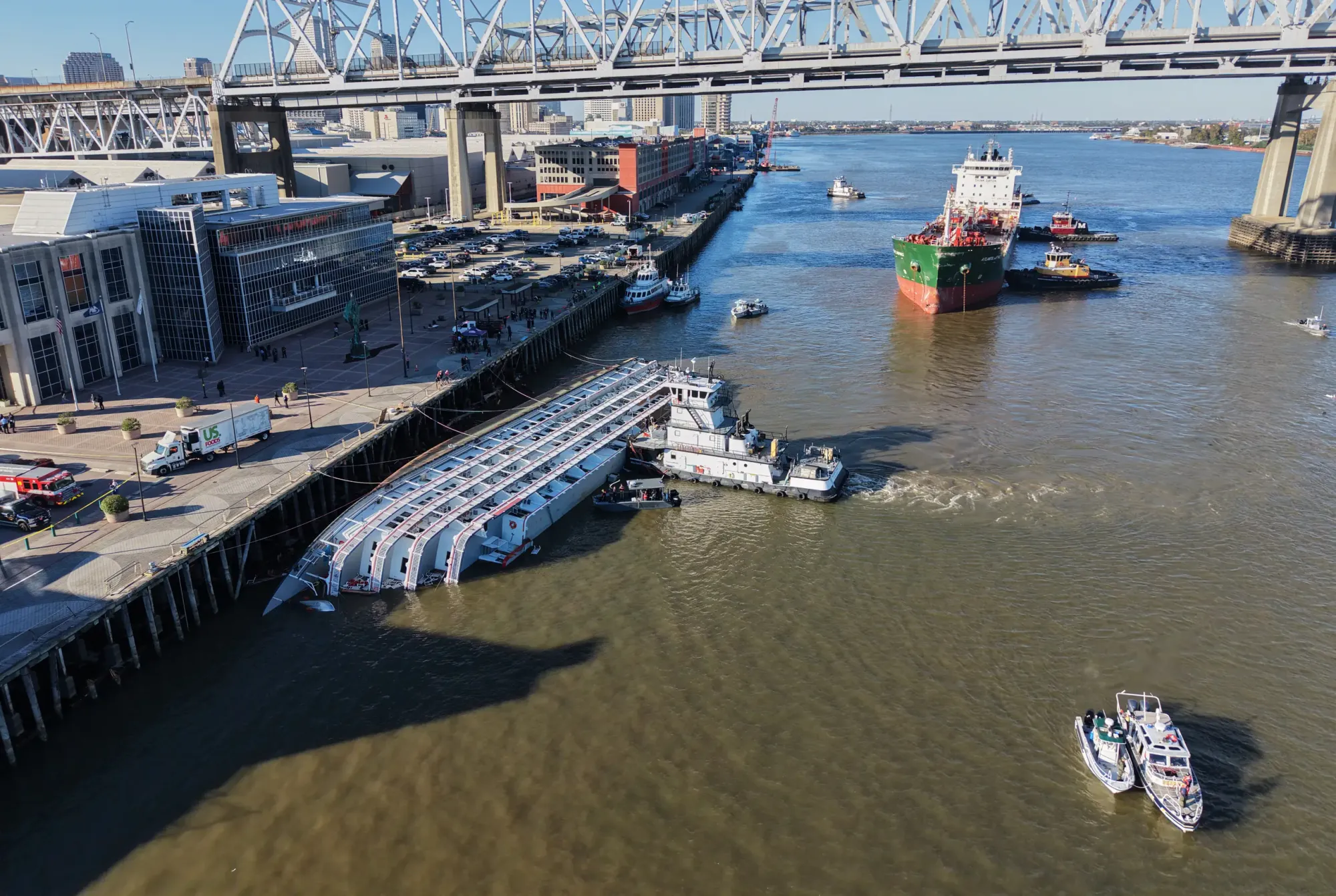
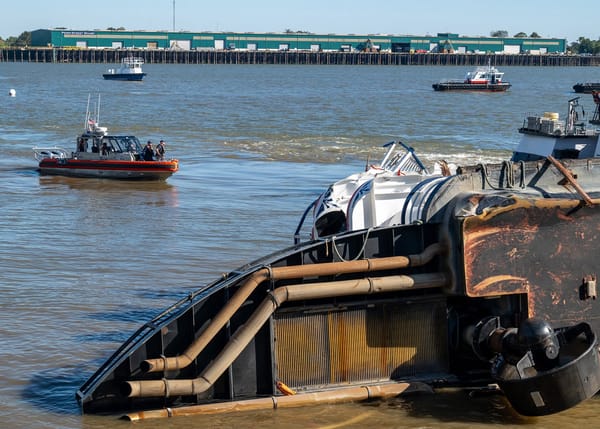
American Cruise Lines’ American Heritage, a 150-guest paddlewheeler built in 2015, capsized after the tanker Atlantic Asphalt struck it while docked in New Orleans on Friday, November 13, 2026. Thirty-two people were taken to hospitals with non-critical injuries following the collision on the Mississippi River.
The Port of New Orleans later confirmed that all 197 passengers and crew had been accounted for, with no fatalities. American Cruise Lines had initially put the number of guests aboard at approximately 129.
The collision occurred at about 12:30 p.m. local time outside the Port of New Orleans Administration Building. The riverboat had arrived roughly two hours earlier for passenger disembarkation, according to the port.
New Orleans Harbor Police Chief Melanie Montroll said 87 passengers got off before the vessel overturned. Others entered the river as the ship took on water and rolled onto its side, while some climbed over railings as the decks tilted.
Harbor police entered the water to assist passengers, and firefighters lowered ladders from the dock. Tugboats and other nearby vessels helped recover people. The Coast Guard deployed boats, cutters and helicopters. Survivors were brought into the port administration building for medical assessments and a roll call.
Eight people remained hospitalized on Saturday, officials said at a briefing that day. Two Harbor Police officers who had been aboard during the rescue were among those taken to hospitals and were subsequently released, according to the port.
The ship and its Mississippi schedule
Chesapeake Shipbuilding in Salisbury, Maryland, built the 295-foot, five-deck, U.S.-flagged American Heritage, which previously sailed as Queen of the Mississippi. American Cruise Lines renamed it during a 2022 rebranding that added “American” to ship names.
The operator’s published schedule listed an eight-day, seven-night Highlights of the Mississippi round trip due to begin Friday. The advertised route included Baton Rouge, St. Francisville, Natchez, Vicksburg and Oak Alley before returning to New Orleans.
Replacement sailings and passenger assistance
American Cruise Lines has assigned fellow paddlewheeler American Splendor to operate American Heritage’s remaining 2026 departures as scheduled. The company is contacting booked passengers with updated itinerary information, including embarkation and disembarkation locations.
Guests booked for 2027 and later will be contacted separately about their cruises and available options. The operator has also established a crisis center in New Orleans to provide travel assistance and other support to affected guests and crew who remain in the area.
Passengers lost belongings including identification, clothing, phones and medications. American Cruise Lines arranged hotel accommodation, while city officials worked with the Red Cross, University Medical Center and other partners to help replace essential items and organize transportation.
Investigators look at the tanker’s steering
Coast Guard Captain Melanie Burnham, commander of Sector New Orleans and captain of the port, said the tanker appeared to have experienced “some type of loss of steering.” Investigators have not established the cause of the collision.
Atlantic Asphalt is a 160-meter, Marshall Islands-flagged tanker designed to carry asphalt and bitumen. Whether it was carrying cargo at the time of impact was not immediately clear. No injuries were reported aboard the tanker, which was subsequently towed away from the collision site.
The Coast Guard initially stopped vessel traffic between Mississippi River mile markers 93 and 96. By Saturday, the river had reopened to traffic, Coast Guard public affairs officer Rachel Ault said, with a 500-foot safety zone around the capsized riverboat.
At Saturday’s briefing, Burnham said approximately 16,000 gallons of fuel needed to be removed from American Heritage before salvage could proceed. She said there were no indications of pollutants in the surrounding water. Authorities expected the vessel to remain on its side for weeks while fuel removal and investigative work continued.
The National Transportation Safety Board has recovered the tanker’s voyage data recorder, which captures information including vessel speed and bridge audio. NTSB member John DeLeeuw said the agency expected to issue a preliminary report within 30 days. The final investigation report is expected to take 18 to 24 months.