Princess Cruises Orders Three LNG Voyager-class Ships from Fincantieri
The order shows big cruise brands are locking in megaship capacity for the next decade while leaning on liquefied natural gas as a bridge fuel amid tightening emissions rules.
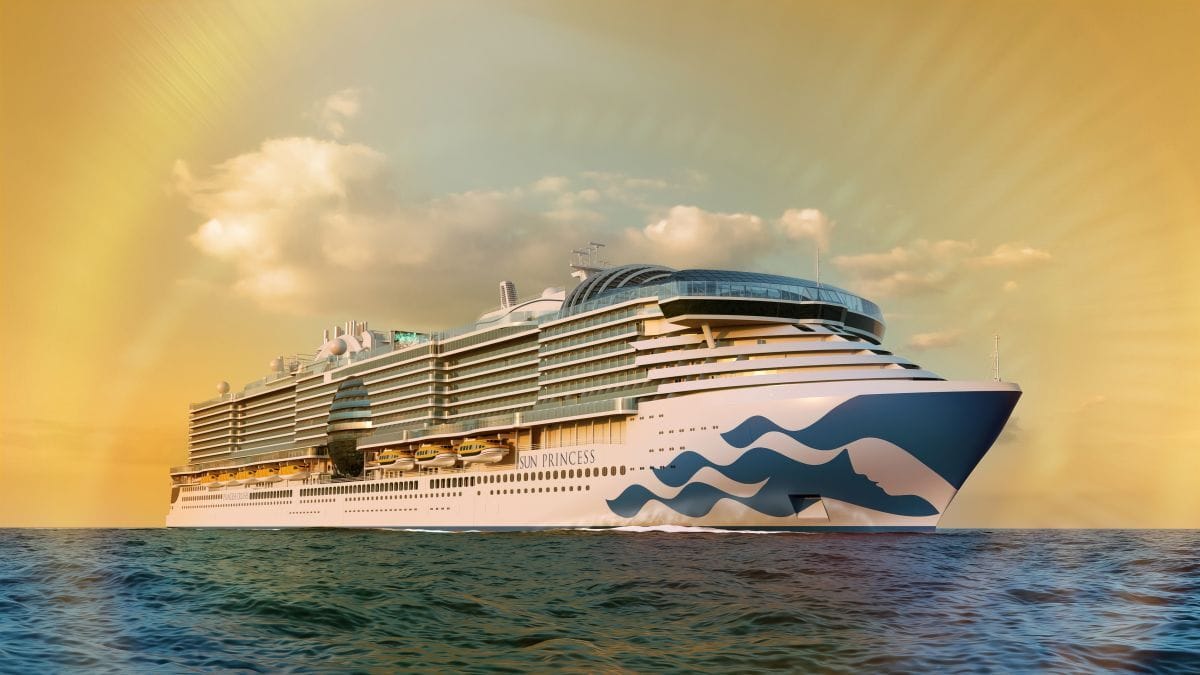
Update: May 2, 2026 — Princess detailed redesigned outer decks, staterooms, and Piazza areas, with the first delivery now slated for late 2035.
Princess Cruises has placed an order worth more than €2 billion (US$2.36 billion) with Italian shipbuilder Fincantieri for three new liquefied natural gas (LNG)-fuelled cruise ships, a deal that will add the largest vessels ever built for the brand.
The ships are due for delivery in late 2035, 2038, and 2039, extending Princess Cruises’ newbuild pipeline into the late 2030s as cruise demand remains strong in the post-pandemic period.
Voyager-class order: size, timeline, and where the ships will be built
The three ships are being described as Voyager-class and are expected to measure about 183,000 gross tons each, with capacity for approximately 4,700 passengers. Construction is planned at Fincantieri’s Monfalcone shipyard in Italy, which has built multiple ships for Princess Cruises, and the agreement was formalized during Seatrade Cruise Global in Miami.
- Scope and value: Princess Cruises ordered three LNG-fuelled cruise ships from Fincantieri under a contract valued at more than €2 billion (US$2.36 billion), with deliveries scheduled for late 2035, 2038, and 2039.
- Ship scale: Each vessel is planned at roughly 183,000 gross tons and about 4,700 passengers, making them the largest ships built for the Princess Cruises brand.
- Propulsion approach: The ships are set to use dual-fuel engines designed to operate mainly on LNG, reflecting the companies’ view of LNG as a readily deployable option for cutting greenhouse gas emissions.
- Build location: The ships will be constructed at Fincantieri’s Monfalcone yard, a facility tied to Princess Cruises’ recent deliveries and longer-running production history with the brand.
Design lineage: building on Sun Princess and Star Princess
Princess Cruises and Fincantieri said the Voyager-class design builds on the cruise line’s Sphere-class ships, Sun Princess (completed in 2024) and Star Princess (completed in 2025), both delivered from Monfalcone. Compared with the roughly 175,500-gross-ton Sphere-class ships, the new vessels are planned to be about 3% larger and carry more than 9% more guests. Princess also said the ships will feature redesigned outer decks, staterooms, and Piazza areas, while dual-fuel engines are expected to run primarily on LNG.
Princess Cruises President Gus Antorcha said the design work drew on customer and travel agent research and will extend to dining venues, pool areas, entertainment spaces, and other public spaces. “We are leaving no area untouched as we thoughtfully evolve the Princess experience,” Antorcha said.
Princess has not yet released detailed information about specific onboard venues and attractions, saying additional design and amenity details will be shared later.
What the deal adds to Carnival Corporation’s broader fleet plan
The order is expected to account for Carnival Corporation’s 19th, 20th, and 21st LNG-based vessels, bringing the company’s LNG-powered fleet to 21 ships by the 2030s. The agreement also fits within a wider newbuild program that includes seven additional ships scheduled for delivery between 2027 and 2033, underscoring how major cruise operators are sequencing capacity additions over multiple shipbuilding cycles while aligning new tonnage with evolving emissions requirements.
Fincantieri: multi-decade partnership and shipyard visibility through 2039
Fincantieri CEO Pierroberto Folgiero linked the agreement to long-term production planning at the builder. “This agreement strengthens our long-standing partnership and provides visibility for our shipyards through to 2039,” Folgiero said.
Folgiero also said the new orders support the company’s 2026-2030 industrial plan. Fincantieri said its relationship with Princess Cruises at Monfalcone has resulted in 21 ships delivered over the past 35 years, including Sun Princess and Star Princess as the most recent completions cited by the builder.
LNG’s role in cruise decarbonisation, and why methane slip remains a focus
The Voyager-class announcement comes as the cruise industry continues to position LNG as the most widely adopted alternative fuel across both ships already in service and the order book. That message was reinforced at Seatrade Cruise Global in Miami, Florida (held from 13–16 April 2026), where Lloyd’s Register presented its report Fuel for Thought: LNG for Cruise.
Lloyd’s Register’s assessment highlights LNG’s lifecycle performance and points to factors supporting its adoption, including established bunkering availability and alignment with existing safety and regulatory frameworks. The report also examines progress in engine technologies, onboard abatement systems, improved verification methods, and cleaner fuel supply, while describing methane slip as a central challenge for LNG’s long-term emissions performance.
Francesco Ruisi, Lloyd’s Register’s vice president and global passenger ship segment director, framed LNG as a transitional option rather than a final destination. “LNG is not an end point, but a practical enabler of the industry’s decarbonisation pathway,” Ruisi said, adding that operators are under pressure to cut emissions now while maintaining flexibility to adopt future fuels and technologies.
Regulatory drivers and future pathways, including bioLNG and synthetic methane
Lloyd’s Register’s report discusses the economic implications of emerging compliance mechanisms, including the International Maritime Organization’s Net Zero Framework and the European Union’s FuelEU Maritime initiative. It also points to potential pathways to further reduce emissions over time, including cleaner fuel supply chains and the use of bioLNG and synthetic methane as they become available at scale.
With construction planned at Monfalcone and deliveries set for late 2035, 2038, and 2039, Princess Cruises’ Voyager-class ships will enter service during a period when both fuel choice and verified emissions performance are expected to remain central to cruise ship design decisions.
Frequently Asked Questions (FAQs)
When will Princess Cruises’ new Voyager-class ships be delivered?
The three ships are scheduled for delivery in late 2035, 2038, and 2039.
How large are the new Princess Cruises ships on order?
Each Voyager-class ship is expected to be about 183,000 gross tons and carry roughly 4,700 passengers, making them the largest ships built for the Princess Cruises brand.
What fuel and engine configuration will the Voyager-class ships use?
The ships are set to be LNG-fuelled, using dual-fuel engines designed to operate mainly on liquefied natural gas.
What is methane slip, and why does Lloyd’s Register highlight it?
Methane slip refers to unburned methane released during engine operation, which can affect overall emissions performance. Lloyd’s Register said reducing methane slip is important to LNG’s long-term credentials, pointing to progress through changes in engine design, onboard abatement systems, and improved verification methods.
Which regulatory mechanisms does Lloyd’s Register link to LNG’s economics and lifecycle performance?
Lloyd’s Register’s report discusses the International Maritime Organization’s Net Zero Framework and the European Union’s FuelEU Maritime initiative, alongside LNG’s lifecycle performance and the economics of compliance mechanisms.