Cruise Industry Forecasts 42 Million Passengers a Year by 2029
Cruising is becoming a mainstream family vacation, and its new scale is testing whether lines can cut emissions and manage port crowding before political pressure grows.
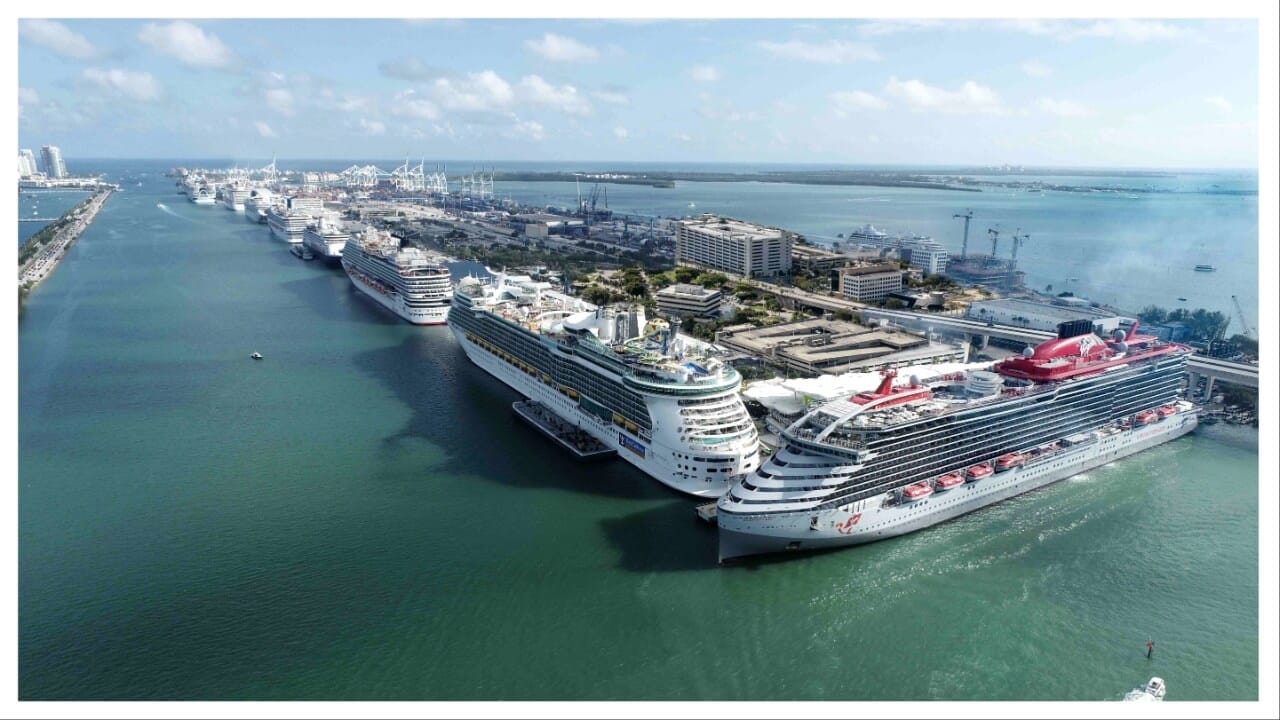
Cruise industry leaders projected global passenger volumes will reach 42 million annually by 2029, up from 37 million last year, as executives gathered Tuesday in Miami Beach for the Seatrade Global conference.
The outlook, shared by Cruise Lines International Association (CLIA) around the event, came alongside warnings from major operators that record demand is colliding with a more volatile operating environment shaped by fuel-price swings, geopolitical disruption, and rising scrutiny of crowding in popular ports.
Demand grows, and the cruise audience shifts
Carnival Corporation CEO Josh Weinstein said cruising has moved firmly into the mainstream. “We are not an alternative vacation anymore. We are a vacation,” Weinstein said, describing demand that is broadening among younger travelers as well as multi-generational family groups.
CLIA’s figures highlighted both growth and repeat behavior among cruisers:
- Younger travelers: One-third of cruise travelers are now under 40, CLIA found.
- Family groups: One-third of trips are multi-generational, often with families traveling together.
- Repeat cruising: Nearly a third of cruisers take vacations by ship multiple times a year.
Weinstein linked that expansion to heightened exposure to shocks that can hit a mass-market business. “That mainstream demand sets us up very well for volatility,” he said.
Fuel volatility collides with net-zero ambitions
Rising fuel prices, described at the conference as being driven by geopolitical tensions, were a central theme as cruise companies balanced near-term cost pressure against long-term emissions targets. Cruise lines have set a goal of net zero emissions by 2050, but executives said reaching it will require both efficiency gains and new fuel options including biofuels, green methanol, and synthetic liquefied natural gas.
Weinstein said Carnival does not hedge fuel, and argued the company’s strategy centers on reducing consumption. “Nobody asks us about (fuel) hedging when the price is low,” he said. “The starting point is fuel is something we need for our business. The focus for Carnival Corporation is to use less. At the end of the day if we use less fuel we will save money and it’s better for the planet.” He added, “It’s true, it will hurt us at this particular moment.”
Weinstein said the company remains confident in demand and its finances. “At the end of the day, it’s a healthy business with a great balance sheet with record demand,” he said.
Royal Caribbean Group Chairman and CEO Jason Liberty said alternative fuels remain a supply-and-scale problem as much as a technology question. “That is in preparation for getting us closer and closer to net zero goals,” Liberty said, adding, “It’s not about what we want to use. It’s about what’s scalable and available.”
Bud Darr, president and CEO of CLIA, framed fuel sourcing as a broader competition across the economy. “We’re going to have heavy competition with other sectors for those fuels as well. There’s no guarantee we get them,” Darr said.
Geopolitical shocks disrupt itinerary planning
MSC Cruises Executive Chairman Pierfrancesco Vago described a fluid situation in the Persian Gulf tied to an impasse at the Strait of Hormuz, a key choke point for regional marine traffic. At least six cruise ships remain stranded in the Persian Gulf, including MSC Euribia, according to comments shared during the Seatrade discussions.
Vago said about 1,500 passengers were evacuated safely amid Dubai airport shutdowns and missile warnings after a late-February attack on Iran by the U.S. and Israel, and said some crew members remained aboard to maintain the vessel.
“Obviously, we live day by day. The situation is very fluid,” Vago said. He added that changing developments and government messaging can move quickly: “Morning is one thing, lunchtime is another, dinner is another again.” Vago said operators need to stay ready to move when conditions allow. “We need to stay cool and actually be ready to move out as soon as the possibility and opportunity comes back,” he said.
Executives said disruption linked to the strait has also complicated planning beyond the Gulf, affecting some itineraries in the Middle East and southern Europe.
AI, connectivity, and the push for a “frictionless” trip
While many of the panel’s discussions centered on operational risk, executives also pointed to technology as a lever for both efficiency and guest satisfaction. Cruise lines described using artificial intelligence to improve onboard operations, including efforts that can reduce food waste and support itinerary optimization.
Weinstein said technology investments are aimed at making vacations smoother for passengers. “Cruising is about reducing friction so people can enjoy the hospitality we give them with our crew aboard,” he said. “We need to make it as frictionless as possible and enjoyable as possible so they get to spend time with their friends and family in a real life scenario.”
Liberty pointed to onboard connectivity, saying most Royal Caribbean ships now have Starlink satellite connectivity to meet demand for faster internet. He also linked demand to broader shifts in work patterns, saying a more flexible work environment has helped drive interest in cruising.
On AI’s impact on jobs, Liberty pushed back on worst-case narratives. “There is a level of fear there will be a 20 percent unemployment rate and an Armageddon, versus we will evolve,” he said.
Executives also cited private destinations and exclusive itineraries as contributors to consumer interest, alongside growing attention to higher-end experiences and eco-tourism-focused travel.
Overtourism moves to the center of cruise-destination talks
As passenger volumes rise, executives said crowding concerns in some places are increasing pressure on cruise operators and ports to coordinate visitor flows. Vago said the industry has faced criticism on sustainability and believes it has made progress, and argued that a similar focus is needed for what is often labeled overtourism.
“We now need to do the same with what’s called overtourism,” Vago said. Pointing to Dubrovnik, Croatia, he said coordinating schedules with local authorities can distribute arrivals more evenly. “We need to work with authorities to plan how to distribute (the guests),” he said.
Vago also argued that the cruise industry’s long planning cycle can help destinations seeking predictability. “Many of these coastal communities actually appreciate that. We plan in advance. We create itineraries three years in advance,” he said.
Norwegian’s new CEO sets a turnaround tone
Norwegian Cruise Line Holdings President and CEO John Chidsey, who took over in February, said his focus is improving execution amid margin pressures and volatile shares. “I am a turnaround guy clearly,” he said, adding, “I think we can improve our execution.”
Chidsey said he expects to be deeply involved in operational details. “As a board member you know just enough to be dangerous and tick management off,” he said. “It’ll be fun to parachute down and get in the weeds.”
In comments tied to his first earnings call after taking the role, Chidsey also pointed to prior operational missteps, including expanding Caribbean itineraries before completing private island infrastructure. Asked about his background, he offered a short summary of the approach he intends to bring: he described himself as “a turnaround guy not a sandwich guy,” arguing that an outside perspective can sharpen execution.
Executives at Seatrade said near-term priorities will center on maintaining flexibility as fuel costs and itinerary risks shift, while continuing longer-term investments in alternative fuels and onboard technology and working more closely with destinations that want more predictable visitor flows.
Frequently Asked Questions (FAQs)
How many cruise passengers does the industry expect by 2029?
CLIA projects the cruise industry will reach 42 million passengers annually by 2029, up from 37 million passengers worldwide last year.
Why does Carnival focus on fuel reduction instead of fuel hedging?
Josh Weinstein said Carnival does not hedge fuel and instead prioritizes using less. He argued that lower consumption reduces costs and supports emissions goals, even as higher prices can “hurt” in the short term.
Which alternative fuels did cruise leaders highlight, and what is the main constraint?
Executives pointed to biofuels, green methanol, and synthetic liquefied natural gas as key options tied to the industry’s 2050 net-zero goal, while stressing that availability and scalability, and competition with other sectors for supply, are major constraints.
What happened with MSC Euribia in the Persian Gulf?
MSC Cruises Executive Chairman Pierfrancesco Vago said MSC Euribia is among ships affected by the Strait of Hormuz impasse. He said roughly 1,500 passengers were evacuated safely amid Dubai airport shutdowns and missile warnings, and that some crew members remained onboard to maintain the ship.
How are cruise lines responding to overtourism concerns in places like Dubrovnik?
Vago said cruise companies are working with local authorities to coordinate timing and distribute visitor flows, and he noted that cruise itineraries are typically planned years in advance, which can help coastal communities manage volumes more predictably.