Princess Cruises Orders Three LNG-Capable Megaships for $2.3B
The order highlights how cruise brands are booking scarce shipyard slots years ahead, a bet that demand for ever-larger ships will hold through the next decade.
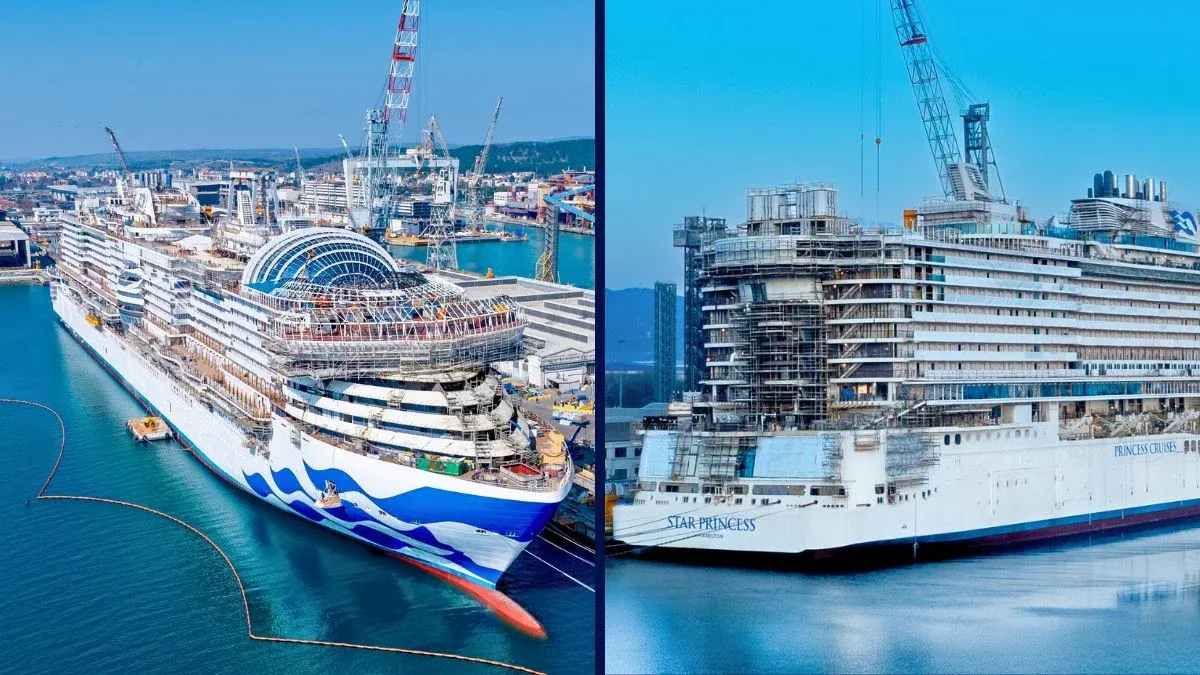
Princess Cruises has confirmed an order for three new large cruise ships from Italian shipbuilder Fincantieri, a deal valued at more than $2.3 billion (about €2 billion). The vessels will form a new Voyager class and are scheduled for delivery in late 2035, 2038, and 2039.
Princess said the ships will become the largest in its fleet by both tonnage and passenger capacity, coming in at about 183,000 gross tons and carrying approximately 4,700 guests in lower berths. Once all three are delivered, Princess said its fleet will total 20 ships.
Delivery schedule and core specifications
All three Voyager-class ships will be built at Fincantieri’s Monfalcone shipyard in Italy. Princess said the newbuilds are intended to combine the line’s highest-rated onboard experiences with redesigned public spaces and accommodations suited to its international itineraries.
- Shipyard: Fincantieri, Monfalcone (Italy)
- Projected size: about 183,000 gross tons
- Capacity: approximately 4,700 guests (lower berths)
- Deliveries: late 2035, 2038, and 2039
- Deal value: more than $2.3 billion (about €2 billion)
Gus Antorcha, President of Princess Cruises, said the ships were shaped by extensive research. “We have been leveraging customer and agent feedback to introduce new concepts grounded in what matters to our current and future guests,” Antorcha said. In a separate statement, he added: “The Voyager class will delight both our loyal guests and attract the next generation of Princess guests.”
How Voyager builds on Sun Princess and Star Princess
Princess positioned the Voyager class as a next-generation platform that builds on the Sphere Class ships developed with Fincantieri for Sun Princess (delivered in 2024) and Star Princess (delivered in 2025). Sun and Star are about 175,500 gross tons and are designed for roughly 4,310 guests.
At about 183,000 gross tons, the Voyager ships are expected to be roughly three percent larger than Sun and Star, while the capacity increase is larger. Princess said the new class is projected to carry more than nine percent more guests than the two recent sister ships when measured in lower berths.
Princess also said the Voyager-class vessels will introduce “completely reimagined” outer decks, staterooms, and Piazza designs, reflecting an effort to update core guest areas while carrying forward elements that have resonated with passengers.
Propulsion plans: dual-fuel ships intended to run primarily on LNG
Like Sun Princess and Star Princess, the three Voyager-class ships will be dual-fuel vessels intended to operate primarily on liquefied natural gas (LNG). Princess framed the propulsion choice as part of its effort to incorporate sustainable fuel systems, and the company noted LNG’s growing adoption across the cruise sector since AIDAnova entered service in 2018 with LNG-capable engines.
Across Carnival Corporation’s broader plans, the three Princess newbuilds are set to be the company’s 19th, 20th, and 21st LNG-based ships.
Why the late-2030s deliveries matter for Princess and Carnival
The delivery spacing in 2035, 2038, and 2039 aligns with Carnival Corporation’s stated approach of pacing ship additions across its brands to manage growth. Carnival already had seven additional ships under contract for delivery between 2027 and 2033, and the Princess order extends major capacity additions into the following decade.
The order also pushes the industry’s construction pipeline further out, with the Princess deliveries stretching into 2039 while other projects are currently scheduled into 2037, highlighting how far ahead major shipyard slots are being booked for large cruise ships.
Fincantieri’s workload and the role of Monfalcone
Fincantieri, headquartered in Trieste, is a state-controlled shipbuilder and Europe’s largest. In addition to cruise ships, the company builds naval vessels and ferries, and it supplies ships to multiple global cruise brands.
Pierroberto Folgiero, Fincantieri’s Chief Executive, tied the Princess agreement to long-term production planning and profitability, saying the deal “confirms the strength of a long-standing partnership” with Princess Cruises. He added that the new orders “secure a robust workload for our shipyards through 2039,” and described the agreement as supporting the profitable development of Fincantieri’s cruise business.
Beyond the Princess project, Fincantieri’s cruise orderbook includes other large newbuilds, including ships above 200,000 gross tons for Carnival Cruise Line and Norwegian Cruise Line.
Broader market context: a record orderbook and long-term demand forecasts
The Princess order adds to a cruise newbuild pipeline that Seatrade Cruise has estimated at a record $86 billion, based on 76 firm orders. Seatrade Cruise has also said that with additional projects under discussion, the total could soon pass $100 billion.
Industry forecasts have also pointed to continued passenger growth. Cruise Lines International Association (CLIA) has forecast that annual cruise passengers will reach 40 million by the end of this decade. Seatrade Cruise has also noted the relative scale of the sector within the wider commercial maritime market, with roughly 350 cruise ships in service out of more than 60,000 commercial ships worldwide.
With construction planned at Monfalcone and deliveries beginning in late 2035, the Voyager-class ships now represent Princess Cruises’ next major newbuild step after Sun Princess and Star Princess. Princess and Fincantieri said additional details on onboard features and deployments are expected closer to each ship’s delivery window.
Frequently Asked Questions (FAQs)
How big will Princess Cruises’ Voyager-class ships be?
The Voyager class is planned at about 183,000 gross tons, with capacity for approximately 4,700 guests in lower berths, making them the largest ships in the Princess fleet.
When will the three new Princess ships be delivered?
Princess Cruises and Fincantieri have scheduled the deliveries for late 2035, 2038, and 2039.
Where will the Voyager-class ships be built?
All three ships will be built by Fincantieri at its Monfalcone shipyard in Italy.
What fuel will the new Voyager-class ships use?
The ships will be dual-fuel and are intended to operate primarily on liquefied natural gas (LNG), similar to Sun Princess and Star Princess.
How does Voyager compare with Sun Princess and Star Princess?
Sun Princess (2024) and Star Princess (2025) are about 175,500 gross tons and designed for roughly 4,310 guests. The Voyager class is projected at about 183,000 gross tons (around three percent larger) and is expected to carry more than nine percent more guests than Sun and Star when measured in lower berths, while introducing “completely reimagined” outer decks, staterooms, and Piazza designs.