Celestyal Discovery Becomes First Cruise Ship Through Strait of Hormuz
A successful transit through Hormuz could unlock stranded cruise capacity and steady summer deployments, but shifting access rules show how fragile routing remains.
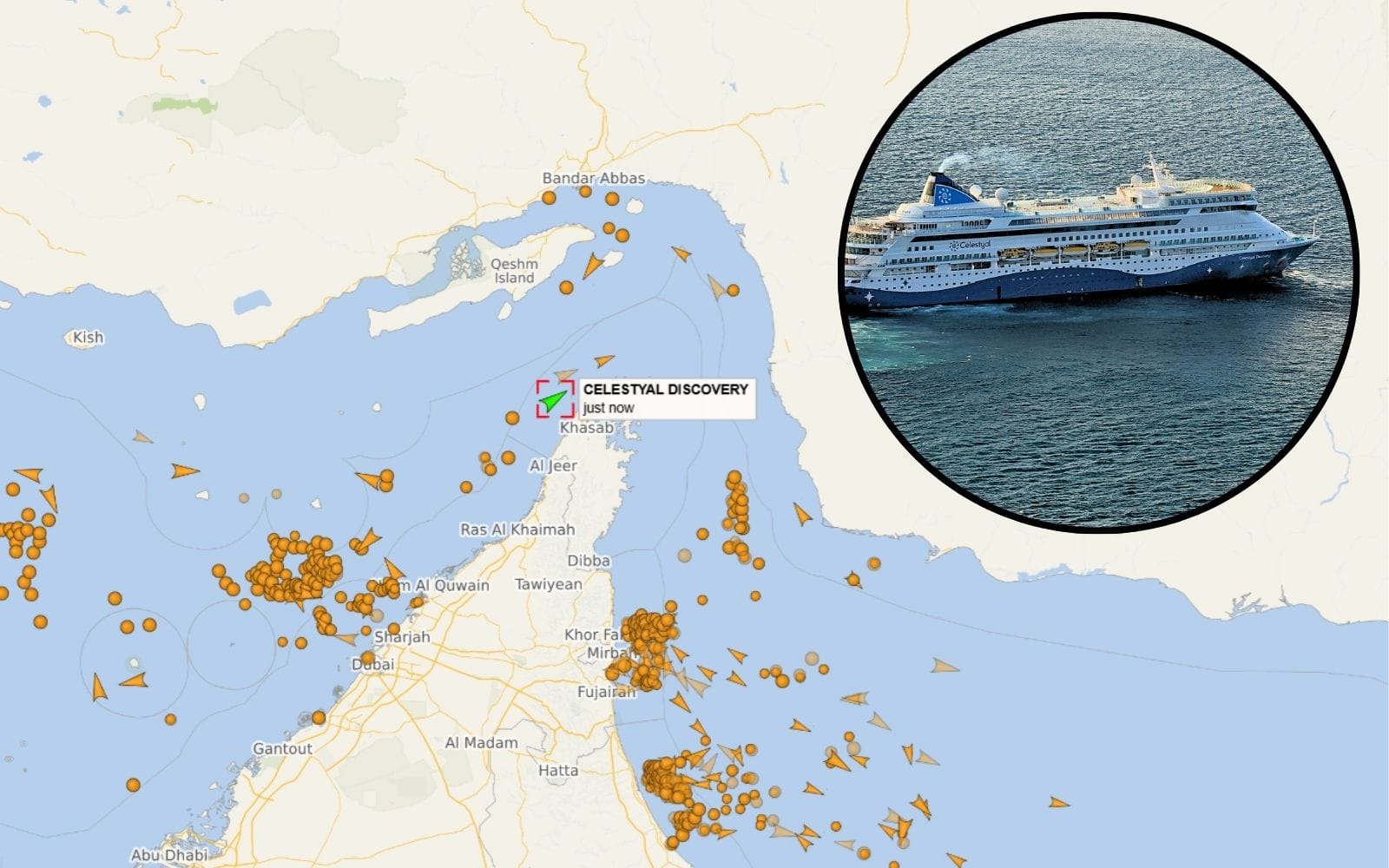
Celestyal Discovery transited the Strait of Hormuz on April 17, 2026, becoming the first cruise ship to make the passage since regional conflict disrupted commercial traffic in late February and left multiple passenger vessels stuck in Gulf ports.
The Malta-flagged ship departed Dubai without guests and headed to Muscat, Oman, as cruise lines began repositioning vessels toward planned summer deployments. Its movement was closely watched across the industry because the strait is a critical chokepoint for ships leaving the Arabian Gulf.
A narrow window for commercial transits, with a controlled route
The passage came after shifting signals on whether and how commercial shipping could resume. Iran’s Foreign Minister Seyed Abbas Araghchi said in a post on X that the Strait of Hormuz was “completely open” to commercial vessels for the remaining period of the current Israel-Lebanon ceasefire, while adding that transits must follow a coordinated route designated by Iran’s Ports and Maritime Organization.
U.S. President Donald Trump also publicly welcomed the reopening in a post on Truth Social, describing the strait as open for passage. Bloomberg, meanwhile, described a fast-moving situation in which Iran’s stance on access to the waterway shifted again within about a day, adding uncertainty even as some cruise ships used the available window to depart.
The waterway had been effectively closed to commercial traffic since late February amid an escalated Iran conflict, following U.S. and Israeli attacks on Iran and subsequent Iranian threats to target vessels attempting passage. Iran’s ceasefire-linked announcement last week created the first clear opportunity for ships to move under controlled conditions.
Celestyal Discovery’s departure from Dubai and arrival in Oman
AIS vessel-tracking data showed Celestyal Discovery leaving Port Rashid in Dubai at 11:36 a.m. local time on April 17 after spending roughly 47 days alongside. Muscat was listed as the ship’s destination, with an arrival expected on April 18.
The 2003-built ship has capacity for about 1,360 passengers, but it repositioned without guests. During the disruption, passengers were disembarked and repatriated, with only essential personnel remaining onboard for navigation and operations as cruise lines worked through security constraints and route planning.
Coordination, captains, and a first-mover transit
Celestyal said the first transit was executed under the command of Captain Nikolaos Vasileiou through a “carefully coordinated voyage plan” developed with regional authorities and maritime security teams. In a separate statement about the operation, the company said, “Safety remained the absolute priority,” describing regional and onboard coordination during the sensitive passage and positioning the successful transit as a proven route for additional vessels.
Celestyal Journey followed as part of the same initial wave. AIS data showed the ship departing Doha, Qatar and heading toward Omani waters, with Khasab among the ports associated with early movements as vessels approached and cleared the strait. Celestyal said Celestyal Journey, led by Captain Angelos Vasilakos, also successfully navigated the passage and joined the broader coordinated movement out of the region.
April cancellations, then confirmation Mediterranean sailings would proceed
Before the transit window opened, Celestyal cancelled all April 2026 sailings for both Celestyal Discovery and Celestyal Journey while the ships remained unable to reposition to the Eastern Mediterranean.
Lee Haslett, Celestyal’s Chief Commercial Officer, said: “Our priority remains the safety and confidence of our guests, crew and partners.” He added that making the decision earlier provided “greater clarity and flexibility” for impacted travelers.
Celestyal Chief Executive Officer Chris Theophilides tied the cancellations to ensuring certainty for passengers and partners while the ships waited for an opportunity to move. “We have made the decision to cancel all April 2026 sailings,” he said, describing the move as proactive and precautionary while the company stayed in contact with relevant authorities.
After the ships began repositioning, Celestyal said its Eastern Mediterranean program would proceed, later adding: “Celestyal can confirm that all future sailings currently on sale will operate as scheduled,” as it transitioned back into its Mediterranean deployment.
May restart dates and the first guest itineraries
Celestyal scheduled its return to passenger operations for early May, after the repositioning voyage through the Strait of Hormuz and onward via the Suez Canal. In an operational update, the company said both ships had safely reached the Mediterranean and were proceeding toward Athens-area ports to prepare for embarkation.
Celestyal Discovery is scheduled to welcome guests back on May 1, 2026, sailing from Lavrion (the Athens area) on a three-night itinerary to Greece and Turkey. The port calls listed for the sailing include Kusadasi, Mykonos, Patmos, Santorini, and Heraklion.
Celestyal Journey is scheduled to resume guest operations on May 2, 2026 from Piraeus on a seven-night cruise that includes calls in Croatia, Montenegro, Italy, and Greece. The itinerary listed includes Dubrovnik, Kotor, Bari, Corfu, Argostoli, and Katakolon.
Other cruise lines begin moving ships out of the Gulf
Celestyal Discovery’s transit coincided with a wider repositioning effort by other cruise operators whose vessels had been held in the region. Ships cited as impacted by the strait disruption included MSC Euribia, Mein Schiff 4, Mein Schiff 5, and Aroya Manara, alongside Celestyal Discovery and Celestyal Journey, for a total of six vessels that had been stranded during the closure.
- MSC Euribia, described as the largest cruise ship stranded in the region, began moving from Dubai toward Oman and then onward to Northern Europe. MSC Cruises said departures from Kiel on May 16 and Copenhagen on May 17 will operate as planned as the ship heads into its summer schedule.
- TUI Cruises confirmed the movements of Mein Schiff 4 from Abu Dhabi and Mein Schiff 5 from Doha, saying both passed through the strait with reduced crewing. Wybcke Meier, CEO of TUI Cruises, said the period brought “extraordinary challenges” and thanked teams for “professionalism, caution and dedication,” adding that the line was pleased to “return swiftly to regular operations.”
- Aroya Manara also began moving out of the region, with sailings resuming later in May from Saudi Arabia in line with its updated deployment.
Tracking data referenced by CruiseMapper indicated both TUI vessels were heading to Cape Town as part of a longer detour around Africa before returning to regular operations, while MSC Euribia was sailing directly toward Northern Europe. During the disruption, several ships also limited public AIS visibility at times while operating in sensitive waters, a practice commonly associated with security precautions.
Operational knock-on effects after weeks of disruption
Even with transits resuming, cruise operators still faced practical hurdles after weeks of inactivity in Gulf ports. Ships moved with skeleton crews during the disruption, and companies anticipated major resupply efforts as vessels repositioned and prepared to restore full onboard staffing and provisioning ahead of their next guest sailings.
Industry observers also framed the reopening as a turning point after significant financial damage to cruise schedules. The closure led to tens of millions in losses from canceled itineraries, compounded by broader disruptions to cruising in other regions, including the continued inaccessibility of the Black Sea amid the Russia-Ukraine conflict.
Operators remained cautious as ships continued their repositioning voyages, with contingency plans in place should conditions at other chokepoints, including the Suez Canal or the Bab-el-Mandeb Strait, shift due to regional instability.
Frequently Asked Questions (FAQs)
Was Celestyal Discovery carrying passengers when it transited the Strait of Hormuz?
No. The ship repositioned without passengers after guests were previously disembarked and repatriated during the regional disruption.
When do Celestyal’s Mediterranean cruises restart?
Celestyal Discovery is scheduled to restart on May 1, 2026 from Lavrion on a three-night itinerary with calls including Kusadasi, Mykonos, Patmos, Santorini, and Heraklion. Celestyal Journey is scheduled to restart on May 2, 2026 from Piraeus on a seven-night itinerary that includes Dubrovnik, Kotor, Bari, Corfu, Argostoli, and Katakolon.
Which other cruise ships were affected by the Strait of Hormuz disruption?
Ships cited as being held in the region during the disruption included MSC Euribia, Mein Schiff 4, Mein Schiff 5, and Aroya Manara, alongside Celestyal Discovery and Celestyal Journey.
What route will ships take from the Gulf to their respective homeports?
Ships exiting the Gulf navigate through the Strait of Hormuz and then continue across the Arabian Sea, typically routing via the Red Sea and Suez Canal to reach the Mediterranean or Northern Europe. Some operators, including TUI Cruises for Mein Schiff 4 and Mein Schiff 5, have been tracked taking longer detours around Africa.
How has the Middle East crisis impacted the cruise industry financially?
The prolonged disruption led to tens of millions in losses tied to canceled itineraries, alongside added operational costs for resupply, crew repatriation, and repositioning voyages as ships worked to rejoin their planned summer schedules.