Zelim’s ZOE Man-Overboard System Wins ISO 21195 Certification
ISO certification could help make artificial intelligence man-overboard cameras standard cruise safety gear, as operators demand better detection without disruptive false alarms.
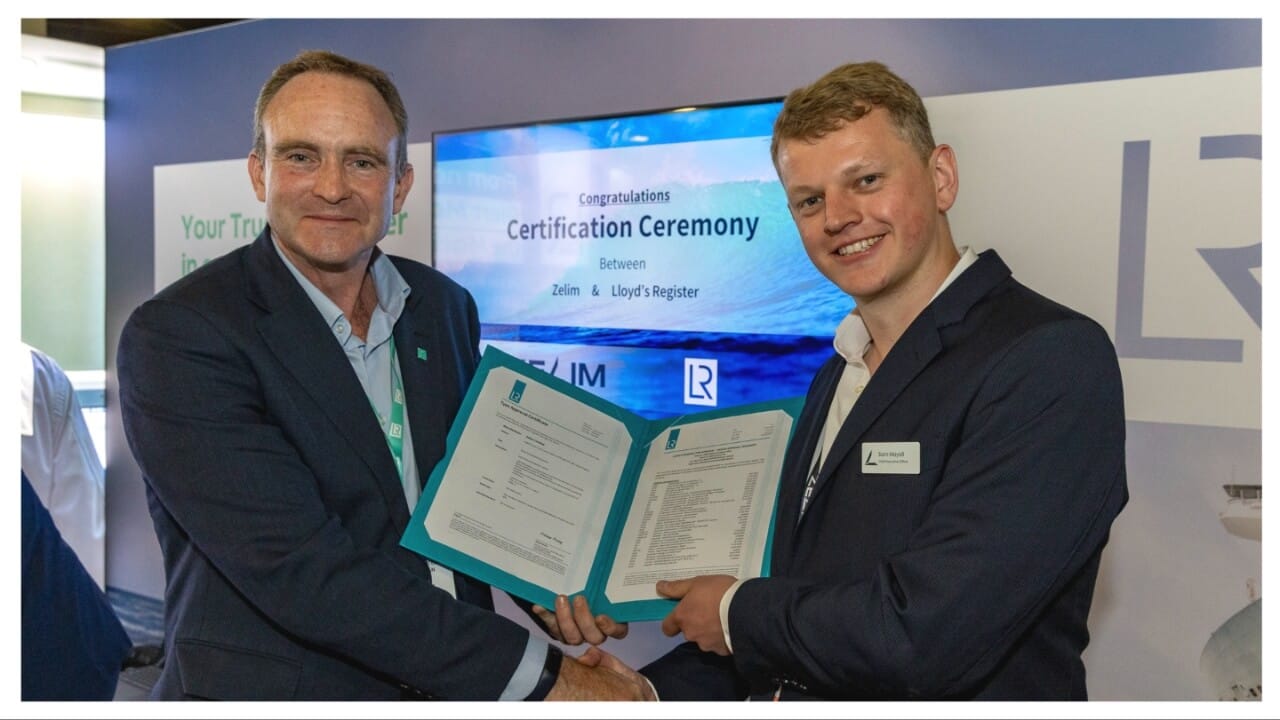
Zelim said its AI-enabled ZOE man-overboard (MOB) detection system has received ISO 21195:2020 certification from Lloyd’s Register, a milestone the company framed as a step forward for automated safety technology on passenger ships. The certification follows a 90-day sea trial conducted aboard Ambassador Cruise Line’s Ambition, where detection performance and false alarm behavior were monitored continuously.
What the ISO 21195:2020 certification signals for passenger-ship MOB systems
ISO 21195:2020 is an international performance standard that sets minimum requirements for automatic MOB detection systems used on passenger ships. In practical terms, the standard is intended to establish a baseline for detecting a person in the water while also limiting unnecessary alarms that can disrupt ship operations.
Zelim said the certification was issued by Lloyd’s Register, which it described as a classification and assurance organization that evaluates maritime systems and equipment against recognized standards.
90-day winter sea trial on Ambition, including detection and false-alarm testing
Zelim’s evaluation program ran for a continuous 90-day period on Ambition spanning winter months, which the company said exposed the system to difficult weather and varying sea conditions. The trial included simulated man-overboard exercises conducted across the monitoring period.
During those simulations, Zelim reported a 97% detection rate, exceeding the minimum requirement set by ISO 21195:2020. The company also said ZOE’s false alarm rate came in below the standard’s maximum allowance.
Why low false alarms were a key part of the trial
False alarms are a major operational concern for shipboard safety systems because alerts can trigger response procedures and distract crews from other critical tasks. Sam Mayall, Zelim’s founder and CEO, pointed to the false-alarm results as a differentiator alongside detection performance.
“Despite this, our false alarm rate was considerably lower than the ISO minimum requirement, reinforcing ZOE as a system operators can trust and rely on,” Mayall said.
Zelim’s “first” claim for a permanently installed, ISO-certified cruise-ship system
Zelim said ZOE is now the first permanently installed man-overboard detection system on a cruise ship to be certified to ISO 21195:2020 by Lloyd’s Register, referencing the Ambition installation as the operational proof point. The company positioned that combination, permanent fit plus third-party certification following a multi-month real-world deployment, as a factor that could influence adoption decisions among passenger-ship operators.
Mayall also tied the certification to broader uptake across the industry, saying, “Our technology has proven its capability to perform consistently under the toughest maritime conditions. ZOE is now positioned as the first permanently installed MOB system on a cruise ship certified to ISO 21195 by Lloyd’s Register, paving the way for broader industry adoption.”
How ZOE is designed to spot MOB events
Zelim said ZOE uses AI-driven computer vision and video analytics to support round-the-clock monitoring around a vessel, with 360-degree surveillance coverage intended to help crews identify and respond to a potential man-overboard situation more quickly.
To support detection in maritime conditions, the company said the system was trained on a dataset containing more than 9.5 million annotated maritime objects, a scale it presented as important for handling real-world variables such as lighting, spray, wake patterns, and wave action.
Zelim added that ZOE can detect both adults and children in the water. The company noted that child detection is not required as part of the ISO 21195:2020 assessment, but said it is included in the system’s design.
What comes next: international rollout and additional maritime sectors
Zelim said it has now completed all three phases of testing required under ISO 21195:2020. With certification in place, the company said its priority is expanding deployment internationally, both within the cruise market and in other areas where automated detection and surveillance are relevant, including defense.
“Our goal is to establish ZOE as the trusted MOB detection system for a wide range of sectors, including the global cruise market,” Mayall said.
Frequently Asked Questions (FAQs)
What is ISO 21195:2020 certification?
ISO 21195:2020 is an international performance standard that sets minimum requirements for automatic man-overboard (MOB) detection systems used on passenger ships, including expectations around detection performance and limits for false alarms.
How did Zelim’s ZOE perform during onboard testing?
Zelim said ZOE achieved a 97% detection rate during simulated man-overboard tests conducted over a continuous 90-day sea trial on Ambassador Cruise Line’s Ambition. The company also said the false alarm rate was below the standard’s allowed limit.
What makes ZOE different from conventional MOB systems?
Zelim said ZOE uses AI-driven computer vision and video analytics, with 360-degree surveillance coverage, and that it was trained on a dataset of more than 9.5 million annotated maritime objects to improve performance in real-world conditions.
Can ZOE detect children as well as adults?
Yes. Zelim said ZOE can detect both adults and children in the water, even though child detection is not required by the ISO 21195:2020 assessment.
Will Zelim deploy ZOE beyond the cruise industry?
Yes. Zelim said that, in addition to pursuing broader international rollout in cruising, it plans to pursue opportunities in other sectors where automated detection and surveillance are relevant, including defense.