Portsmouth Completes First Commercial Cruise Shore-Power Link
Brittany Ferries' Guillaume de Normandie was the ferry connected alongside Valiant Lady, with Portsmouth expecting three simultaneous connections later this year.
Updated September 16, 2026
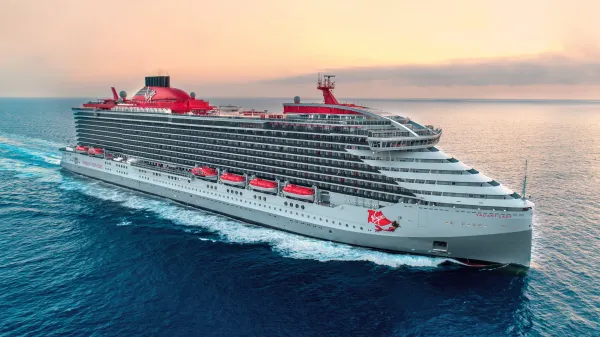
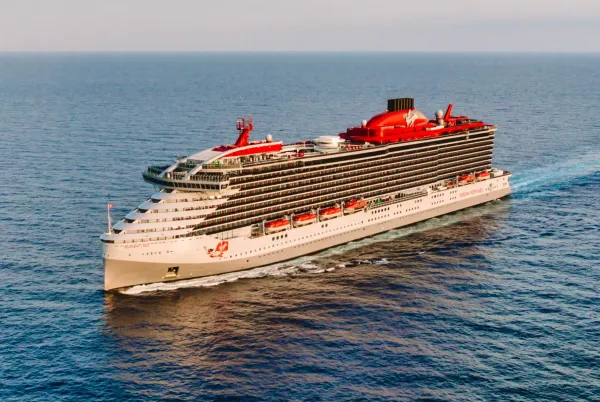
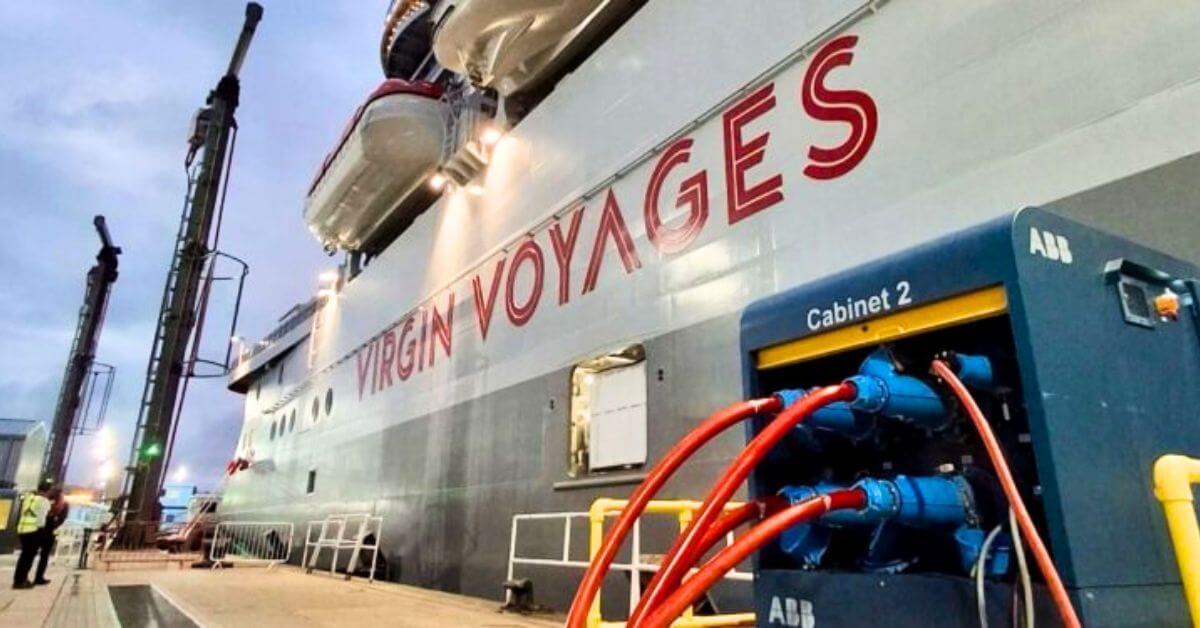
Portsmouth International Port has completed its first commercial cruise shore-power connection. Virgin Voyages’ Valiant Lady took electricity from the UK port’s newly operational system while berthed, the port’s first European shore-power connection for the line. The port announced the connection on Aug. 5, after final testing brought the installation into full operation in July.
A ferry plugged in at the same time. Brittany Ferries’ Guillaume de Normandie was connected alongside Valiant Lady, and Portsmouth said the two-vessel operation showed the working capacity of its multi-berth shore-power infrastructure.
A cruise ship and a ferry connected at once
Valiant Lady drew shore-side electricity instead of running onboard auxiliary engines during the port stay. Guillaume de Normandie’s simultaneous connection made it the first time Portsmouth had supplied two vessels through the system at once.
Three of Virgin Voyages’ four ships are equipped to use shore power where compatible infrastructure is available. The cruise line said Valiant Lady planned to connect during all three of its Portsmouth calls that month.
“Progress happens when the infrastructure on land and the technology at sea come together, which is exactly what this moment represents. Seeing Valiant Lady connected in Portsmouth turns that ambition into something tangible,” said Jill Stoneberg, senior director of social impact and sustainability at Virgin Voyages.
The installation is designed for both cruise ships and ferries. Portsmouth describes it as the UK’s first multi-berth, multi-user and multi-frequency shore-power system, and has tied the project to its plan to become the UK’s first emissions-free port by 2050.
The shore-power project received funding from Innovate UK, along with 19.8 million from the UK Department for Transport and 4.6 million from Portsmouth City Council. Portsmouth did not publish a total project cost or electrical capacity rating in its Aug. 5 announcement.
At-berth emissions are the target
For equipped vessels, shore power can cut emissions from auxiliary engines while a ship is alongside, including NOx, SOx, particulate matter and CO2. The U.S. Environmental Protection Agency has reported overall pollutant reductions of up to 98% under favorable conditions, while noting that results depend on the grid electricity mix and that boilers and other onboard systems may still run during a port stay.
Portsmouth projects that the system will help avoid around 20,000 tonnes of CO2 emissions from 2027. The port is also working through electricity-pricing challenges as it seeks to make shore-power use more attractive to operators.
AIDAsol and Amera tested the system during commissioning before the first commercial cruise connection. The port expects the installation to reach full capacity later this year when three ships connect simultaneously, though no date has been announced for the first three-ship operation.