Port of Galveston Starts First Mobility Study Amid Cruise Growth
The port has secured almost five million dollars in grants for road, sidewalk and wayfinding improvements as the review identifies priority fixes.
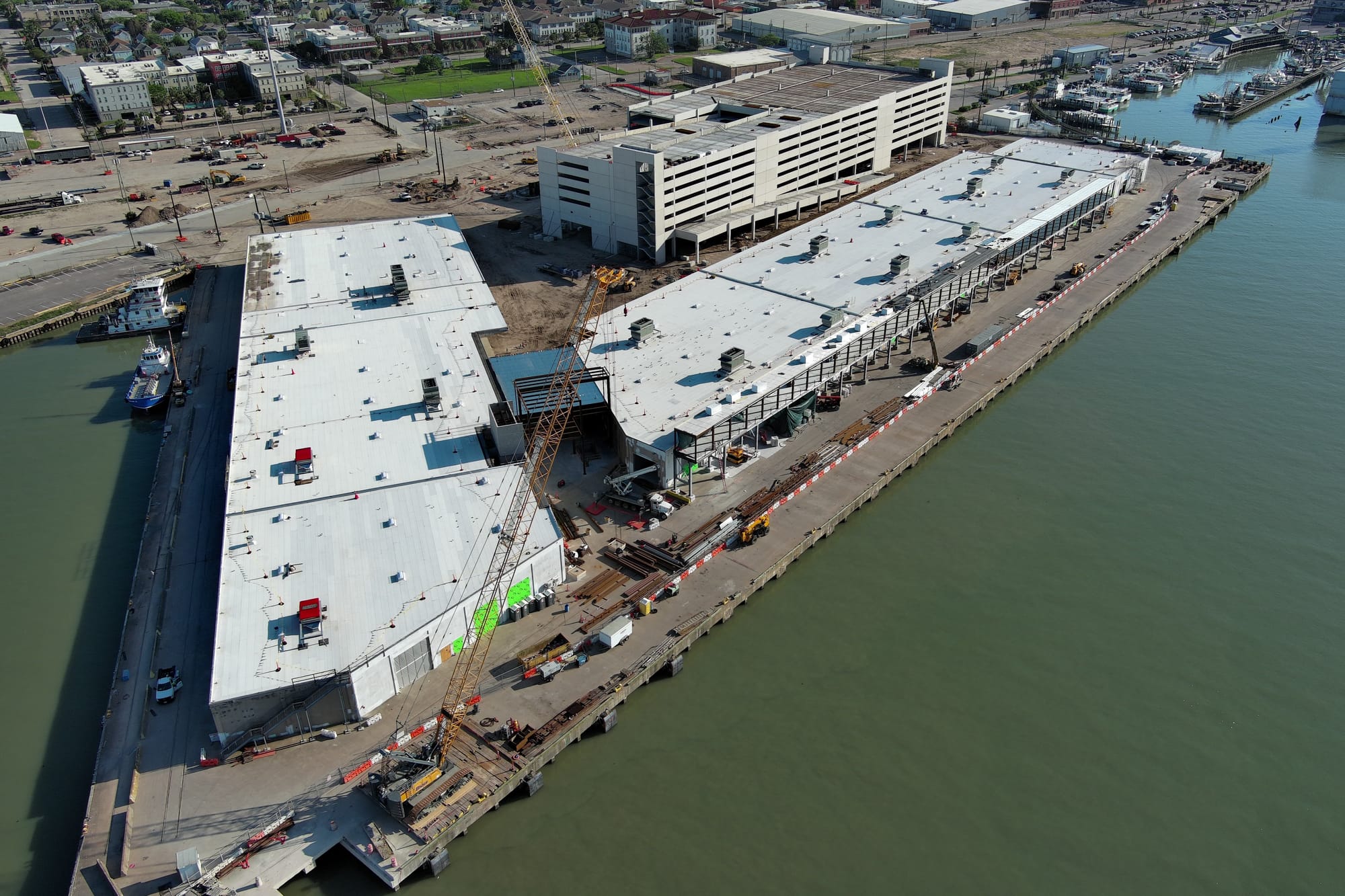
The Port of Galveston has begun its first comprehensive mobility study, a port-funded review of how people, vehicles, bicycles, transit and goods move through the waterfront, downtown and nearby neighborhoods as the port expands. The first phase covers the area bounded by Galveston Harbor and 14th, 33rd and Church streets.
The study is tied to the port’s updated master plan, which includes a fifth cruise terminal and a commercial district near downtown with a hotel, retail, multifamily housing and greenspace.
“The mobility study is much more than a traffic study,” said Rodger Rees, Galveston Wharves port director and CEO. “It identifies ways to improve safety, reduce conflicts between vehicles and pedestrians, and create better connections between destinations.”
Connections between the port, downtown and neighborhoods
Bermello Ajamil & Partners, which prepared the port’s long-range master plans and has handled cruise-terminal work at Galveston, is conducting the first phase. Researchers will review existing transportation conditions, forecast future demand and recommend practical improvements intended to support economic growth and public safety.
Rees said one goal is “creating safer, more convenient connections” between the cruise terminals, the commercial waterfront and Historic Downtown Galveston.
The study will examine how to integrate Island Transit, the city’s trolley system and the port’s elevated pedestrian walkover at 25th Street. It will also look at sidewalks, pedestrian crossings, bicycle access, signage and wayfinding along the waterfront.
Planning for a fifth cruise terminal
The proposed fifth cruise terminal would be located at Pier 14 between Royal Caribbean’s Cruise Terminal 10 and Cruise Terminal 16, used year-round by MSC Cruises and in winter by Norwegian Cruise Line. Rees has said the port will incorporate recommendations from a completed traffic study, along with lessons from its first four cruise terminals, into the fifth-terminal planning process.
A 107-page traffic study by an independent engineering firm assessed roadway operations for the proposed terminal and, Rees said, found minimal expected effects on Harborside Drive and other routes serving the east cruise area. At the 14th Street-Harborside Drive intersection, the study identified potential peak-operation delays that could be addressed with a longer eastbound left-turn lane and flashing yellow arrow signals for eastbound and westbound turns.
Rees has said an economic impact study estimated that a fifth terminal would generate 1,500 jobs, $91.5 million in personal income, $278 million in direct business revenue and $7.9 million in state and local taxes.
Galveston’s cruise business has grown sharply in recent years. The port handled about 1.49 million cruise passengers on 354 cruises in 2023, later forecast more than 400 sailings and 1.75 million passengers in 2025, and is forecast at about 445 to 446 sailings and 3.9 million passenger movements in 2026.
What the port has already funded
The mobility study will incorporate recommendations from both the Port of Galveston and City of Galveston Safe Streets and Roads for All action plans. The port has already completed a two-mile internal roadway system, onsite parking and new roads to improve traffic circulation around its facilities.
The port has secured almost $5 million in grant funding for road, sidewalk and wayfinding improvements. Those funds are designated for implementation work as the mobility study identifies priority fixes.
See cruises departing Galveston on Cruise Lookup.