Port of Galveston Invests $1.57M in Cruise and Cargo Security
The largest project directs $802,100 to cybersecurity updates, while smart padlocks will log key activity and retain audit trails through a digital system.
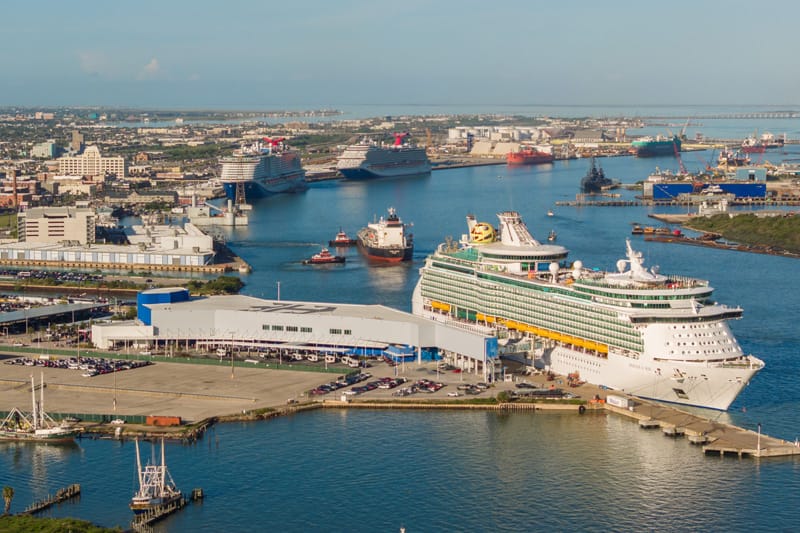
The Port of Galveston has secured $1,180,524 in federal grants for four projects covering cybersecurity, surveillance, smart locks and mobile vehicle barriers. The awards, announced October 24, will be combined with $393,510 in port funding for a total investment of $1,574,034.
The security work covers cruise and cargo facilities. Galveston projects 445 sailings and a record 3.9 million passenger movements in 2026. The port operates four cruise terminals and ranks itself as the fourth-largest U.S. cruise homeport.
“As the Port of Galveston grows, we continue to enhance our security systems to ensure that port facilities, tenants and guests are protected,” said Rodger Rees, Galveston Wharves port director and CEO.
The funding comes through FEMA’s fiscal 2026 Port Security Grant Program, which supports maritime-security projects, including investments aligned with area maritime security plans and facility security plans.
Cybersecurity leads the four projects
The largest allocation is an $802,100 project for continued cybersecurity updates and maintenance of the port’s security system. FEMA will contribute $601,575, with the port providing the remaining $200,525.
A separate $525,000 project will extend video surveillance to roads serving cruise terminals and cargo areas. That work carries a federal contribution of $393,750 and a local share of $131,250.
The port will also replace mechanical locks with smart padlocks connected to a digital key-management system. The $88,925 project includes $66,693 in federal funding and $22,232 from the port. The system will record key activity, control key issuance and retain audit trails.
The fourth award supports a $158,009 mobile vehicle-barrier system, funded by $118,506 from FEMA and $39,503 from the port. The equipment is designed for rapid deployment at critical infrastructure, public gathering sites and other locations requiring temporary restrictions on vehicle access.
Security responsibilities extend beyond cruise terminals
The port covers approximately 840 acres at the entrance to Galveston Bay and the Houston Ship Channel. Alongside its passenger operations, Galveston typically handles more than 4 million tons of cargo annually, including vehicles, bulk commodities, refrigerated products and project cargo. The port’s Security Department oversees facility protection and cybersecurity, as well as safety and personnel clearances.
See cruises departing Galveston on Cruise Lookup.