Port Canaveral Expands Robotic Monitoring at Cruise Terminal 5
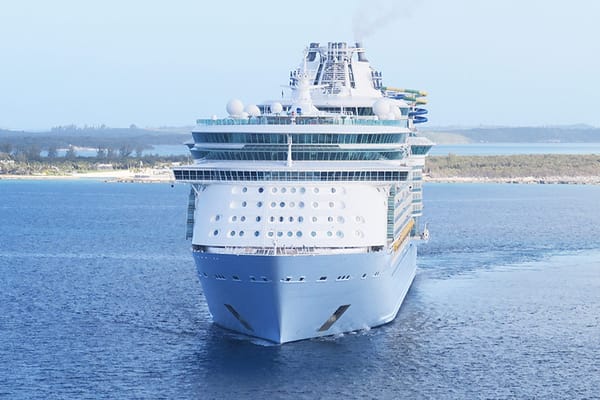
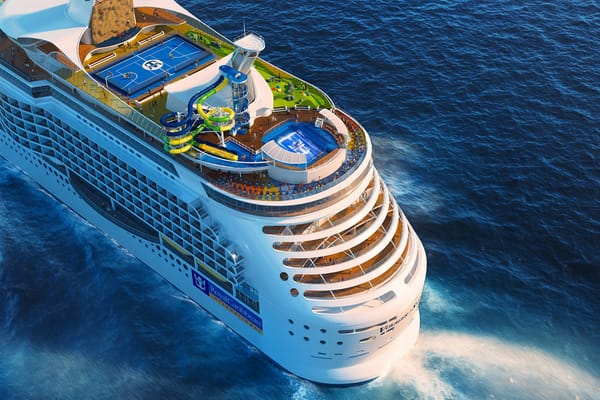
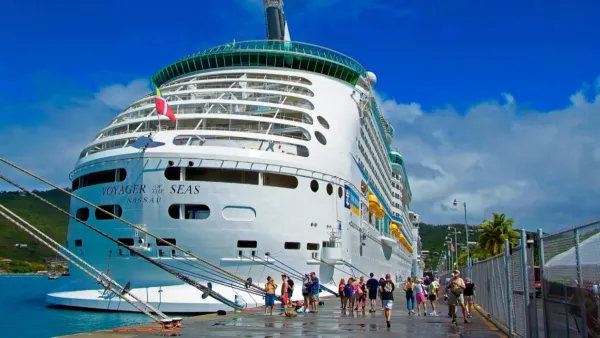
Cruise Terminal 5 serves Royal Caribbean Group and Norwegian Cruise Line Holdings. The renovation will expand its area from 90,000 to 170,000 square feet.

Procon and the Canaveral Port Authority are expanding robotic construction monitoring at Cruise Terminal 5 after a successful pilot using a four-legged robot nicknamed “Sparky.” The platform performs repeatable 360-degree capture walks to document changing conditions during the terminal’s $78 million expansion and renovation.
The project will increase the terminal’s area from 90,000 to 170,000 square feet to accommodate the world’s largest cruise ships and improve passenger facilities. Cruise Terminal 5 serves Royal Caribbean Group and Norwegian Cruise Line Holdings.
The regular capture walks give the port and its construction teams more frequent visual records while reducing staff time spent on routine site inspections. Teams can compare conditions over time and check progress between in-person visits.
Bill Crowe, Port Canaveral’s vice president of engineering and construction, described the terminal expansion as “one of the most complex projects ever undertaken at the Port.”
Documenting progress and resolving construction questions
The dated images can help teams verify completed work and investigate questions involving schedules, change orders or construction claims. Procon says the consistent visual record also allows teams to identify issues while they are easier to address.
“On a project like Cruise Terminal 5, a lot can change in a single day,” said Stephen DeVito, CM-BIM, Procon’s director of technology. “Daily capture gives the team a clearer record of what happened and when.”
The documentation could remain useful after construction. Records of existing conditions may help facility teams plan maintenance and coordinate repairs.
Teleworker AI developed components of the camera payload used for the capture work. Its team also helped assemble and set up Sparky, preparing the platform to operate with limited hands-on intervention.
From construction research to terminal deployment
The terminal work builds on Procon’s collaboration with Virginia Tech’s Myers-Lawson School of Construction. The partners previously tested Boston Dynamics’ Spot quadruped robot on university construction projects to see how well it could automate site inspections.
Their Multi-Agent Robotic System for Inspection On Site initiative, known as MARIO, explores coordinated use of ground robots, aerial systems, AI sensing and computer vision for remote construction monitoring. Led by associate professor Kereshmeh Afsari through Virginia Tech’s ARCADE research lab and the construction school, the initiative is in its first development phase.
That research examines applications beyond progress photography, including detecting installation defects, coordination problems and safety hazards. At the terminal, Procon’s current evaluation focuses on how reliably Sparky can capture site conditions each day and how project teams use the resulting information.
The findings will help Procon determine where the technology could be useful on future projects. Sparky is scheduled to appear at Port Canaveral’s 2026 State of the Port presentation on Thursday, November 19, ahead of the introduction of port CEO Capt. John Murray.