NTSB Says Steering Failure Sent Tanker Into New Orleans Riverboat
National Transportation Safety Board data places the tanker's steering casualty near the Crescent City Connection at 12:26 p.m.; the riverboat capsized 22 minutes after impact.
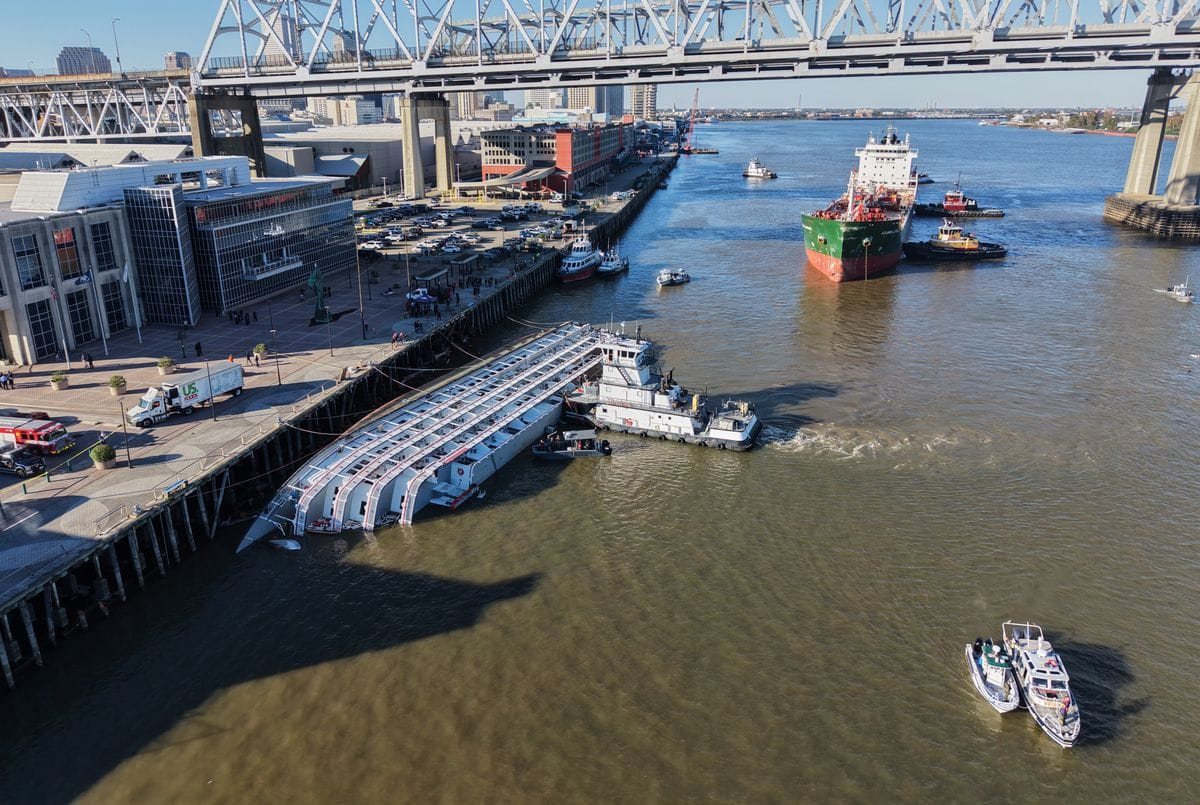
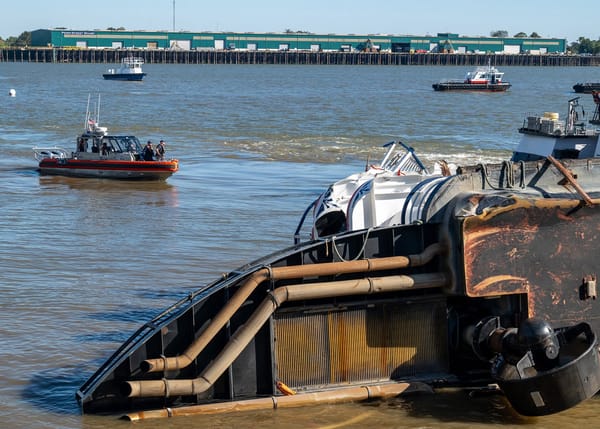
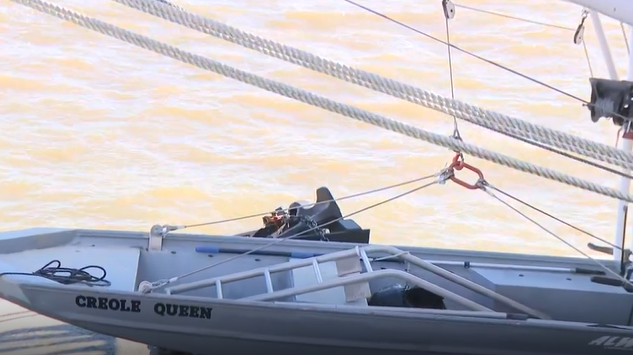
The tanker Atlantic Asphalt struck American Cruise Lines’ docked American Heritage in New Orleans on Friday, Nov. 13, leaving the riverboat capsized and sending passengers into the Mississippi River. Thirty-two people were hospitalized after the collision and rescue operation, but everyone aboard was accounted for and no deaths were reported.
Investigators subsequently identified 140 passengers and 50 crew members aboard the riverboat. American Heritage had tied up about two hours before the collision to begin disembarkation after an eight-day Mississippi River cruise through Louisiana and Mississippi.
By Monday, four people remained hospitalized, including one in serious condition and three in stable condition, New Orleans Mayor Helena Moreno said. Initial assessments had found no critical injuries. The hospital admissions included two Harbor Police officers involved in the rescue; no injuries were reported aboard the tanker.
Randy Christie, a New Jersey wrestler in New Orleans for a riverfront comedy festival, witnessed the collision while preparing for his performance. He estimated he was roughly two football fields from the vessels.
“It hit, we heard screams, some people jumped into the water,” Christie said. He described watching the cruise ship begin to tilt and take on water after the impact.
Recorder data identifies steering casualty
A preliminary National Transportation Safety Board review places the tanker’s steering casualty at about 12:26 p.m., near the Crescent City Connection bridge. NTSB Investigator-in-Charge Bart Barnum said the rudder remained turned to starboard, sending the upbound tanker toward the river’s east bank. It struck American Heritage approximately two minutes later, and the riverboat capsized 22 minutes after impact.
The tanker had been heading to an oil facility in Reserve, Louisiana. Investigators downloaded more than nine hours of voyage data recorder information, including audio consistent with whistle signals, radio warnings, requests for assistance, anchor-deployment commands and emergency ship-handling orders.
NTSB Board Member John DeLeeuw said video showed anchors had been lowered. Investigators were still determining which anchors were deployed, how far they descended and whether there was sufficient time for them to affect the tanker’s movement. The underlying cause of the steering failure remained undetermined.
New Orleans Harbor Police Chief Melanie Montroll said river conditions were normal and the current was not unusually strong. Louisiana Gov. Jeff Landry said state transportation engineers confirmed that the tanker had not struck the bridge before hitting the cruise ship.
Evacuation continued as the riverboat rolled
Montroll said 87 passengers left American Heritage before it capsized. “Unfortunately, we were not able to get everyone off before the boat started to take on water,” she said.
Harbor Police officers and New Orleans firefighters boarded the damaged vessel, while Coast Guard crews, nearby tugboats, private vessels and other responders recovered people from the river. New Orleans Fire Department Superintendent Roman Nelson said two firefighters continued rescuing people from the water after the ship rolled over.
American Cruise Lines credited Captain Leonard Stewart and the crew with organizing the evacuation. The operator said Stewart stayed on the bridge as the vessel capsized, requesting assistance and keeping the riverboat alongside the dock for as long as possible. Montroll said having passengers put on life jackets before leaving the ship was an important factor in their survival.
Survivors were taken to the Port of New Orleans Administration Building for triage and assistance. Moreno said many had lost identification, phones, keys and prescription medications, and most were visiting from outside New Orleans. City personnel and partner organizations arranged food, accommodation and transportation; 50 hotel rooms at the Hilton New Orleans Riverside remained occupied by passengers on Sunday.
The 295-foot American Heritage was built in 2015 by Chesapeake Shipbuilding in Salisbury, Maryland, and accommodates up to 150 guests. Atlantic Asphalt, a Marshall Islands-flagged asphalt and bitumen tanker built in 2017, measures 160 meters and has a gross tonnage of 14,485.
Traffic restrictions, terminal damage and salvage
The Coast Guard initially closed the river near the collision. After reopening, a safety zone remained between mile markers 95.5 and 96.5, extending 500 feet into the water. Deep-draft ships and towing vessels with at least 10 barges must pass through using one-way traffic arrangements. All vessels must coordinate with Vessel Traffic Service Lower Mississippi River and proceed at their slowest safe speed.
Atlantic Asphalt has since been towed away. Coast Guard Captain Melanie Burnham, commander of Sector New Orleans, said Saturday that removing American Heritage could take weeks, with the safe removal of approximately 16,000 gallons of fuel required first.
The Board of Commissioners of the Port of New Orleans also filed a federal lawsuit against tanker owner Nave Shipping SA and management company Thome Ship Management. The port alleges negligence and estimates repairs to its Thalia Street terminal will exceed $1 million, in addition to cleanup, inspection and other costs. U.S. District Judge Wendy Vitter authorized the tanker’s seizure on Friday.
NTSB divers examined the riverboat on Sunday for evidence to compare with the tanker’s recorder data. DeLeeuw said the investigation would also examine the actions that prevented fatalities. A preliminary report is expected within about 30 days.