Norwegian Dawn Is First Cruise Ship to Fail CDC Inspection in 2026
The March 29 report noted two fruit flies at lunch service, one on bread, and dairy storage at 47 degrees Fahrenheit with milk above CDC guidance.
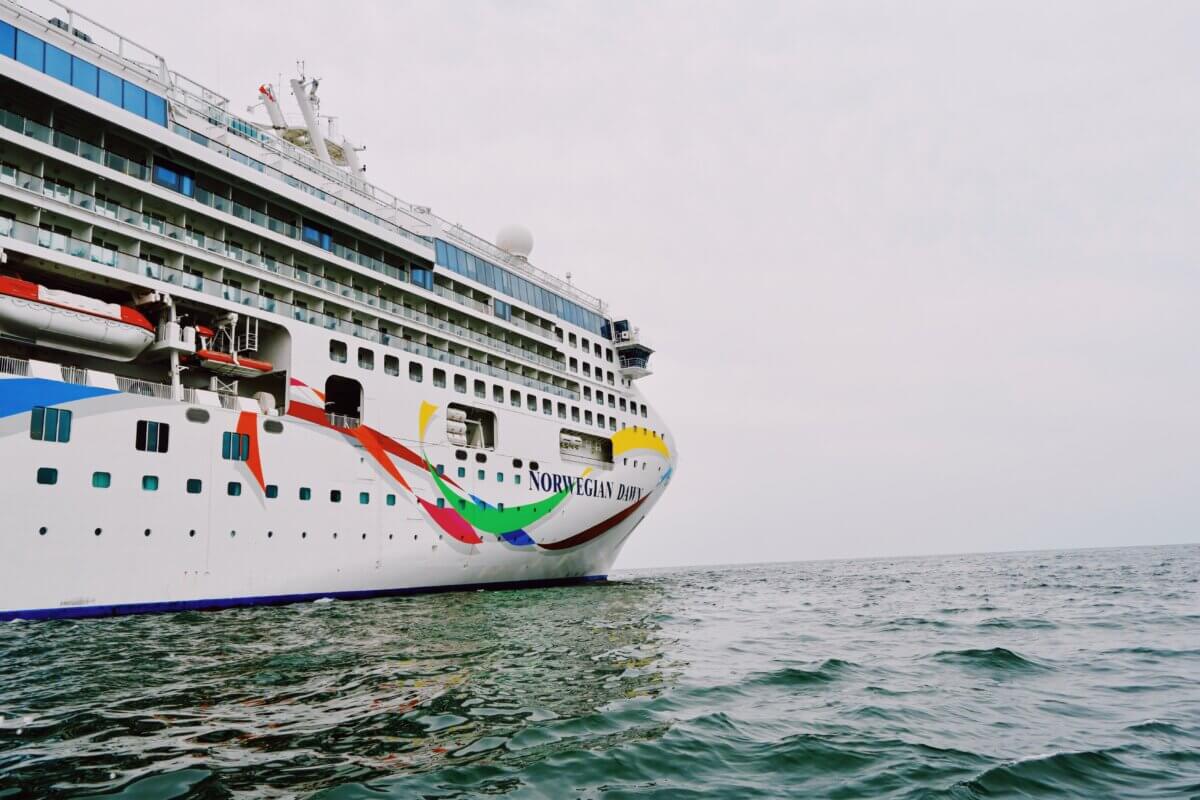
Norwegian Cruise Line’s Norwegian Dawn became the first cruise ship in 2026 to receive a not-satisfactory score under the CDC’s Vessel Sanitation Program, scoring 84 during an unannounced March 29 inspection in Tampa, Florida. Inspectors cited food-safety, pest-control and maintenance issues, including fruit flies at a buffet line and dairy storage temperatures above CDC guidance.
The finding came as the federal cruise sanitation program faces questions over staffing, outbreak response and public communication. Under the VSP scoring system, 86 or higher is satisfactory and 85 or lower is not satisfactory for covered ships, including foreign-itinerary cruise vessels calling at U.S. ports with at least 13 passengers.
What inspectors found on Norwegian Dawn
Norwegian Dawn is a 92,250-gross-ton ship built in 2002, with double-occupancy capacity for 2,340 guests and roughly 1,032 crew. The CDC inspection report documented several deficiencies in public areas and food-service spaces aboard the vessel.
At lunch service, inspectors found two fruit flies at the buffet, including one on bread. In a soda cabinet area, they observed pooled water with mold-like growth around soda syrup and carbonation equipment. The report also cited liquid dripping from an overhead area and collecting on and around a utility sink faucet and handles, with the source of the liquid unidentified.
Temperature control was another issue. In dairy storage, inspectors measured ambient air at 47 degrees Fahrenheit, while a thermometer attached to the evaporator drip pan read 46 degrees. Five 5-gallon bags of fat-free milk and half-and-half were stored there with internal temperatures above 41 degrees, the CDC’s recommended maximum for cold food storage, and large dairy boxes were arranged in a way that restricted airflow.
The VSP inspection framework covers medical centers, drinking water, food preparation and dining, pools and spas, housekeeping and hygiene, pest management, child activity areas and ventilation systems. Beyond inspections, the program monitors illness reports, investigates outbreaks, reviews ship design and construction plans for sanitation compliance, trains cruise personnel and publishes inspection and outbreak information for passengers.
Cruise Law News said the Norwegian Dawn result was the first cruise-ship inspection failure since July 2025. It also said failed inspections have been less frequent than in earlier periods, citing 13 ship failures in 2017.
Questions over VSP staffing
Luis Rodriguez, the top U.S. official responsible since 2023 for public health on cruise ships, has retired. StatNews described the Vessel Sanitation Program as having a turbulent year, and CBS News said full-time VSP employees were laid off in April 2025.
CBS News said those layoffs included the epidemiologist who led the CDC’s outbreak response on cruise ships. The same coverage said 12 U.S. Public Health Service officers remained with the VSP, including one epidemiologist who was new to the role and still training.
A CDC spokesperson said the Vessel Sanitation Program is “fully staffed, including epidemiologists, and continues to carry out all core program activities for cruise ships under U.S. jurisdiction.” Snopes said the CDC did not answer its follow-up question about how many employees are currently assigned to the program.
Other shipboard illness cases in 2026
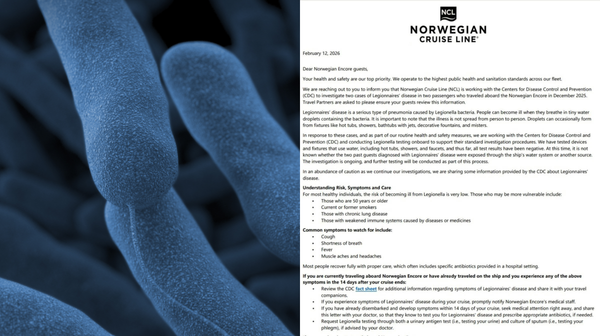
Other shipboard illness events have also drawn attention in 2026. Norovirus outbreaks sickened 115 people on Caribbean Princess in early May, dozens on Oceania Insignia in early April and at least 153 on Star Princess in March. In February, Norwegian Cruise Line notified guests that two passengers had been diagnosed with Legionnaires’ disease after sailing on Norwegian Encore in December 2025.
The MV Hondius hantavirus outbreak has also raised questions about federal response. StatNews said HHS declined a request to interview a CDC expert about the outbreak aboard the Dutch ship and did not answer questions about how many Americans were onboard or how they were being monitored.
Chuck Schumer wrote to HHS Secretary Kennedy expressing “deep concern” over what he called the “inadequate response” by HHS and the Department of State to the Hondius outbreak. Schumer wrote that Trump Administration decisions, including the “reckless” firing of public health officials at the CDC’s Vessel Sanitation Program and Port Health Stations, had “weakened the country’s ability to protect American citizens and respond to emerging global health threats.” The letter asks Kennedy to provide details on how the CDC is responding to the Hondius outbreak.