Norwegian Cruise Line Warns of Phishing Emails With Booking Details
NCL plans to send its warning directly to guests departing within 30 days. It says official emails use @ncl.com or @nclcorp.com, though sender addresses can be spoofed.
Correct Booking Details Don’t Make Those NCL Emails Safe
A Norwegian Encore passenger says a fraudulent email included the amount already paid for their cruise. I’d put that detail at the center of Norwegian Cruise Line’s warning. A sender who knows your booking number, departure date and how much you’ve already paid can look convincing without having any authority to ask for your card.
The fraudulent emails ask passengers to verify payment cards or complete supposed pre-boarding security checks. Guests began reporting the messages on social media on October 10, 2026.
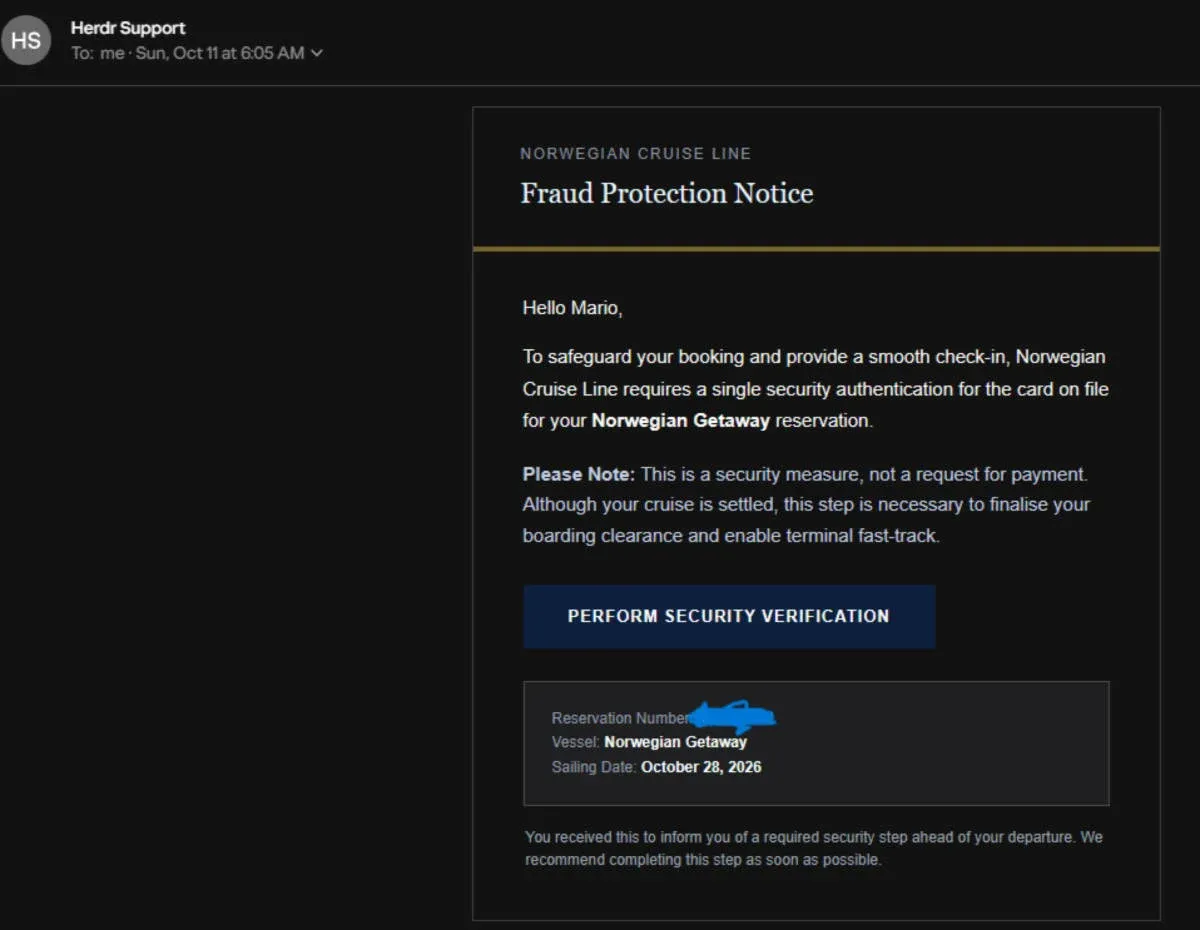
Passengers say the emails contain their names, ships, departure dates and booking numbers. That makes them harder to dismiss than a message with no connection to a real reservation. The details a guest might use to reassure themselves are already in the email.
NCL has posted a warning on its website and sent a letter to travel advisors saying it was “actively investigating the matter.” It instructed recipients not to click links, reply or disclose personal or payment information.
The boarding threat adds pressure
The reported messages use several explanations for the request, including security verification, payment-card confirmation and completion of check-in. Some threaten cancellation unless the passenger responds quickly.
That is a particularly unpleasant way to exploit an approaching holiday. The passenger is being asked to choose between questioning a request that appears to know their reservation and complying to avoid supposedly losing their cruise.
One message shared on Reddit about a Norwegian Getaway reservation described card authentication as a required security procedure before boarding. It also insisted that the request was not for a payment. A passenger booked on that ship reported receiving at least six suspicious emails containing accurate personal and reservation information.
NCL has not confirmed the source of the reservation details. Passenger speculation about a possible data breach remains unconfirmed. The specificity deserves investigation, but it does not establish which system or organization, if any, was compromised.
Check through a separate channel
NCL’s letter identifies @ncl.com and @nclcorp.com as its official email domains. Those are useful details, but they are not an authentication test. Sender addresses and telephone numbers can be spoofed.
Guests concerned about a message should verify the request through NCL’s official website, its official customer service telephone number or their travel advisor. They should not submit payment information through a suspicious email link or provide it during an unsolicited call.
Impersonation attempts are not new to NCL. In May 2025, Cruise Hive reported that scammers posing as cruise line representatives contacted a guest about flights for a large party and obtained nearly $20,000 from her across two incidents. NCL warned guests about that telephone scam. Virgin Voyages also warned passengers in February 2025 about fraudulent calls and fake offers seeking payment and personal information.
NCL now plans to send its current warning directly to guests scheduled to depart within the next 30 days, extending the notice beyond its website and travel-advisor communication.
That is the right move. For guests approaching departure, supposed boarding requirements and cancellation threats can feel especially urgent. They need the warning before they are asked to make a rushed decision, not after they have handed over a card.