Nippon Maru Ends 36-Year Career With Final Yokohama Call
Mitsui Ocean Fuji also called at Yokohama for the farewell, while Nippon Maru remained docked there with no post-service plan disclosed.
Updated June 18, 2026
Nippon Maru has left the Far East after its May retirement from Mitsui Ocean Cruises and is expected to be scrapped at the Alang Ship Breaking Yard in India. AIS data showed the former Japanese-flagged cruise ship renamed Mary, sailing under the Comoros flag toward the Bhavnagar region.
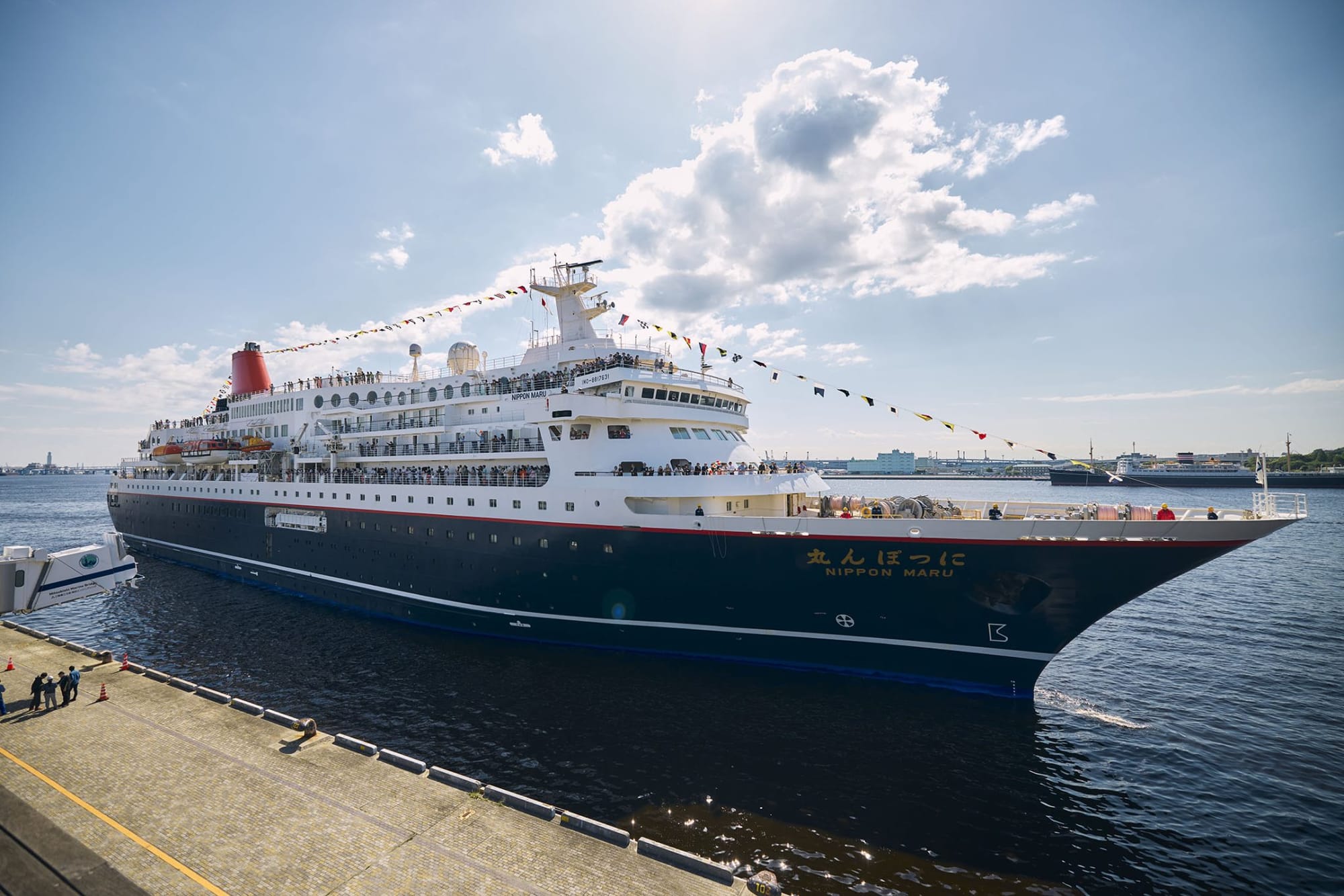
The move follows the ship's final call at Yokohama's Osanbashi Yokohama International Passenger Terminal on May 10, 2026, ending a 35-year career for the 600-passenger vessel. More than 7,000 people attended a retirement ceremony on the terminal roof, with Mitsui Ocean Fuji also calling at Yokohama for the farewell event.
Before the ship left the fleet, MOL O.S.K. Lines offered onboard furniture, fixtures and repurposed items through the Nippon Maru Memorial Goods Project. Mitsui said the program was intended to preserve the history of the 1990-built vessel through mementos for passengers and crew.
Nippon Maru items offered as memorial goods
The memorial project included items sold in their original form: coffee tables from the Horizon Lounge, bridge chairs, decorative pieces, general signaling items, deck chairs, side tables and furniture from the ship's restaurants, lounges, cabins and outside decks.
Other items were removed and repurposed before sale. Mitsui offered table, wall and floor lamps made with light fixtures from the ship's decks, keychains made with crystals from chandeliers, and art pieces using lifebuoys, clocks and ropes from the vessel. Curtains from different areas were also used to create keychains, pens, wristwatches and other items.
Yokohama hosted final port ceremony
"We are truly honored that Yokohama was chosen as the location for such an important final occasion," said Fumie Ono, director of the cruise project promotion division at the Port and Harbor Bureau of the City of Yokohama.
The retirement event had been announced in June 2025. "Nippon Maru has been much more than a cruise ship - it has been a symbol of connection, discovery, and heartfelt hospitality for generations of guests," Tsunemichi Mukai, president of Mitsui Ocean Cruises, said during the ceremony. "We are deeply grateful to the guests, crew members, port communities, and partners who supported Nippon Maru throughout this extraordinary 35-year journey."
A domestic cruise pioneer ended service
Nippon Maru started construction in October 1989 at Mitsubishi Heavy Industries' Kobe-Osaka shipyard and was launched in March 1990. The 22,472-gross-ton, 547-foot ship entered service for Mitsui O.S.K. Lines on Sept. 27, 1990, with an inaugural cruise from Kobe to Keelung and Hong Kong. It originally accommodated 422 passengers and later underwent extensive 20- and 30-year overhauls that increased capacity to 600 by its final operating period.
The ship sailed from Yokohama and other Japanese ports on domestic itineraries, longer international voyages and world cruises. MOL has cited Nippon Maru's Panama Canal transit, a 2001 Baltic sailing described as the first Japanese cruise to the region, and the first modern around-the-world cruise by a Japanese cruise ship among its career events. The ship ultimately made nine world cruises. It also operated a 62-day cruise that included the Caribbean, Hawaii and Alaska, as well as a 48-day cruise from Japan to Mauritius.
By the time MOL Cruises announced the retirement plan in 2025, Nippon Maru had operated more than 2,000 cruises, sailed nearly three million nautical miles, carried more than 600,000 passengers and visited more than 400 ports. The ship outlasted its early Japanese-market peers. Fuji Maru was retired in 2013, while NYK's Asuka was sold in 2006 and replaced by a larger vessel.
Mitsui shifts capacity to former Seabourn ships
The withdrawal leaves Asuka Cruise's Asuka II and Asuka III as the only Japanese-flagged cruise ships currently in service. For MOL Cruises Ltd.'s Mitsui Ocean Cruises, Nippon Maru's departure also shifts the brand's near-term capacity toward former Seabourn vessels acquired in 2023 and 2025.
MOL decided in 2022 to expand its cruise business as part of a diversification strategy. Its initial plan called for an investment of more than $700 million in two 35,000-gross-ton newbuilds, but the company instead bought Seabourn Odyssey from Carnival Corporation's Seabourn Cruise Line in March 2023.
That ship entered Mitsui service in December 2024 as Mitsui Ocean Fuji. MOL then agreed in March 2025 to acquire the roughly 32,000-gross-ton Seabourn Sojourn, a sister ship that is being delivered to MOL this month and is scheduled to debut for Mitsui Ocean Cruises as Mitsui Ocean Sakura on Sept. 19, 2026.
Asuka Cruise continues to operate the 50,000-gross-ton Asuka II and the 52,265-gross-ton Asuka III from Japanese ports including Yokohama, Kobe and Osaka. Asuka III entered service in 2025 while Asuka II remained in the market.
Japan targets a larger home cruise market
Japan recorded 1.8 million cruise visitors in 2025, most of them international passengers on port calls, while the domestic cruise market totaled 76,000 passengers. Another 167,000 Japanese passengers sailed on international cruises, and CLIA ranks Japan 12th as an international source market for cruising.
Domestic cruise passenger volume increased 25 percent year on year in 2025, but it remained below the pre-pandemic record of 356,000 passengers in 2019. Japan's Ministry of Land, Infrastructure, Transport and Tourism has set a goal of growing the domestic cruise market to one million passengers by 2030.
"Japan has not enjoyed the huge growth of the international market," said Anthony Kaufman, head of commercial strategies at Mitsui Ocean Cruises, during a Seatrade Cruise Global panel on Asia. Kaufman acknowledged barriers to entry and older market perceptions, while describing Japan's demographic profile as a "huge opportunity."
More Japanese cruise capacity is on the way. Ryobi Holdings plans to introduce the 120-passenger Sefu in summer 2027, while Oriental Land Cruises has ordered an adapted Disney Wish-class ship of about 140,000 gross tons for Disney Cruise Line Japan service from Tokyo in the fiscal year ending March 2029.