New Alliance Warns Rising Costs Threaten Australia’s Cruise Sector
The report says cruise lines spend about one point five billion Australian dollars locally each year, while passengers add about one point eight billion.
Updated September 18, 2026
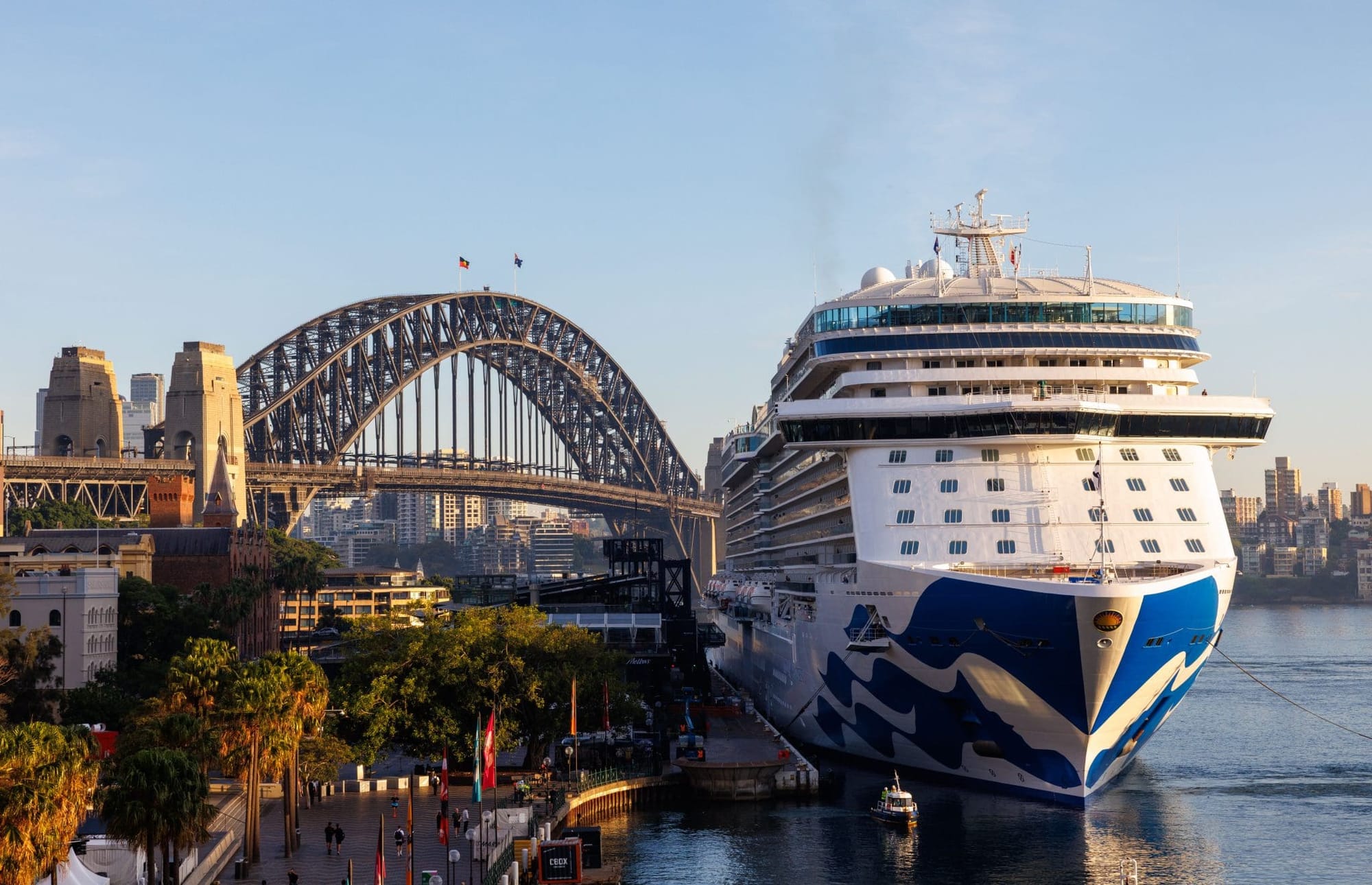
Australian agricultural, tourism, travel, port and cruise interests have launched the Australian Paddock to Port Alliance, a national campaign warning that rising costs and regulatory uncertainty could push international cruise ships away from Australia. The campaign is built around Australia's Paddock to Port Economic Impact Report, which puts cruise-related activity at more than A$7.3 billion a year and counts more than 22,000 Australian jobs.
Cruise lines spend about A$1.5 billion in Australia each year. Passenger spending contributes about A$1.8 billion across accommodation, tours, retail, transport, dining and other visitor activity.
Cruise spending linked to suppliers and shore businesses
The report breaks out passenger spending across several onshore categories, including almost A$400 million on food and beverages, about A$250 million on shore excursions, roughly A$210 million on retail and about A$210 million on transportation.
The alliance said its campaign will focus on the businesses connected to each ship visit: produce suppliers, logistics providers, hotels, tour operators, retailers, transport companies and regional communities.
Australian cruise demand reaches a record
A record 1.45 million Australians took a cruise in 2025, an increase of 9.5% from the previous year and the first time the total had exceeded the 2018 record of 1.35 million passengers. Shorter cruises accounted for much of the increase.
About 1.16 million Australians sailed on cruises from Australia to New Zealand and the South Pacific. Roughly 286,000 instead flew overseas to join cruises outside Australia, a 17% increase.
The passenger record comes as Australia faces changes in locally based cruise capacity. Carnival Cruise Line is the only brand with ships based year-round in the market, and Carnival Adventure is scheduled to switch from year-round Australian deployment to seasonal service from April 2028. Carnival Luminosa already operates seasonally between Australia and Alaska.
Royal Caribbean International, meanwhile, plans to send Ovation of the Seas, Anthem of the Seas and Voyager of the Seas to Australia seasonally between November 2027 and April 2028.
CLIA and farmers press for competitive settings
"Cruise lines have been warning that Australia is becoming uncompetitive as a destination and risks losing cruise tourism to other countries," Joel Katz, executive director of Cruise Lines International Association Australasia, said.
Concerns cited by cruise interests include Sydney port costs reported at up to twice those in Miami, along with lower-cost alternatives elsewhere in Asia. The Coastal Trading (Revitalising Australian Shipping) Act 2012 requires cruise lines carrying passengers between Australian ports to obtain permits that must be renewed every one or two years, which complicates longer-term itinerary planning.
Australia and New Zealand's biofouling regulations can also require cruise ships to clean or treat their hulls. In 2023, New Zealand denied multiple ships entry to sensitive areas and diverted them from Milford Sound, Fiordland National Park and South Island ports.
Katz said the industry is seeking "stable, practical and competitive settings" so Australia can continue attracting ships, passengers and investment.
Michael Guerin, CEO of the National Farmers' Federation, said Australian ship provisioning generates demand for fresh produce, meat, dairy, seafood, wine and other domestic goods. "Cruise may start at the port, but the economic activity reaches back to paddocks, processing facilities, transport networks and regional businesses," Guerin said.
Compare current Australia cruise fares on Cruise Lookup.