NCLH Does Not Detail Revenue-Cost Split in $100 Million Plan
Changes to Norwegian’s guest air promotions began earlier this year, but existing bookings under the prior program mean more crew-related benefit is expected in 2027.
NCLH’s $100 Million Benefit Needs a Revenue-Cost Breakdown
Norwegian Cruise Line Holdings has put lower crew travel costs and changes to guest air promotions into the same $100 million figure. I’d rather see the revenue gains separated from the expense reductions. Both can improve earnings, but only one shows the company spending less to run its business.
The company disclosed the expected run-rate savings and cash benefits on its October 29 third-quarter earnings call. The measures will take effect progressively through 2028. This is a pipeline of expected improvements, not $100 million already delivered.
Chief executive officer John Chidsey said the air-related changes would benefit both revenue and expenses, including lower transportation costs for crew. Chief financial officer Mark Kempa declined to break down how much of the overall benefit would come from each side.
That missing split makes the announcement harder to assess. Changing the economics of a passenger promotion is a commercial decision. Reducing crew transportation costs is an operating improvement. Combining them gives readers a bigger number without showing which lever is doing the work.
Existing bookings slow the payoff
Kempa said promotional offerings changed earlier this year, but many passengers had already booked under the previous air program. The financial effect therefore takes longer to appear. He expects more of the crew-related benefit to emerge in 2027.
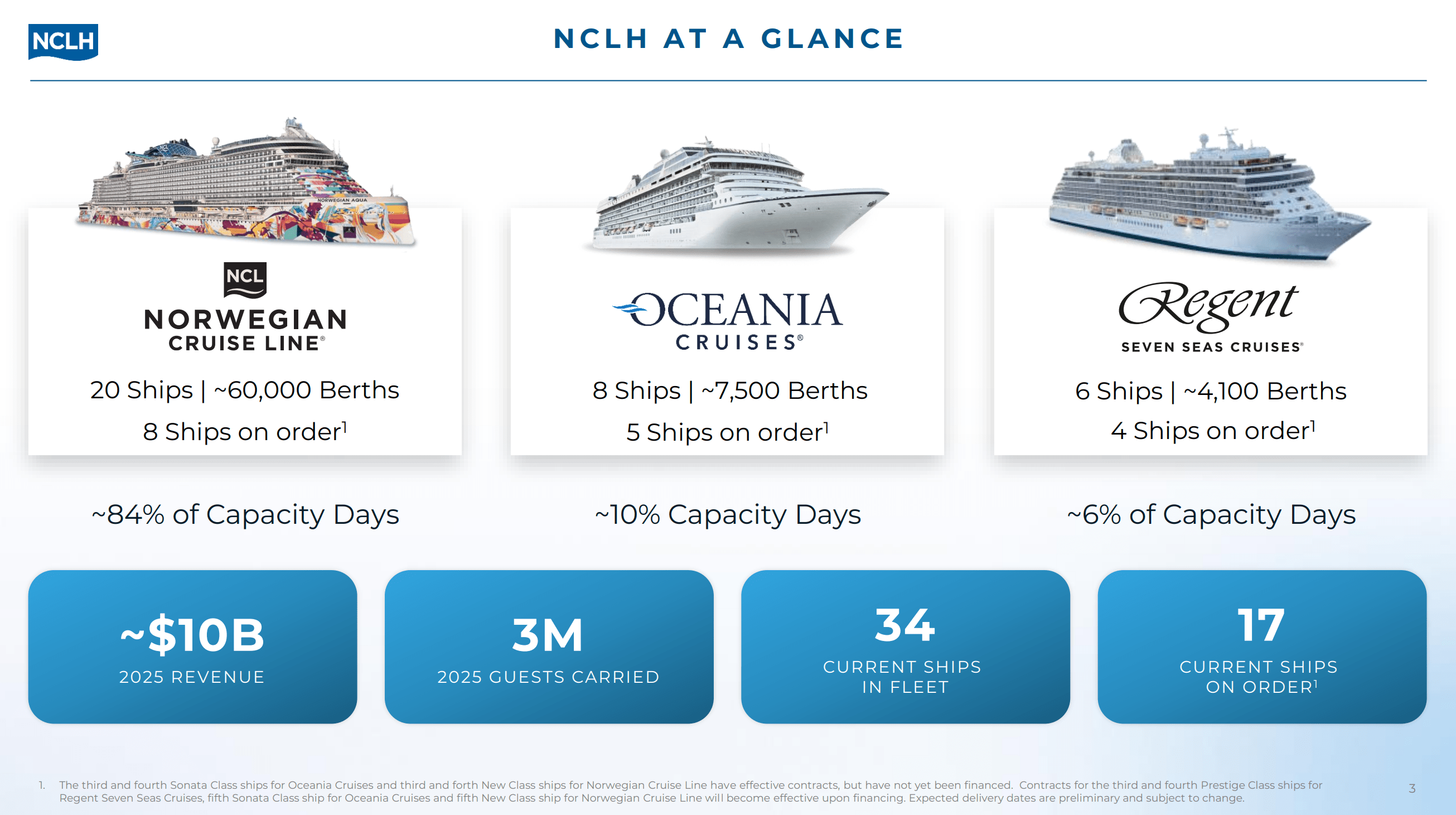
The latest initiatives follow approximately $225 million identified during the preceding two quarters. That brings annualized savings and cash benefits identified in 2026 to about $325 million. Across all initiatives identified to date, the total now exceeds $600 million.
The booking lag is a useful qualification. The schedule through 2028 matters as much as the headline total.
Cost control becomes a standing assignment
Management also identified strategic sourcing, outsourcing selected shoreside support functions and using artificial intelligence to simplify processes as further opportunities. The group reported approximately 5,200 shoreside employees at the end of 2024.
“We do have line of sight of further incremental cost savings for next year,” Kempa said.
For 2027, management aims to keep unit cost growth below 1%, continuing the performance achieved over the preceding three years. Executives described cost discipline as a permanent part of the turnaround.
That unit-cost target provides a more concrete test of operating discipline than a combined revenue-and-savings total.
A better quarter than expected, but below last year
The third quarter exceeded the company’s targets, helped by strong late bookings and resilient onboard spending across its brands. NCLH raised its full-year adjusted earnings before interest, taxes, depreciation and amortization outlook to approximately $2.55 billion.
Beating internal targets still left quarterly adjusted EBITDA below the prior year: $937 million compared with $1.02 billion. Passenger ticket revenue fell 5.1% to $1.95 billion.
Where the cash has to come from
Management forecasts net yield growth of 1% to 2% in 2027, with stronger performance in the second half as marketing and revenue initiatives take effect. First-half bookings remain behind the comparable prior-year position, although pricing is higher.
The company has introduced a baseloading strategy for late-2027 and 2028 departures to manage the booking curve. Management expects targeted marketing to help recover occupancy without broad discounting and is watching whether the third quarter’s late-booking demand continues.
Net leverage stood at 5.5 times, measured as net debt divided by trailing adjusted EBITDA. Management said it did not anticipate needing an equity raise, citing sufficient liquidity and plans to reduce leverage organically.
Beyond operating initiatives, gross newbuild capital spending is projected to decline by approximately $1 billion annually in 2028 and 2029. Management identified that reduction as a central driver of future balance-sheet improvement.
There are several routes to better cash generation here, with different timelines and dependencies. The distinction matters when ticket revenue is falling and the booking recovery still needs work. NCLH should make clear how much of its latest $100 million benefit removes an expense and how much requires a better result at the point of sale.