MSC Poesia to Carry Whale Observer in Alaska This Summer
NOAA’s Alaska humpback approach rules date to July 2001; in the Juneau area, nine vessel-strike incidents were reported from 2020 through 2024.
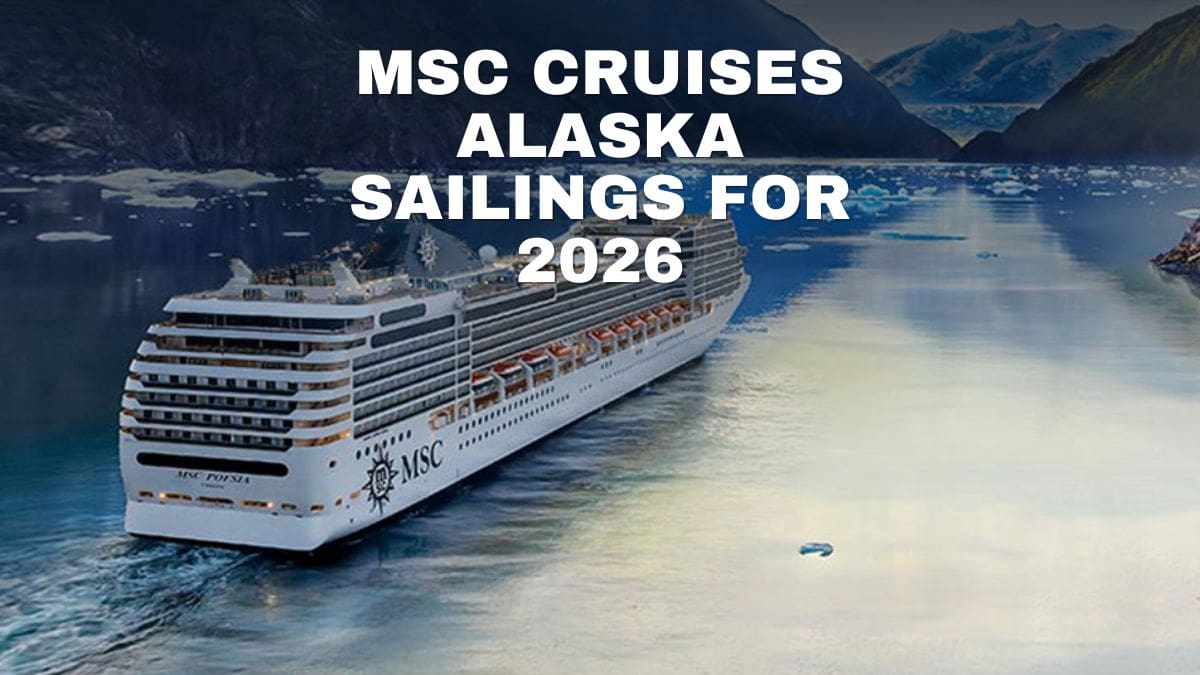
Alaska requires vessels to stay at least 100 yards from humpback whales, but ship strikes remain a documented risk for cruise operations in Southeast Alaska. MSC Cruises will host a marine mammal observer aboard MSC Poesia for five weeks this summer on Seattle-to-Inside Passage sailings, working with ORCA to study how large ships can avoid whales.
The collaboration follows MSC Poesia’s first Southeast Alaska voyage in May as MSC enters the Alaska market. In the Juneau area, nine vessel-strike incidents were reported from 2020 through 2024, six of them involving calves.
MSC and ORCA focus on ship avoidance
Steve Jones, ORCA’s chief operating officer, joined MSC Poesia during its first Southeast Alaska voyage to begin the collaboration. “We still don’t understand some really fundamental questions,” Jones said. “What action should the ship take? What species-specific guidance might there be?”
The observer, Maria Snell, will use a video camera and binoculars from the bridge to record whale behavior and proximity to the ship, and will alert the crew when whales are sighted. The work will take place as humpbacks spend the summer feeding on herring and krill and raising young in the region.
Jon Olav Stedje, MSC Cruises’ manager of sustainability and community engagement, said MSC wants to enter the market “in a proper and respectful way.”
Alaska rules have been in place since 2001
NOAA’s Alaska humpback whale approach rules have been in effect since July 2001. Beyond the 100-yard separation requirement, the rules prohibit placing a vessel in a whale’s path, disturbing normal behavior or operating near humpbacks above a slow, safe speed.
NOAA whale-viewing guidance also calls for limiting observation of an individual whale or group to 30 minutes and putting the engine in neutral if a whale approaches. The International Whaling Commission, which maintains a ship-strike reporting portal and created a vessel-strike expert panel in 2023, says collisions involving large vessels may go unnoticed or never be reported.
Prior Glacier Bay work found active avoidance can be possible
Earlier observer work in Glacier Bay National Park suggests active avoidance can be possible when crews have enough warning. During the summers of 2016 and 2017, a marine mammal observer monitored humpbacks aboard 67 large cruise ships transiting the park; scientists later paired surfacing observations with simulated ship responses and concluded large ships can actively avoid strikes.
The scientists estimated that crews have three opportunities on average to see a whale surface as a ship approaches. Jones said the basic rule remains “if you see a blow, go slow,” but early detection can allow a vessel to maneuver around a whale when speed and propulsion conditions allow.
Heidi Pearson, a University of Alaska Southeast marine biology professor who studies humpback whale health in Juneau, said she is not familiar with ORCA’s work. “I think if more vessels had dedicated marine mammal observers aboard, potentially they could help to avoid more whale strikes,” Pearson said.
Pearson said collecting rigorous data on how whales respond to a vessel may be difficult without baseline or control data and dedicated behavioral studies. ORCA has not published peer-reviewed scientific papers, but Jones said the organization makes its citizen-science data freely available and has submitted data to Happywhale and NOAA.
Snell also plans to train crew members on whale avoidance and speak with passengers about conservation.