Meyer Werft Pitches Battery-Electric Cruise Ship for 2031
Johannes Bade said the ship is best suited to regions with close-together ports, and Meyer Werft named Florida and the Bahamas among possible deployment areas.
Meyer Werft is pitching Project Vision, a 100% battery-electric cruise ship concept that the German builder says could be delivered in 2031 if it secures a contract this year. The proposed vessel is sized at about 82,000 GT and 275 meters, with capacity for 1,856 passengers, and Meyer Werft says the design could reduce greenhouse-gas emissions by as much as 95%.
The proposal applies battery technology already used in hundreds of electric ferries to a large cruise vessel, with Corvus Energy supplying the battery system. Its main constraint is shoreside power: Charles “Bud” Darr of Cruise Lines International Association said cruise ships call at 1,500 ports worldwide in a typical year, while CLIA data shows 41 ports can supply electrical power to one ship.
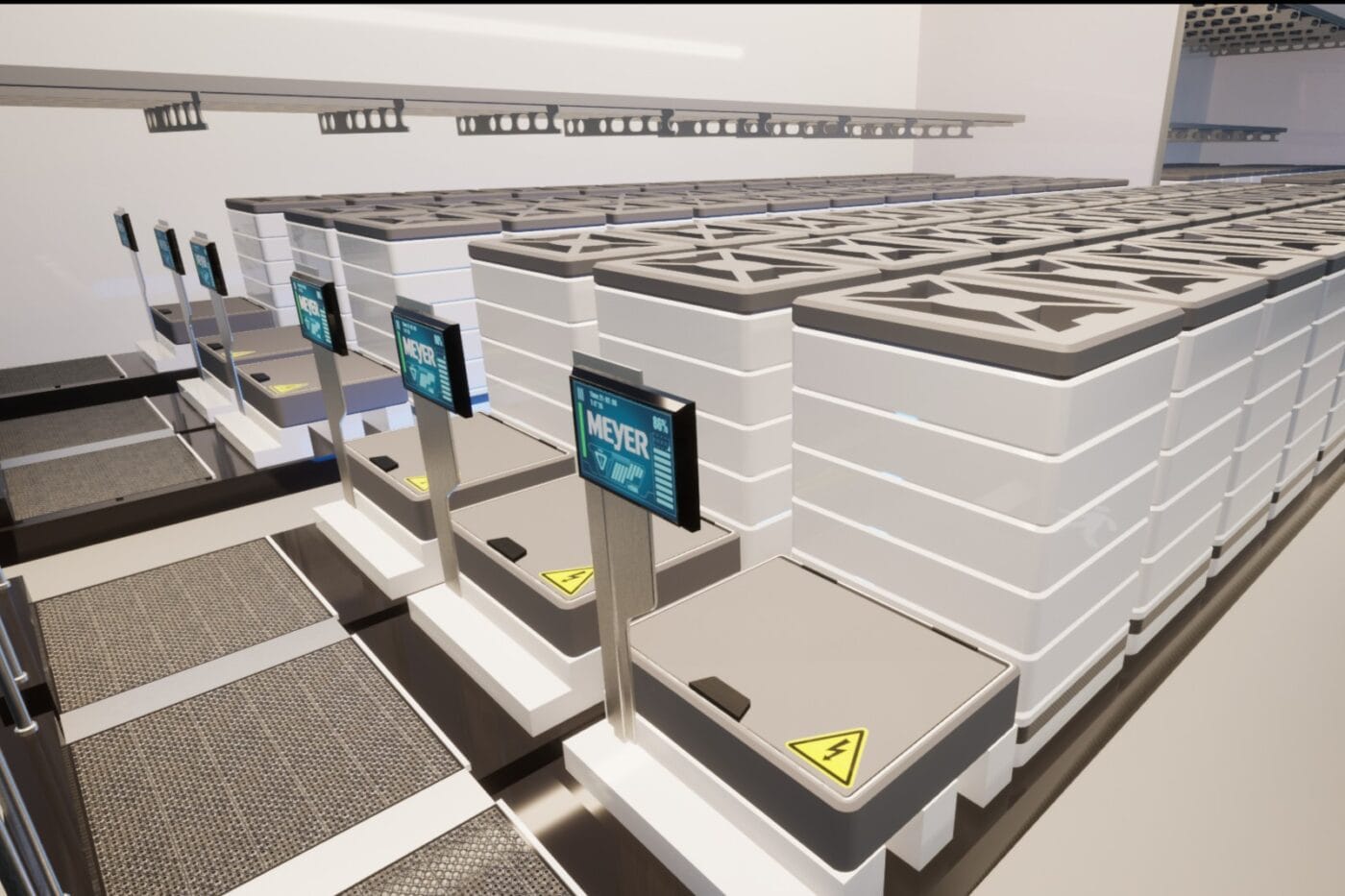
Battery operation would replace the conventional engine-room model
Papenburg-based Meyer Werft, founded in 1795, has released Project Vision as a concept rather than an ordered newbuild.
“Batteries are now in a state ... where we say, now this is the most energy efficient way to do cruises,” said Johannes Bade, a project engineer with Meyer Werft.
The ship would plug in during port stays, store power in a large onboard battery room and sail between calls without local emissions.
“We do not convert energy to a liquid and then burn it again,” Bade said, describing the aim as sailing on recharged batteries “without any local emissions at all.”
Design information released so far shows fully glazed, weather-protected areas, an indoor stern aqua park and no top-deck smoke stacks. Their absence creates additional outdoor space. Meyer Werft has not released a full technical datasheet for battery capacity, propulsion power, charging time, range or endurance.
Itinerary fit depends on port spacing
Bade said the ship is best suited to cruise regions where ports are relatively close together. Meyer Werft identified potential deployment areas including the Mediterranean, Northern Europe, the Norwegian fjords, the Baltic Sea, Florida and the Bahamas.
For longer voyages, Meyer Werft says the concept could also be built as a hybrid ship with small generators. No customer or order has been announced.
Darr linked Project Vision to the cruise industry’s 2050 net-zero target. “It is going to take a mosaic or bundle of solutions to get to net zero for 2050,” he said.
The industry still faces “a whole shore-side element,” Darr said, while Meyer Werft projects that about 100 European ports could have infrastructure capable of supporting battery-powered cruise ships by 2030.