Juneau Shore-Power Plan Prioritizes Local Needs During Shortages
H3 Engineering paused work at 35% design completion for further analysis, while its engineer estimated construction could take four and a half to five years if approved now.
Juneau’s Shore-Power Plan Is Right to Put Local Electricity Needs First
Cruise ships would be among the first customers disconnected if Juneau’s electricity supply came under strain, even under a shore-power project that could cost as much as $111 million. I’m comfortable with that restriction. A cleaner port call should not require the local utility to fire up diesel generators to keep a ship plugged in.
The price is substantial. H3 Engineering Solutions told Juneau’s Docks and Harbors Board on Thursday that electrifying the two city-owned cruise docks could cost twice the city’s 2024 estimate. The firm has paused work at 35% design completion for further analysis and board review.
That pause makes sense with an estimate this large. But the interruptible electricity supply is one part of the proposal I would keep intact.
Shore power, with a clear cutoff
Under normal conditions, all of Alaska Electric Light & Power’s base-load generation comes from hydropower. The utility maintains diesel generators for periods when water supplies are insufficient or outages disrupt hydroelectric generation.
Asked what would happen if reservoirs ran low or a landslide disrupted power sources, AEL&P chief generation officer Bryan Farrell said cruise ships would be among the first customers disconnected.
“We’re never going to burn diesel to serve an interruptible power customer,” Farrell said.
That is a useful boundary for a project whose advocates say it would reduce ships’ diesel fuel costs and pollution during port calls.
Farrell also said electricity sales to cruise ships would benefit regular utility customers through lower rates. That is the utility’s claim. Still, the proposed arrangement gives Juneau a straightforward priority: sell power to ships when it is available, and disconnect them when supply is constrained.
Why these connections could cost so much
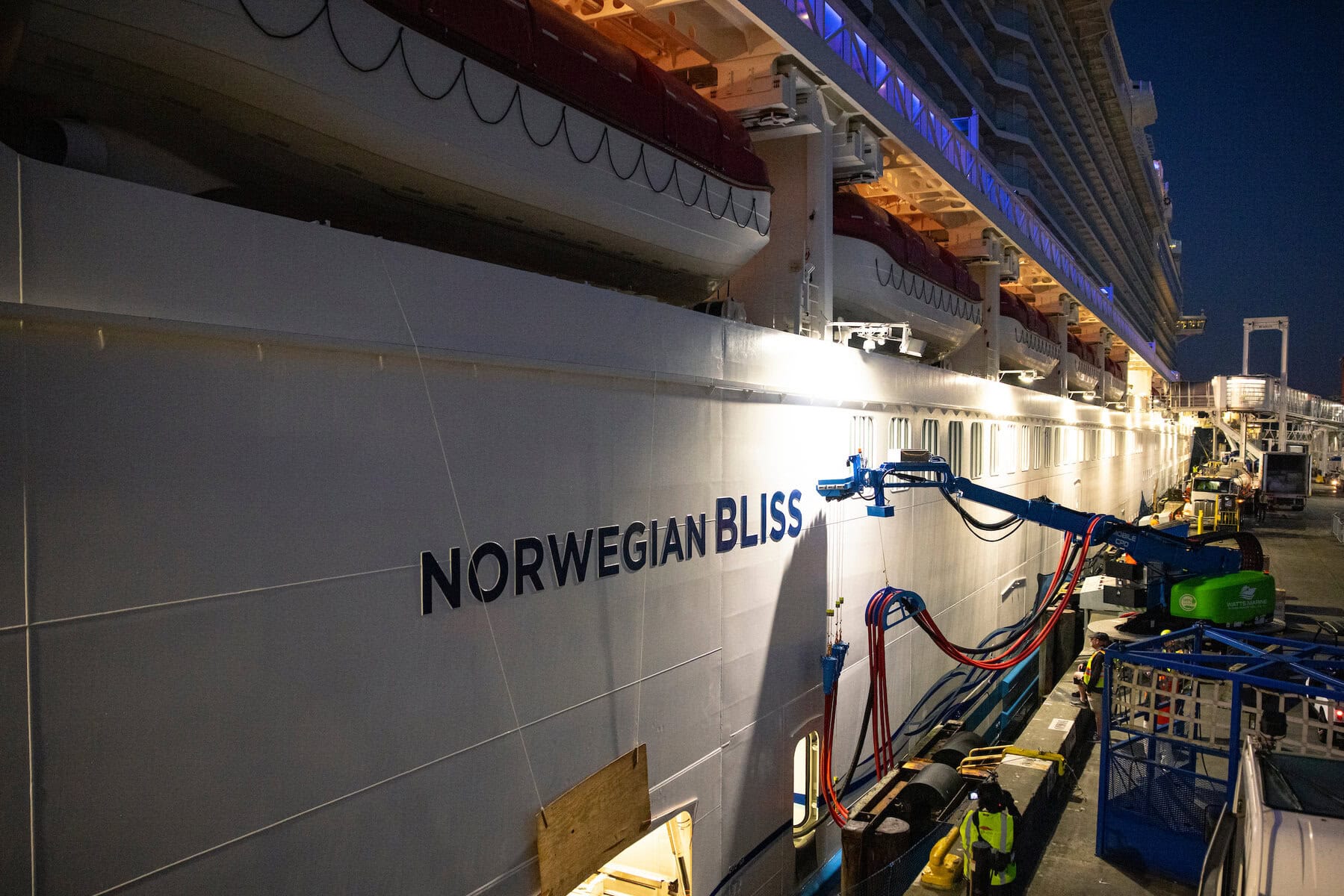
H3’s proposal would accommodate nearly all current cruise ships and nearly all those expected to enter service in the near future. The municipal berths can take a Panamax vessel up to 1,000 feet long and a post-Panamax vessel up to 1,100 feet. Cables would need to move horizontally to reach different ships’ electrical connection points and vertically to account for Juneau’s large tidal range.
H3 engineer Vahik Haddadian said that flexibility adds expense compared with a system serving vessels with known dimensions and connection layouts. Broad compatibility makes sense at a municipal dock, and Juneau will pay for it.
The work would require another dock beside the existing city facilities, supported by new steel pilings. Alluvial soils and mine waste rock create construction uncertainty. The estimate includes a 30% contingency for risks, changes and unexpected expenses.
Even getting the equipment into position is a problem. An uphill access road to AEL&P’s transmission infrastructure has a grade exceeding 20%, about twice what a truck carrying a 100,000-pound transformer could manage, Haddadian said. A replacement road may be necessary, with the grade reduced by at least half.
Haddadian also cited rising electrical-equipment demand from data centers and electric vehicles. Transformers are scarce enough that orders must be placed two years before the equipment is needed.
A long wait beyond the design review
Juneau already has a working example of cruise shore power. The privately owned Franklin Dock has provided it since 2001 through an installation built specifically for Princess Cruises. Haddadian said many of its specifications have since been adopted at electrified docks elsewhere. Further local expansion has stalled over the following decades because of costs and other obstacles.
Public comment on the newly presented plan was limited. Steve Behnke of Renewable Juneau called it “a pretty good step forward.”
It would also be a slow one, in part because seasonal limits restrict when construction can happen. “If you say ‘go’ now it will probably take four and a half to five years,” Haddadian told the board.
The design review has plenty to examine, from vessel compatibility to the road needed to deliver a transformer. An uninterrupted supply promise should not be added to that list. Even a project this expensive should give cruise ships access to available hydropower, not a claim on Juneau’s backup generators.